
Bring Beautiful Greenery Into Your Winter Home
Winter is the perfect time to make your home feel fresh, welcoming, and full of natural beauty. When outdoor gardens become quiet and the days grow shorter, indoor trees can bring life into empty corners, add height to your decor, and create a relaxing atmosphere. From elegant tropical trees with glossy leaves to delicate trees with silvery foliage, there are many wonderful choices for creating a lush indoor garden in 2027.
The secret to growing indoor trees successfully during winter is choosing plants that suit your available light, indoor temperature, humidity, and space. Some trees thrive in bright rooms with plenty of indirect sunlight, while others tolerate lower light conditions more comfortably. Most indoor trees need protection from cold drafts, heating vents, and sudden temperature changes. Watering should depend on the plant’s needs and how quickly its soil dries, rather than following a rigid schedule.
In this article, you will discover 26 beautiful indoor trees, along with their appearance, care needs, decorating potential, and unique image prompts for inspiring a greener winter home.
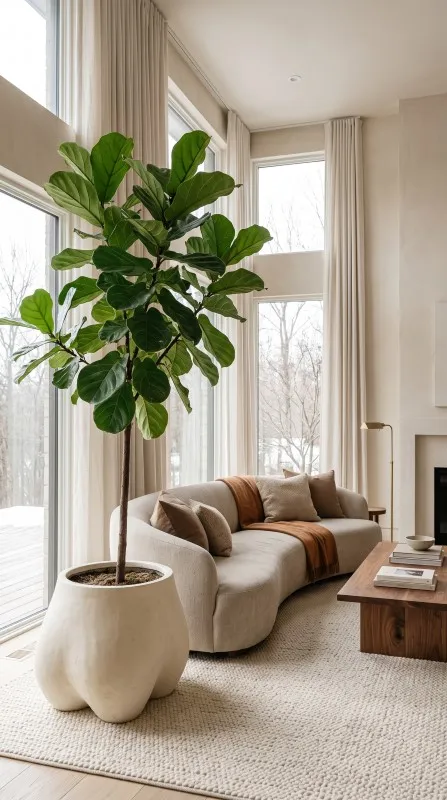
1. Fiddle-Leaf Fig for a Dramatic Living Room
The fiddle-leaf fig is a striking indoor tree known for its large, violin-shaped leaves and upright growth. It makes a beautiful focal point beside a sofa, near a bright window, or in an empty living room corner. Its sculptural appearance works especially well with contemporary, minimalist, and natural interior styles. During winter, give it plenty of bright, indirect light and keep its environment consistent. Allow the upper portion of the soil to dry before watering again, and avoid moving it frequently because sudden changes can cause leaf drop.
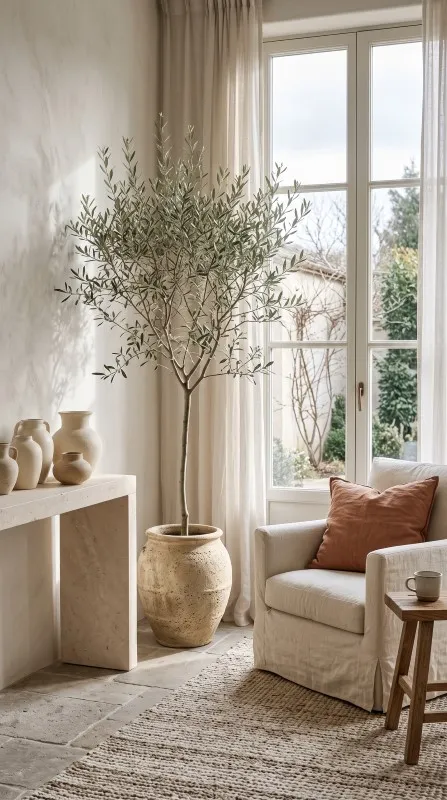
2. Indoor Olive Tree for Mediterranean Elegance
An indoor olive tree brings a graceful Mediterranean look to bright rooms with its slender branches and narrow silvery-green leaves. It pairs beautifully with limestone finishes, pale wood, linen upholstery, and handmade ceramics. Unlike many tropical indoor plants, olive trees generally need several hours of strong light, making a sunny window essential. They also prefer well-draining soil and should not remain soggy. In dim winter homes, a suitable grow light may help support healthy growth.
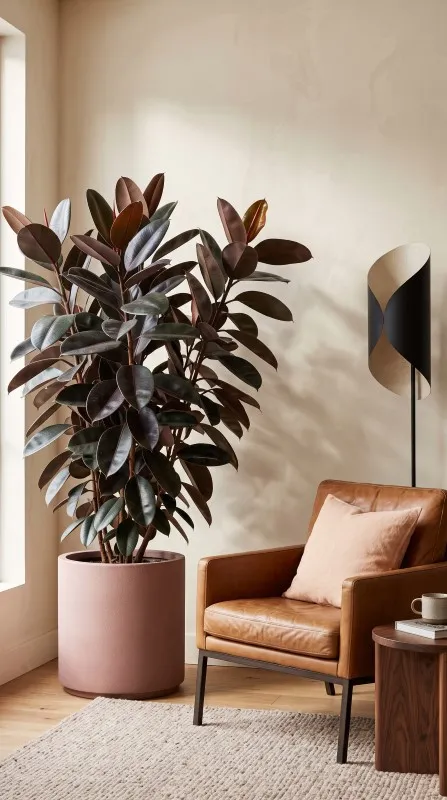
3. Rubber Tree for Glossy, Colorful Foliage
The rubber tree is an attractive indoor tree with thick, shiny leaves that can be deep green, burgundy, or variegated depending on the variety. Its upright form suits modern apartments and larger bedrooms where a strong plant silhouette can add visual interest. Give it bright, indirect light for the best foliage color, and allow the top layer of soil to dry between waterings. Wipe dust from the leaves occasionally to keep them looking glossy. Rubber plants contain irritating milky sap, so keep them away from children and pets that might chew them.
4. Dwarf Umbrella Tree for a Bright Corner
The dwarf umbrella tree, also called Schefflera arboricola, has attractive clusters of leaflets that spread like tiny green umbrellas. It is a useful choice for adding fullness to a bright living room or home office without needing an enormous floor space. It prefers bright, indirect light and moderate watering, with excess water allowed to drain away. Regular pruning can help maintain a compact shape. Note that Schefflera is toxic if chewed by pets, so choose its placement carefully.
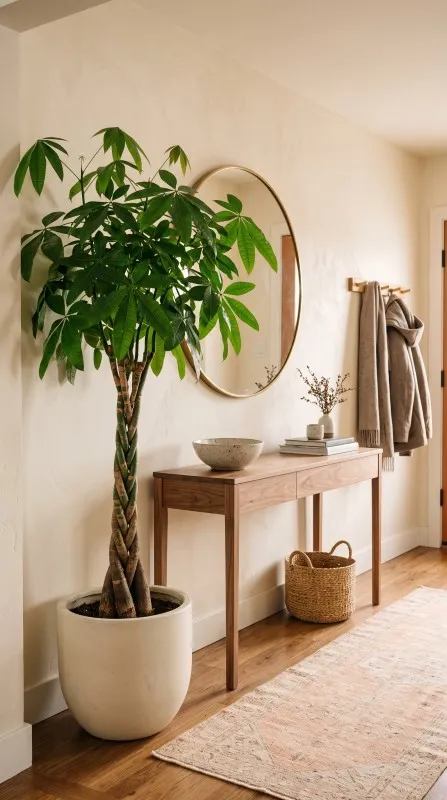
5. Money Tree for a Tropical Indoor Accent
The money tree, or Pachira aquatica, is loved for its braided trunk and attractive palmate leaves. Its distinctive shape makes it a popular choice for living rooms, entryways, and home offices. Place it in bright, indirect light and water when the upper portion of the soil has dried. Good drainage is essential because constantly wet soil can damage the roots. Its lush green canopy creates a tropical feeling that pairs well with warm wood, woven materials, and earthy colors.
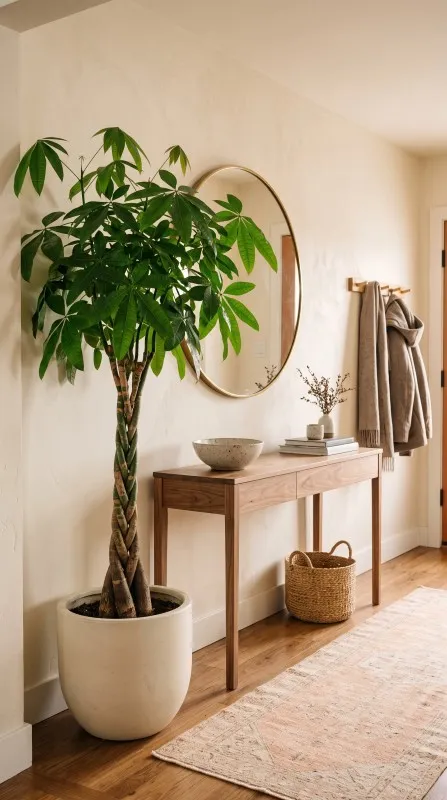
6. Kentia Palm for a Relaxed Tropical Atmosphere
The Kentia palm has graceful arching fronds that bring a soft tropical feeling to indoor spaces. It is often better suited to ordinary home conditions than many delicate palms and can tolerate lower light than some tropical species, although bright indirect light is beneficial. Keep it away from cold drafts and avoid leaving its roots in standing water. Its elegant, spreading foliage looks particularly beautiful beside linen curtains, natural rugs, and relaxed contemporary furniture.
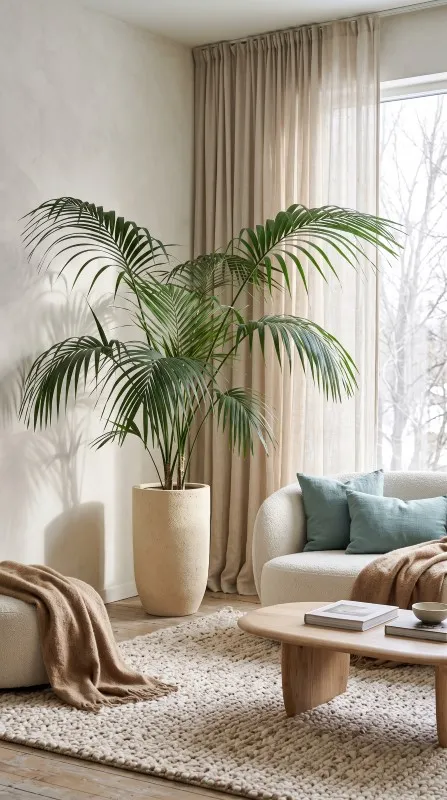
7. Parlor Palm for Smaller Indoor Spaces
The parlor palm is a compact, graceful plant that works well in smaller homes and bright-to-moderately lit rooms. Its fine, arching fronds create a soft green appearance without overwhelming furniture or narrow walkways. It prefers indirect light and evenly moderate moisture, but the soil should not remain waterlogged. Because it stays relatively small compared with many indoor trees, it is useful for a bedroom corner, a small sitting room, or a home office.
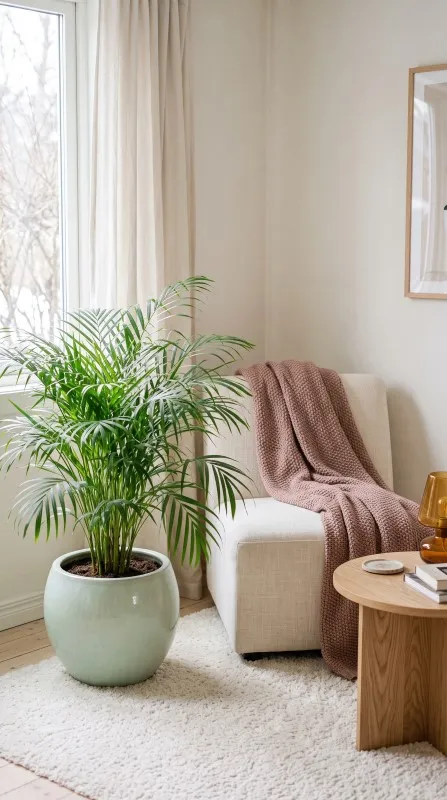
8. Lady Palm for Classic Indoor Greenery
The lady palm, or Rhapis excelsa, has fan-shaped leaves divided into narrow segments and sturdy cane-like stems. Its structured growth makes it a beautiful choice for traditional interiors, modern foyers, and rooms that need a lush plant with an orderly silhouette. It appreciates bright, indirect light but can tolerate some lower-light conditions. Use a well-draining potting mix, water when the surface begins to dry, and protect it from cold winter air.
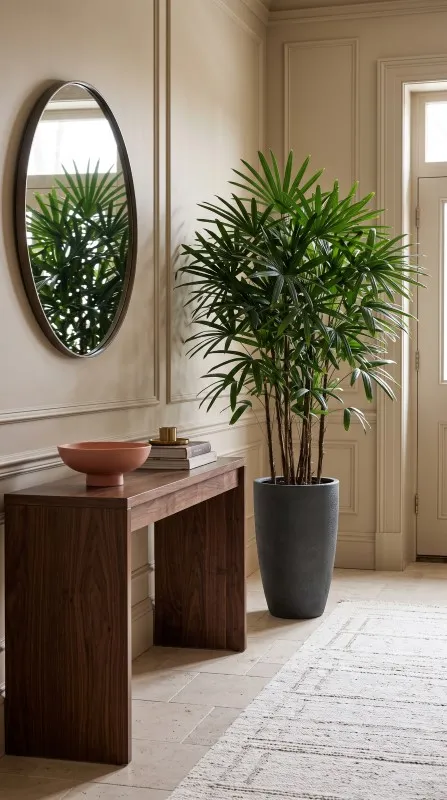
9. Ponytail Palm for a Sculptural Look
The ponytail palm has a distinctive swollen trunk base and long, curling leaves that create a playful fountain-like shape. Despite its name, it is not a true palm but a succulent-like tree-form plant. It prefers bright light and requires less frequent watering than many tropical houseplants because it stores water in its swollen base. Let the soil dry thoroughly between waterings and use a pot with excellent drainage. Its sculptural form suits modern spaces with simple furniture and bold decorative objects.
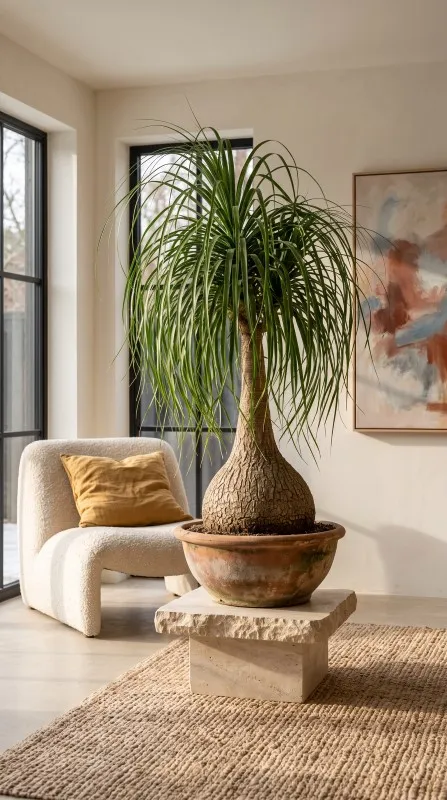
10. Weeping Fig for an Elegant Indoor Canopy
The weeping fig, or Ficus benjamina, forms a delicate canopy of small glossy leaves and fine branches. It can become an attractive indoor tree when given consistent conditions and sufficient light. This plant dislikes sudden changes in its environment, and winter drafts or irregular watering may trigger leaf drop. Place it in a bright spot with indirect light, avoid frequent relocation, and allow the top layer of soil to dry slightly between waterings. Its airy canopy complements traditional and contemporary interiors alike.
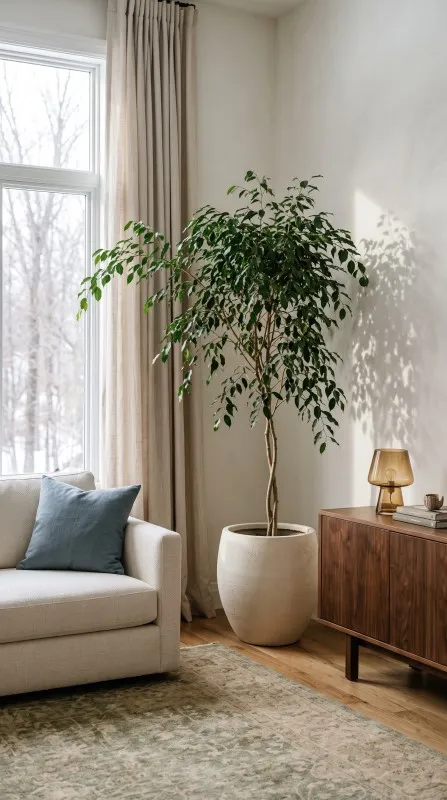
11. Corn Plant for Tall, Architectural Greenery
The corn plant, commonly sold as Dracaena fragrans, features sturdy cane-like stems and long, arching leaves. Some varieties have attractive yellow or lime-green stripes that brighten indoor corners. It is a good option for homes where the light is moderate, although bright indirect light usually supports stronger growth. Allow the soil to partially dry between waterings and avoid cold drafts. This plant is often called an indoor tree because of its tall, upright form, even though it is not a true tree botanically.
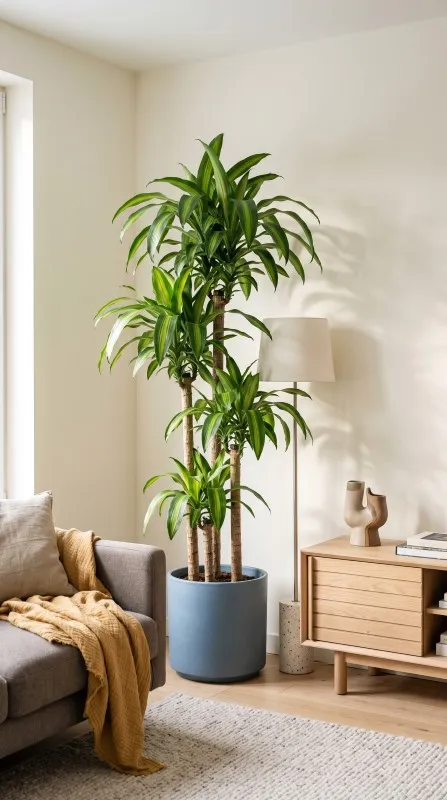
12. Dragon Tree for Modern Minimalist Rooms
The dragon tree, or Dracaena marginata, is recognized by its slim trunk and narrow, spiky leaves that often have reddish edges. Its upright form is useful in apartments where floor space is limited but vertical greenery is desired. It tolerates moderate indoor light and generally prefers its soil to dry partly between waterings. Keep it away from cold drafts and avoid overwatering in winter. Dragon trees are toxic to cats and dogs, so place them where pets cannot chew the leaves.
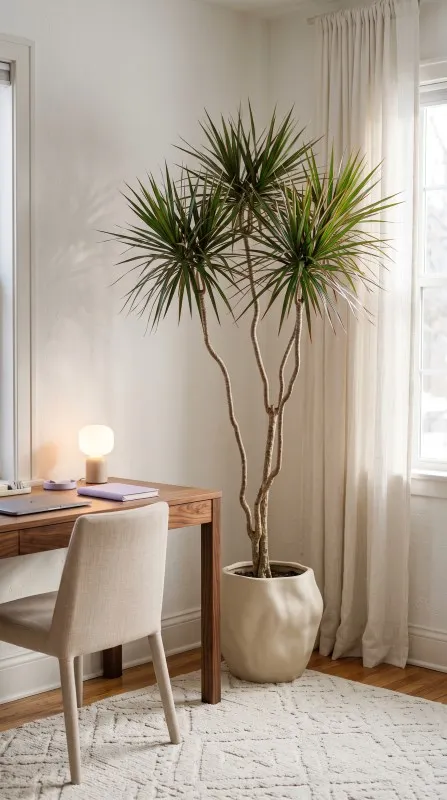
13. Cast-Iron Plant for a Shady Corner
The cast-iron plant, Aspidistra elatior, is not a tree in the botanical sense, but its upright, broad leaves make it a useful choice for adding greenery to rooms where many plants struggle. It tolerates low-to-moderate light and is generally forgiving of ordinary indoor conditions. Growth is slow, and it should not be kept in constantly wet soil. It is an excellent option for a shaded hallway, a quiet bedroom corner, or an area away from direct sunlight.
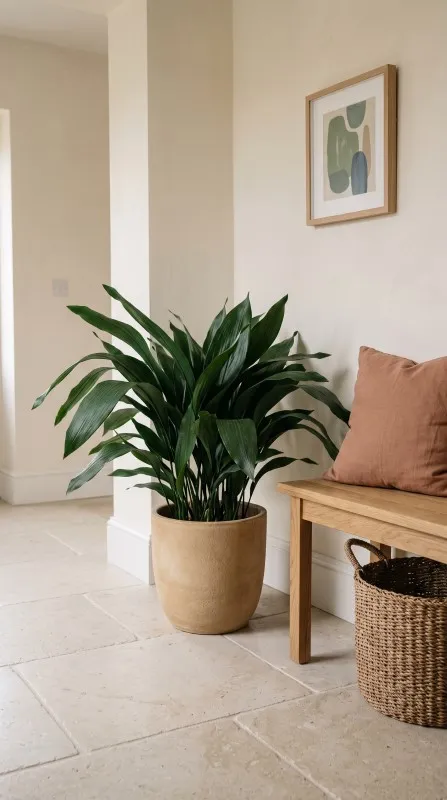
14. Madagascar Dragon Tree With Red-Edged Leaves
A Madagascar dragon tree, a variety of Dracaena marginata, adds a striking vertical accent with its thin stems and narrow leaves edged in reddish tones. Its sculptural silhouette works well beside a bookshelf, in a modern bedroom, or in a bright apartment corner. It prefers indirect light and moderate watering, with the soil allowed to dry partly between waterings. Because winter indoor air can become dry, inspect the leaves for signs of stress and keep the plant away from heating vents.
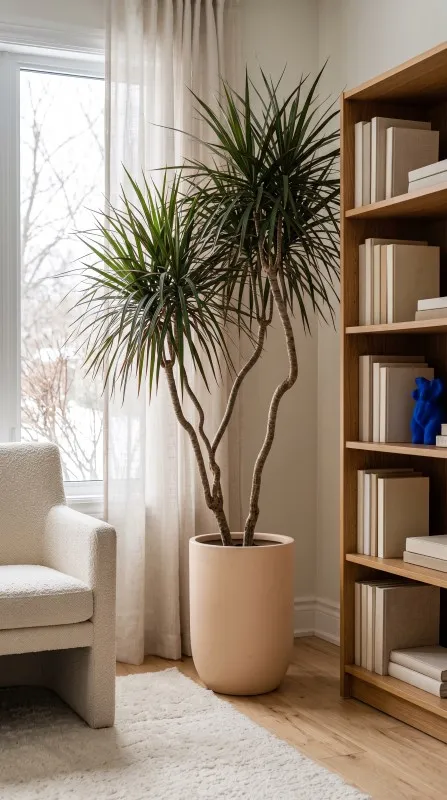
15. Norfolk Island Pine for a Winter Woodland Feeling
The Norfolk Island pine has soft, layered branches that resemble a delicate evergreen tree. It creates a woodland-inspired atmosphere indoors and can look especially beautiful in a bright sunroom or near a large window. It needs bright light, consistent moderate moisture, and good drainage. Although its shape may resemble a miniature Christmas tree, it can be enjoyed throughout the year as a decorative indoor plant. Keep it away from cold drafts and very dry heating air.
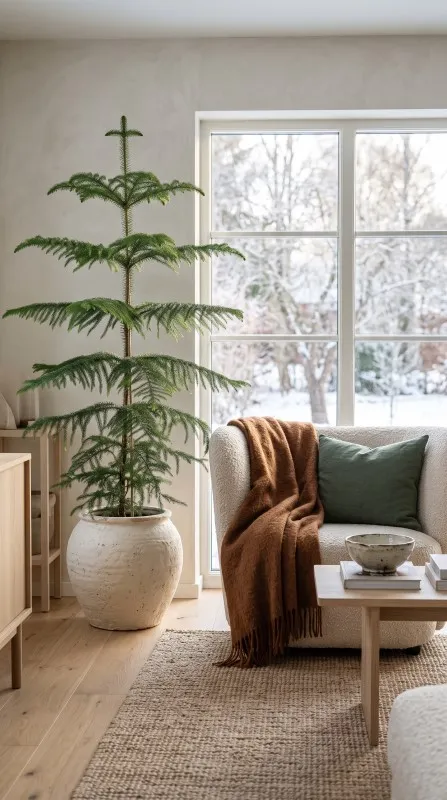
16. Bay Laurel Tree for a Kitchen With Natural Charm
Bay laurel is an aromatic evergreen tree that can be grown indoors in a bright location. Its dark green leaves add a refined, Mediterranean touch to kitchens, breakfast nooks, and sunny dining areas. It needs strong light, good drainage, and careful watering that allows excess moisture to escape. Indoor growth is usually slower than outdoor growth, and a sunny window is especially important during winter. If you want to harvest leaves for cooking, make sure the plant has been grown without unsuitable ornamental pesticides.
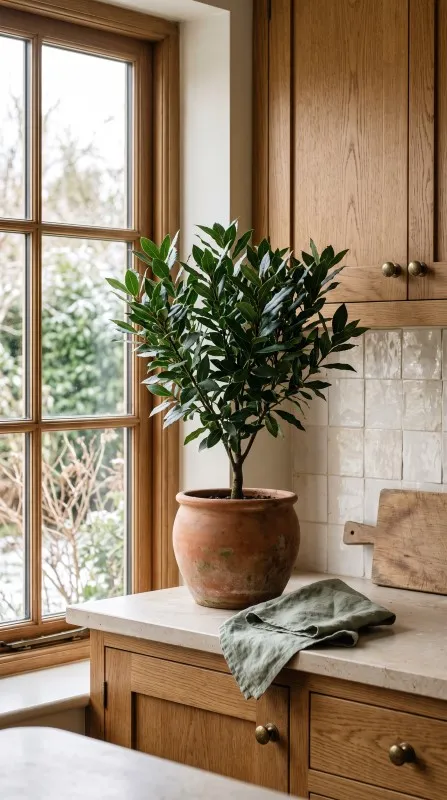
17. Citrus Tree for a Bright, Sunny Room
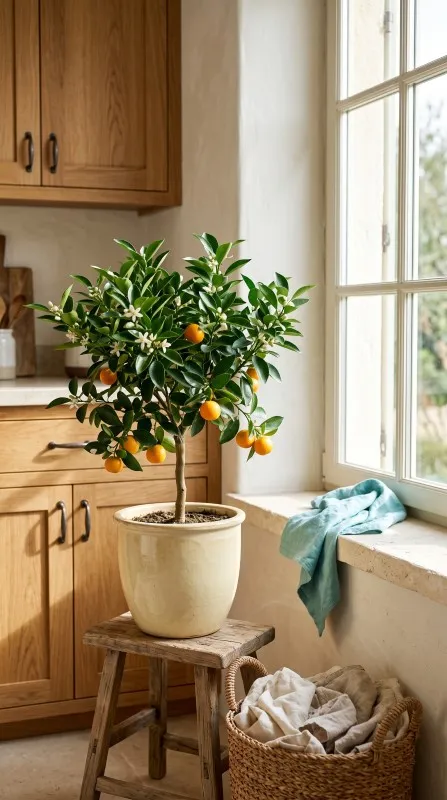
A dwarf citrus tree, such as a lemon or calamondin, can add glossy leaves, fragrant blossoms, and sometimes colorful fruit to a sunny indoor space. Citrus trees need strong light, often including several hours of direct sun, so a bright window or suitable grow light is important. Use a well-draining growing medium and water according to the soil’s moisture. Indoor fruiting is not guaranteed, and flowering plants may need help with pollination. Inspect regularly for common indoor pests, especially during winter.
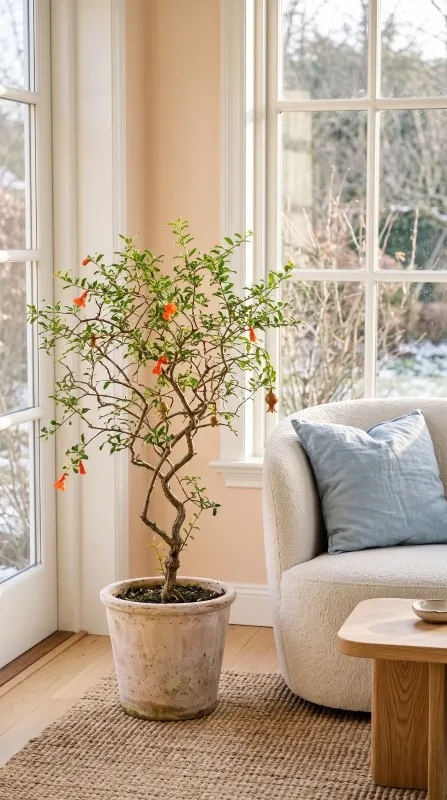
18. Dwarf Pomegranate for Artistic Branches
A dwarf pomegranate can be an attractive small indoor tree for a bright sunroom or a sunny window area. Its narrow leaves, woody branches, and occasional vivid flowers or fruit make it visually interesting. It requires strong light and well-draining soil, and it may need seasonal adjustments to its growing conditions to remain healthy. Indoor flowering and fruiting vary depending on light, plant variety, and care, so it is best chosen primarily for its attractive structure and potential seasonal display.
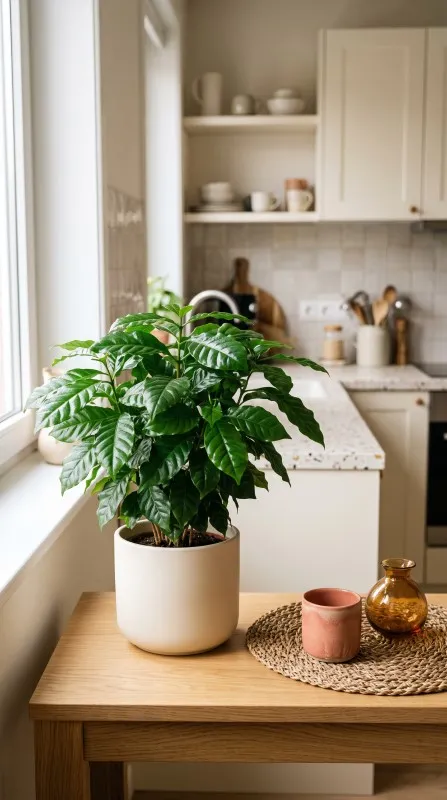
19. Coffee Plant for Glossy Tropical Leaves
The coffee plant, Coffea arabica, is often grown as a compact indoor shrub or small tree. Its shiny, deep-green leaves bring a lush tropical look to bright kitchens, home offices, and reading corners. It prefers bright indirect light, warmth, moderate humidity, and evenly moist but well-drained soil. Indoor flowering and berry production are possible under suitable conditions but should not be expected in every home. Its attractive foliage alone makes it a worthwhile decorative plant.
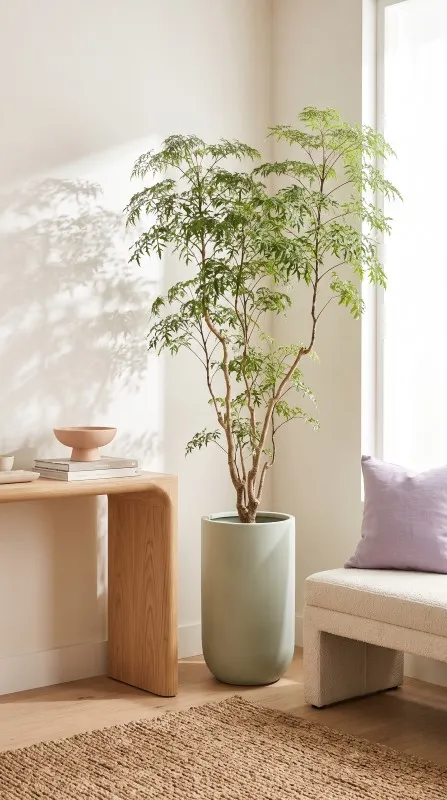
20. Aralia Tree for a Light and Airy Look
Some aralia species, including Polyscias varieties sold as indoor aralia trees, develop delicate branching stems and finely divided foliage. They can add a graceful, airy appearance to a living room or bright hallway. These plants generally prefer bright, indirect light, warmth, and steady care without waterlogged soil. Their fine foliage makes them especially beautiful in interiors with simple furniture, light-colored walls, and soft natural textures. Exact care needs vary by species, so identify the variety before choosing a routine.
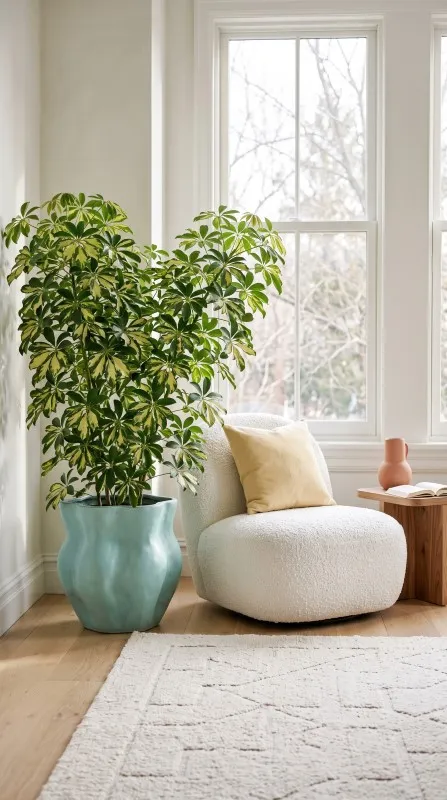
21. Umbrella Tree With Variegated Leaves
Variegated umbrella trees have green leaves marked with cream or yellow patterns, bringing brightness to a room without relying on flowers. Their rounded leaf clusters create a full, cheerful appearance, and the plant can be shaped with pruning if it becomes too large. Bright indirect light helps maintain attractive variegation, while regular checks of the soil prevent overwatering. Keep this plant out of reach of pets that may chew its foliage.
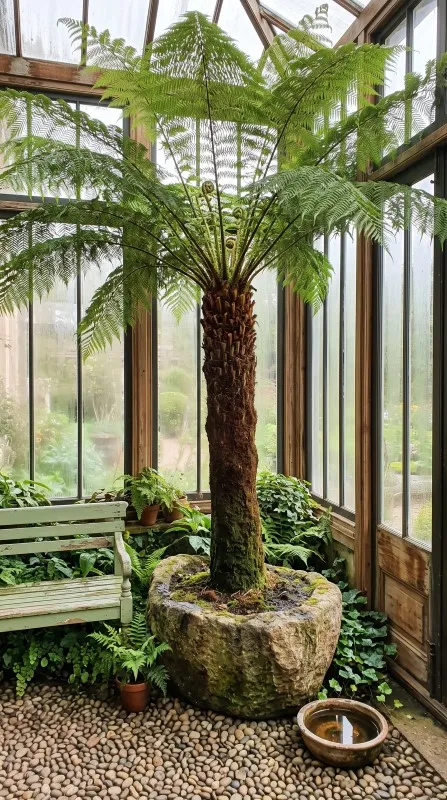
22. Australian Tree Fern for a Lush Green Corner
An Australian tree fern is a dramatic choice for a bright, humid indoor conservatory or a carefully managed sunroom. Its feathery fronds create a dense, woodland-like canopy that can make a room feel almost tropical. It usually requires bright filtered light, consistently moist but well-draining soil, and higher humidity than many ordinary houseplants. It is not the easiest choice for a dry heated living room, so consider a humidifier and suitable space before bringing one home.
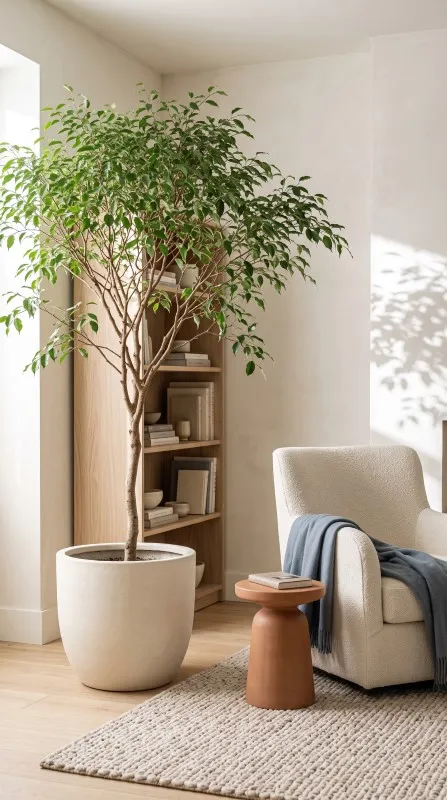
23. Indoor Fig Tree With Small Decorative Leaves
Small-leaved fig varieties can create a delicate, refined look in bright indoor spaces. Depending on the species and variety, they may grow as compact trees or shrubs with fine branching and dense foliage. Choose a type known to suit container cultivation, provide suitable bright light, and avoid keeping the roots waterlogged. Indoor fig varieties differ in their light and humidity needs, so identify the exact plant rather than assuming all figs require the same care.
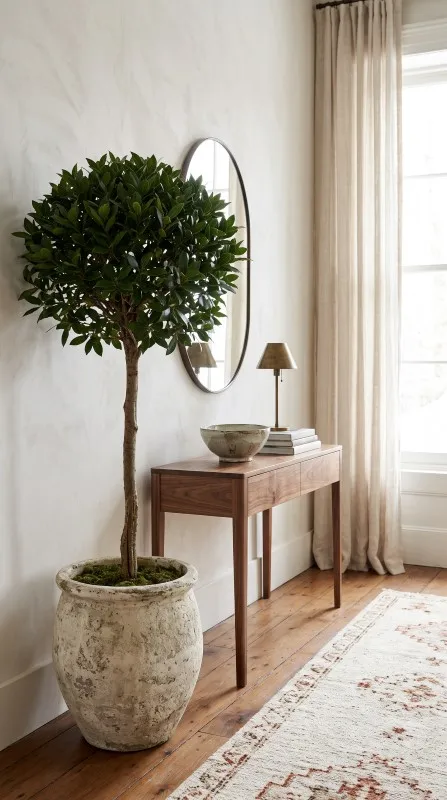
24. Sweet Bay Topiary for a Formal Indoor Accent
A bay laurel shaped into a rounded or tiered topiary offers a more formal alternative to a loosely growing indoor tree. It can look beautiful beside an entry console, near a sunny dining-room window, or in a bright enclosed porch. It needs strong light and good drainage, and its shape can be maintained with careful pruning. Because bay laurel prefers bright conditions, avoid placing a topiary in a dark hallway simply for decoration.
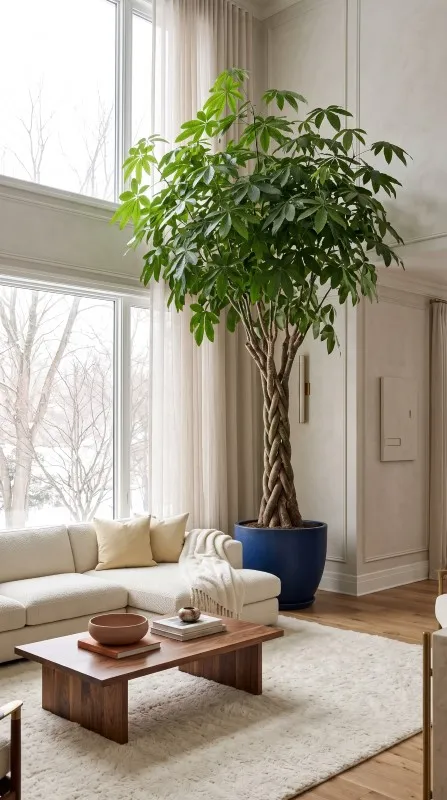
25. Pachira Money Tree With a Multi-Trunk Form
A multi-trunk money tree creates an impressive indoor feature through its intertwined stems and broad leaf canopy. It works well in spacious living rooms, home offices, and open-plan interiors where its height can balance larger furniture. Give it bright indirect light, a pot with drainage holes, and a watering routine based on the soil’s moisture. A well-chosen planter can emphasize the braided trunk while keeping the overall look elegant and uncluttered.
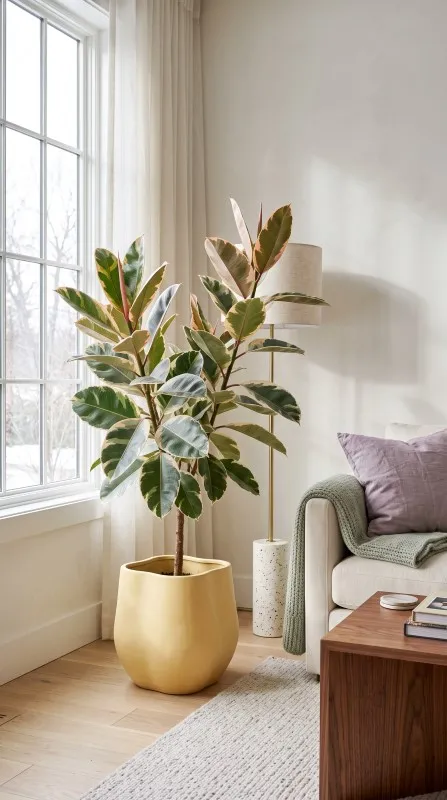
26. Variegated Rubber Tree for a Bright Winter Interior
A variegated rubber tree offers a colorful alternative to the classic all-green rubber plant. Depending on the cultivar, its broad leaves may combine green with cream, pale yellow, or blush-toned markings. The plant looks beautiful in a bright living room where its foliage can become a natural statement piece. Provide bright indirect light, water after the upper soil begins to dry, and rotate the pot occasionally if growth becomes uneven. Remember that rubber tree sap can irritate skin and is harmful if chewed by pets.
Make Your Winter Home Feel Naturally Lush
Indoor trees can bring height, texture, and a comforting connection to nature into your home during winter. Whether you prefer the dramatic leaves of a fiddle-leaf fig, the delicate canopy of a weeping fig, the tropical shape of a Kentia palm, or the sculptural form of a ponytail palm, the right plant can transform an ordinary corner into a beautiful focal point.
Before choosing a tree, consider how much light your room receives, how much space the plant will need as it matures, and how easily you can provide suitable care. Sunny rooms are better for light-loving options such as olive and citrus trees, while some palms and cast-iron plants can be more adaptable to lower-light conditions. Keep plants away from cold drafts, avoid placing them directly against heating vents, and adjust watering to the plant’s needs during the slower winter growing season.
For the most beautiful results, pair your indoor trees with planters that complement your home decor. Terracotta and natural stone create an earthy feeling, while colorful ceramic pots add personality to modern spaces. Allow each plant enough room for its foliage to spread, and avoid overcrowding your windows or walkways.
With thoughtful plant selection and simple winter care, you can create a home that feels greener, calmer, and more inviting throughout 2027. The best indoor tree is one that suits your actual growing conditions and brings you joy every time you see it.