Augmented Reality (AR) has been a futuristic buzzword for years, but Apple has taken it from imagination to everyday practicality. With the release of the Apple Vision Pro and a growing ecosystem of AR-powered apps, Apple isn’t just improving technology—it’s redefining how you live, work, learn, create, and connect. This shift is so dramatic that many believe we are entering a new chapter in personal computing, one where digital and physical worlds blend seamlessly.
Welcome to your next reality—powered by Apple’s AR revolution.
What Makes Apple’s AR Vision So Different?
While many companies experimented with AR, Apple approached it with a deeper philosophy: AR shouldn’t pull you away from the world; it should enhance the world you already live in. Instead of creating a virtual bubble, Apple is building a digital layer that interacts naturally with your real environment.
The result? A new kind of computing.
- Apps living in your space, not on a screen.
- Information appearing where it’s most useful.
- Immersive visuals without cutting you off from people.
- A seamless blend of hardware and intelligence.
Apple calls Vision Pro a “spatial computer,” not a headset. This term matters, because Apple sees AR not as entertainment—but as the future of all personal computing.
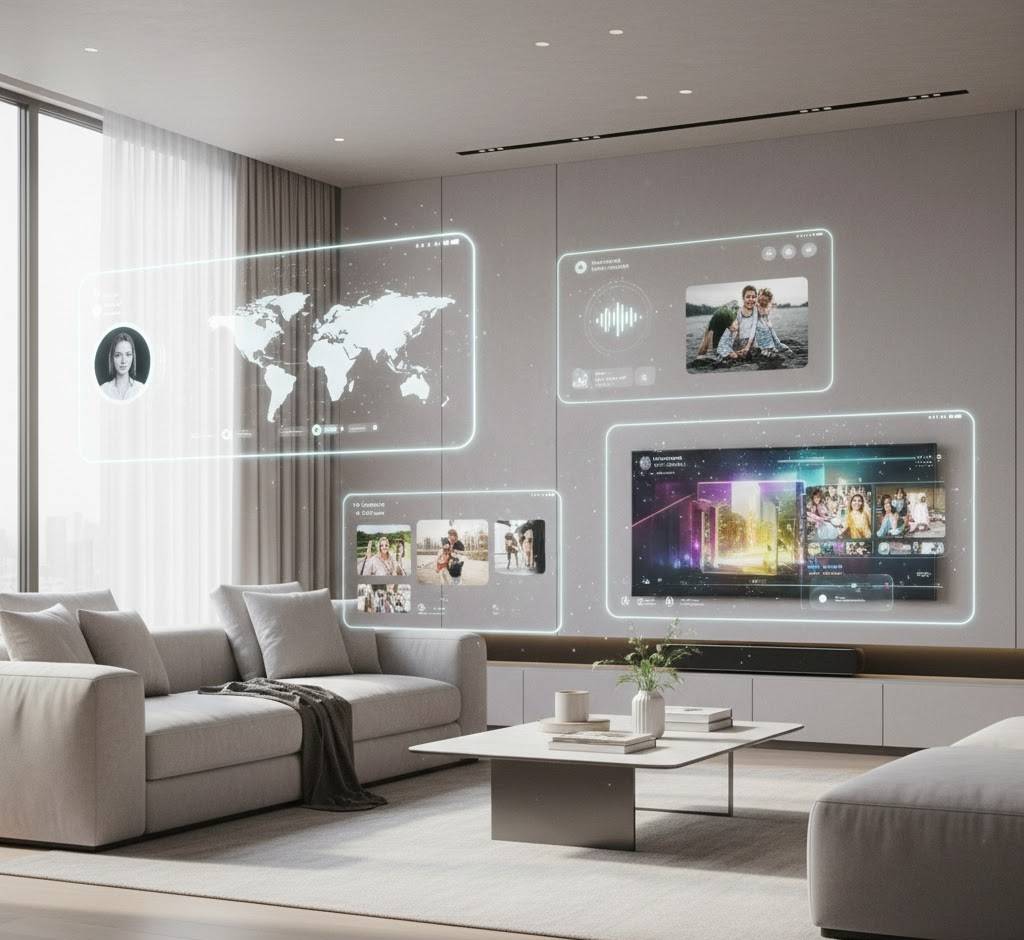
A modern living room where digital AR windows, app icons, and floating screens are integrated naturally into the environment.
Vision Pro: The Heart of the AR Revolution
The Apple Vision Pro is more than a device; it is the engine behind Apple’s AR ecosystem. With eye-tracking, gesture-based navigation, and micro-OLED displays sharper than any screen you’ve used, Vision Pro is designed to make digital content feel physical.
How You Navigate
There’s no controller.
No joystick.
No complex menu.
You simply look at something to select it, tap your fingers to click, and pinch-and-drag in the air to move things. It’s the closest technology has ever come to reading your thoughts.
Micro-OLED Magic
The display packs 23 million pixels—more than a 4K TV for each eye. This gives you stunning clarity for movies, apps, and augmented objects. Suddenly, a digital screen floating in front of you looks as crisp as a real one.
Audio That Feels Real
Vision Pro uses “spatial audio,” which means the sound seems to come from objects in your environment. If a notification pops up to your right, the sound comes from the right. If you’re watching a movie on a virtual screen, the audio surrounds you like a cinema.
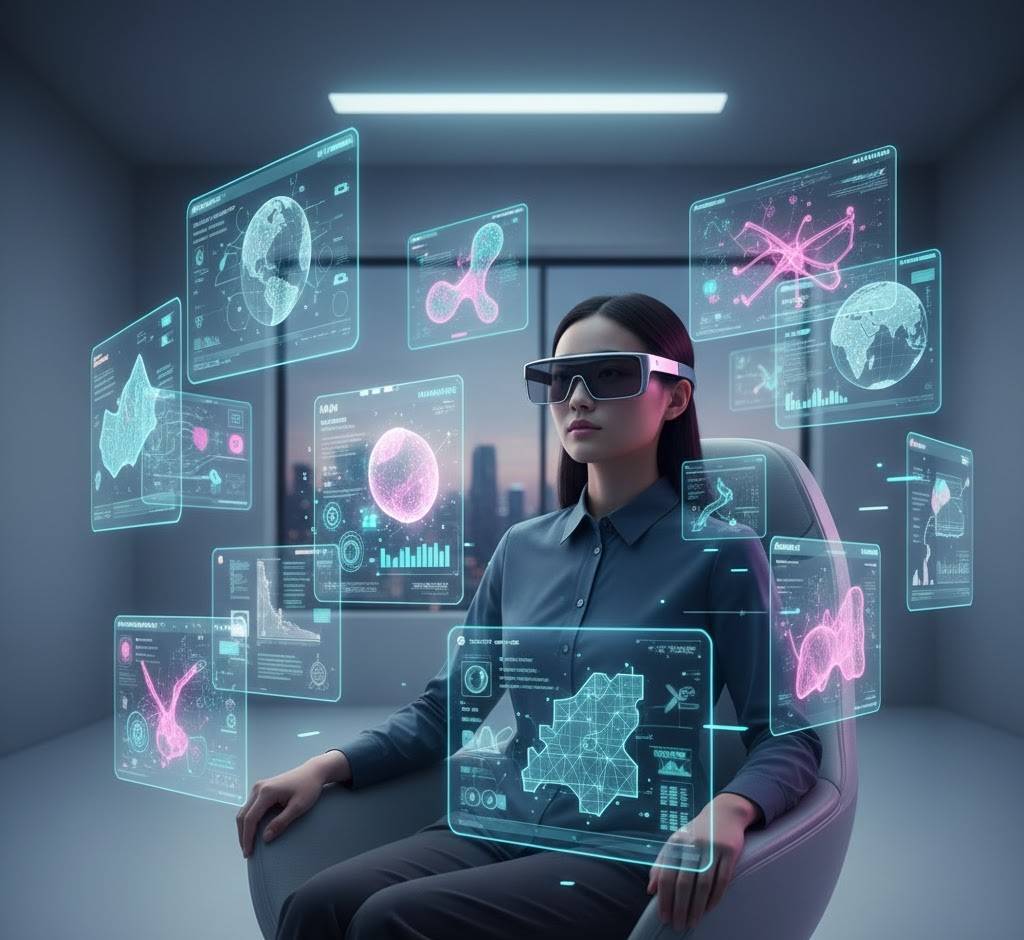
Close-up of a person using Vision Pro with holographic elements floating around them.
Work Reimagined: The Productivity Leap
Forget the limitation of one monitor—or even two. With AR, your workspace becomes limitless.
Unlimited Screens
Imagine sitting at your desk and instantly opening:
- A giant spreadsheet on your left
- A video meeting window floating in front
- Notes and email pinned to your right
- A calendar attached to your wall
All perfectly arranged where you want them.
This isn’t sci-fi. This is what the Vision Pro already does.
Better Than a Laptop?
The Vision Pro can replace your:
- Monitor
- Keyboard (if using virtual typing or voice input)
- Video conferencing screen
- Productivity apps
- Presentation tools
And thanks to its integration with macOS and iPadOS, you can “bring in” your Mac screen as a massive, crystal-clear floating display.
Natural Multitasking
Because AR puts apps around you spatially, multitasking becomes intuitive. Your brain remembers spatial positions better than folders or tabs, making your workflow faster and more natural.
A floating multi-screen digital workspace projected around a desk.

Entertainment Like Never Before
Apple’s AR revolution isn’t just about work—it’s transforming entertainment into an experience that feels cinematic, immersive, and personal.
A Private Theater Anywhere
You can turn any room into a private cinema:
- A floating massive screen
- Crisp 4K HDR content
- Surround sound that fills your space
- Environment filters that dim lights and enhance the mood
You may never want to watch movies on a TV again.
Gaming Enters a New Era
Games can transform your room into a digital playground:
- Creatures hiding behind real furniture
- Puzzles built into your walls
- Virtual objects interacting with physical ones
This is the next frontier where gaming feels alive around you.
Immersive Video
Apple is also pushing “Spatial Videos” and “Spatial Photos,” which use depth to make memories look real. Watching a birthday party or vacation footage in spatial format feels like stepping inside your memories.
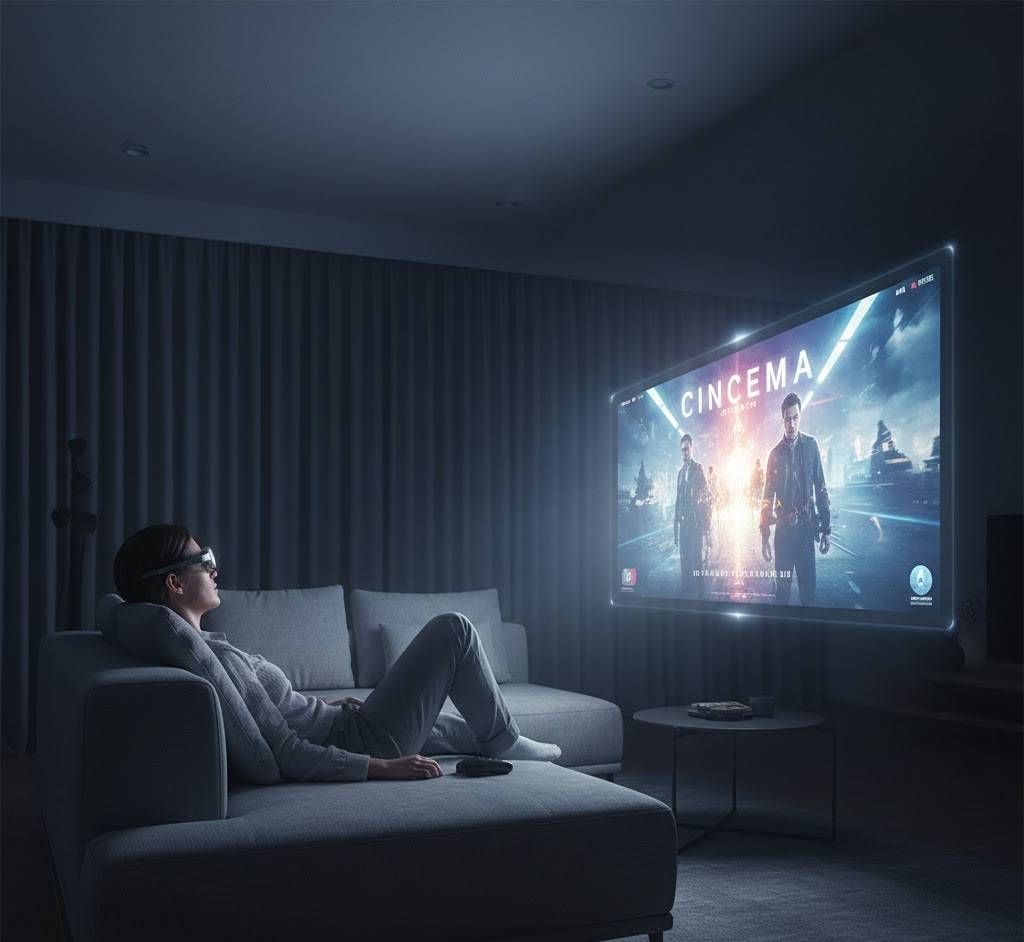
User watching a giant virtual movie screen in a cozy room.
Communication Becomes More Human
Apple is rethinking how people connect.
FaceTime in AR
FaceTime calls now create life-size, floating windows of people around your room. Multiple participants appear naturally spaced, turning video calls into something that feels more like real conversation.
Spatial Personas
Apple also introduced “Personas”—a digital representation of your face made using Vision Pro. It allows others to see your facial expressions, eye movements, and gestures during calls. The result is more natural communication, even across distances.
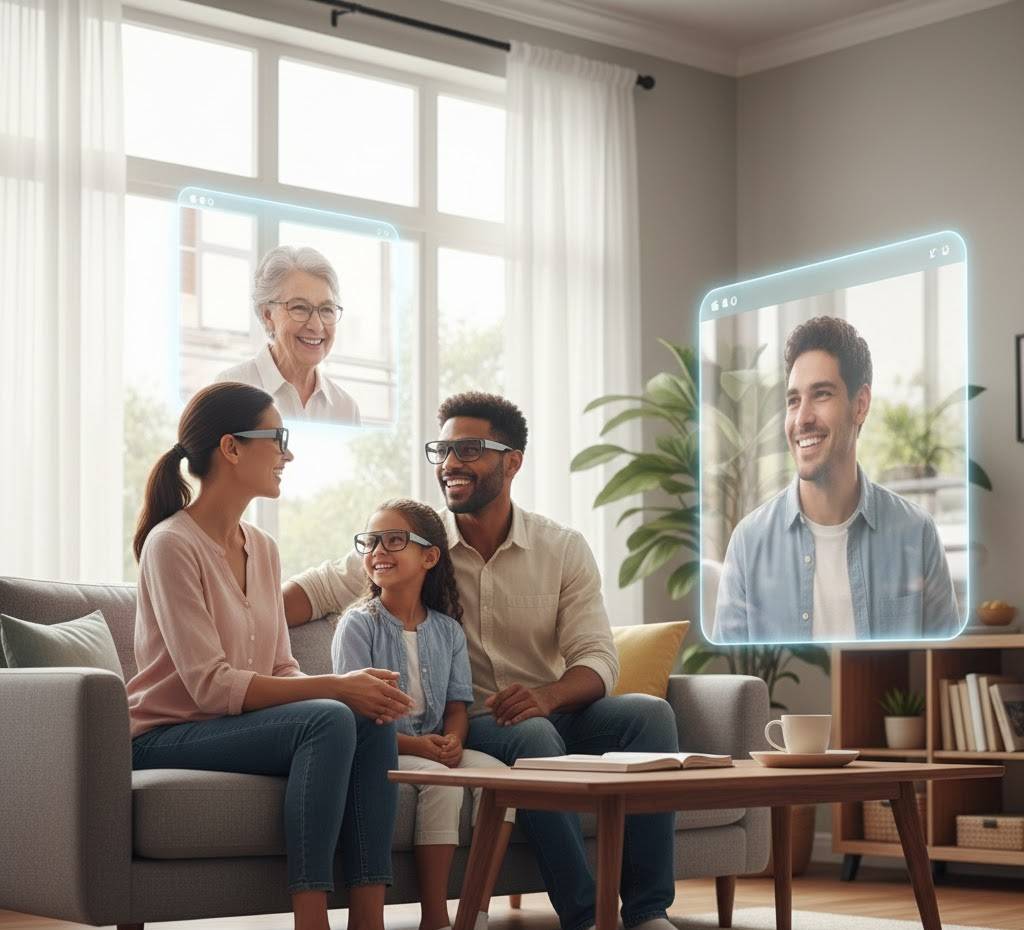
Floating FaceTime windows arranged naturally in a room.
Learning and Creativity Unlocked
One of the most powerful impacts of AR is its ability to make learning more interactive and creativity more intuitive.
Learning Comes Alive
Imagine:
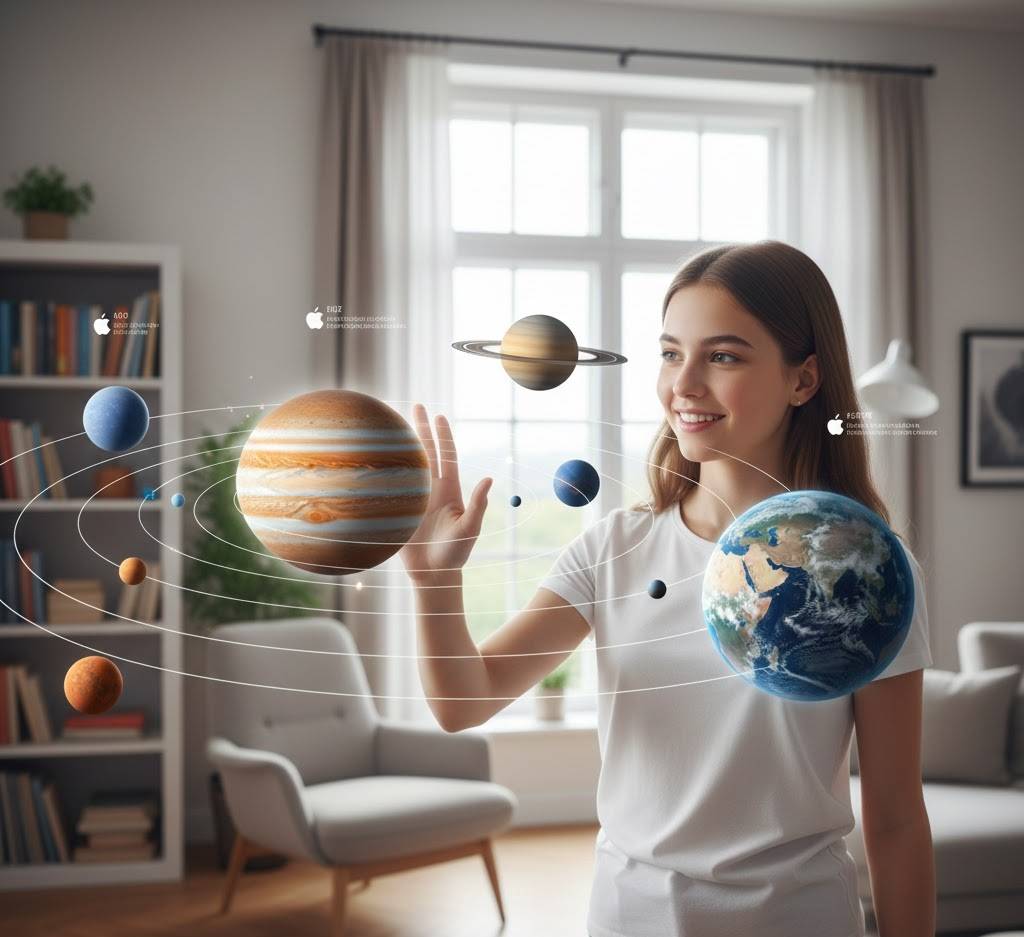
- Exploring the solar system by walking around planets in your living room
- Seeing 3D anatomy models floating in front of you
- Learning architecture by placing virtual buildings right on your desk
- Studying history through immersive reconstructed environments
AR isn’t just visual—it’s experiential.
A New Creative Canvas
Artists, designers, architects, and filmmakers now have an infinite canvas:
- Draw in 3D space
- Edit videos on floating giant screens
- Sculpt virtual objects
- Test product designs in real scale
Creatives no longer think in two dimensions. Apple’s tools help them bring ideas into life-size reality.
A student examining a floating solar system model in AR.
AR in Everyday Life: Practical Uses You’ll Actually Use
Apple’s AR isn’t only for professionals or tech lovers—it’s becoming part of daily routines.
Navigation
Your iPhone already uses AR for walking directions, placing arrows on the real street to guide you. Vision Pro takes this to a new level, projecting directions into your field of view.
Home Design
Apps let you:
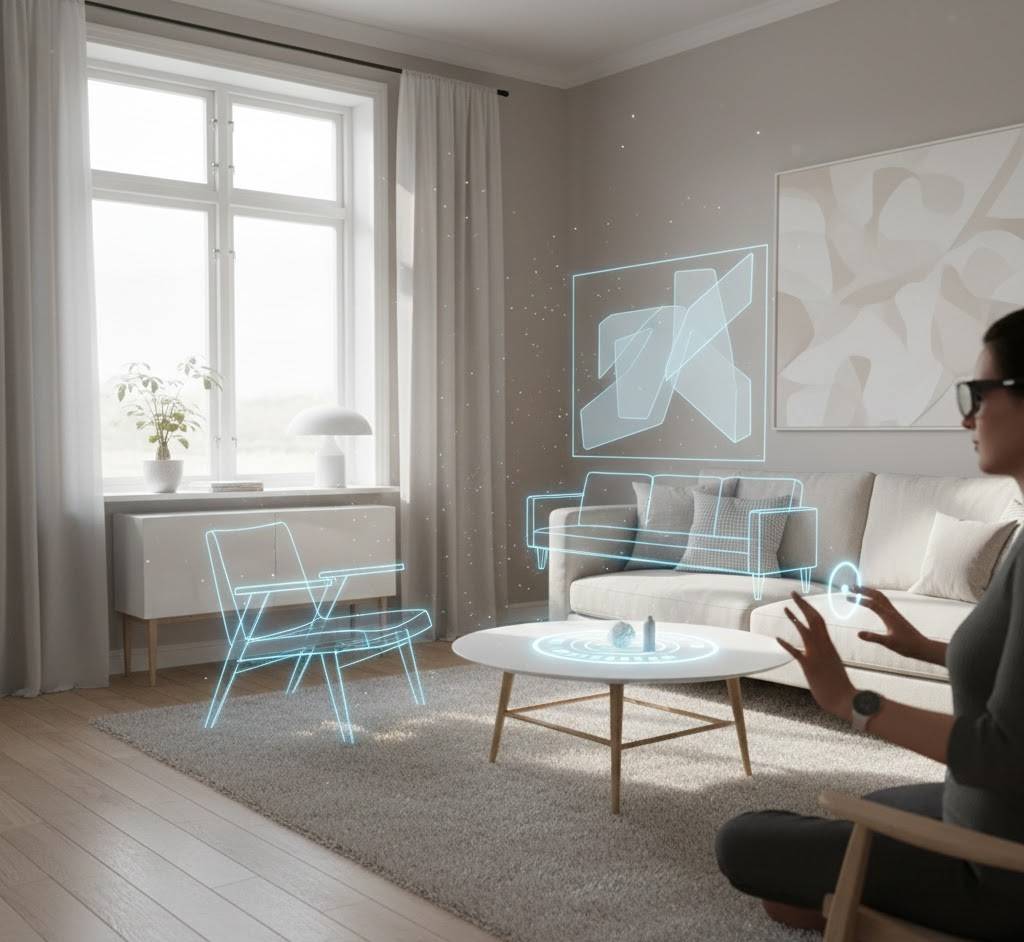
- Place virtual furniture
- Preview wall colors
- Visualize room layouts
This takes the guesswork out of home decoration.
Shopping
Apple is enabling AR shopping experiences where you can:
- Try virtual clothing
- View electronics on your desk
- Preview cars in your driveway
No more imagining—now you see it before you buy.
Fitness and Health
AR workouts project trainers and real-time guidance right into your environment, making exercise fun and interactive.
AR furniture placement in a modern home interior.
The Future of AR with Apple
The journey is just beginning. Apple’s long-term goal is clear: to make AR a natural part of everyday life, just like smartphones are today.
What Could Come Next?
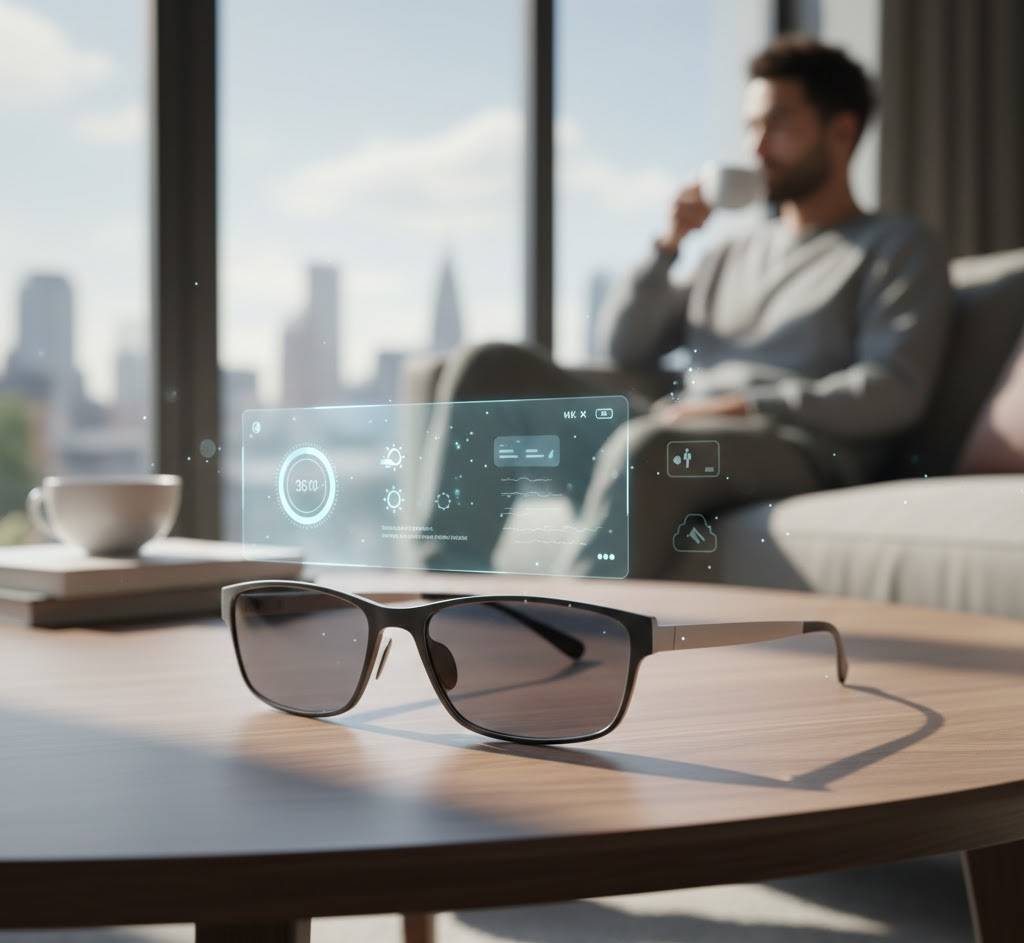
- Lightweight AR glasses for daily wear
- A fully spatial version of iOS
- AR-native apps replacing traditional 2D apps
- Immersive multi-user AR environments
- Blended physical-digital collaboration
In the near future, you might wake up, put on Apple’s AR glasses, and see your schedule floating above the breakfast table, notifications pinned to your wall, and your messages overlaying your surroundings. This isn’t far away—it’s the path Apple is already paving.
Futuristic AR glasses concept showing soft holographic overlays in daily life.
Conclusion: Your Next Reality Starts Now
Apple’s AR revolution is not just a technological upgrade—it’s a lifestyle shift. It’s a new way to interact with information, people, entertainment, and creativity. Vision Pro may be the first step, but the foundation Apple is building will shape the next decade of digital life.
Your next reality is approaching fast.
And it’s more immersive, more natural, and more empowering than anything we’ve seen before.
Welcome to the future—welcome to Apple’s AR revolution.