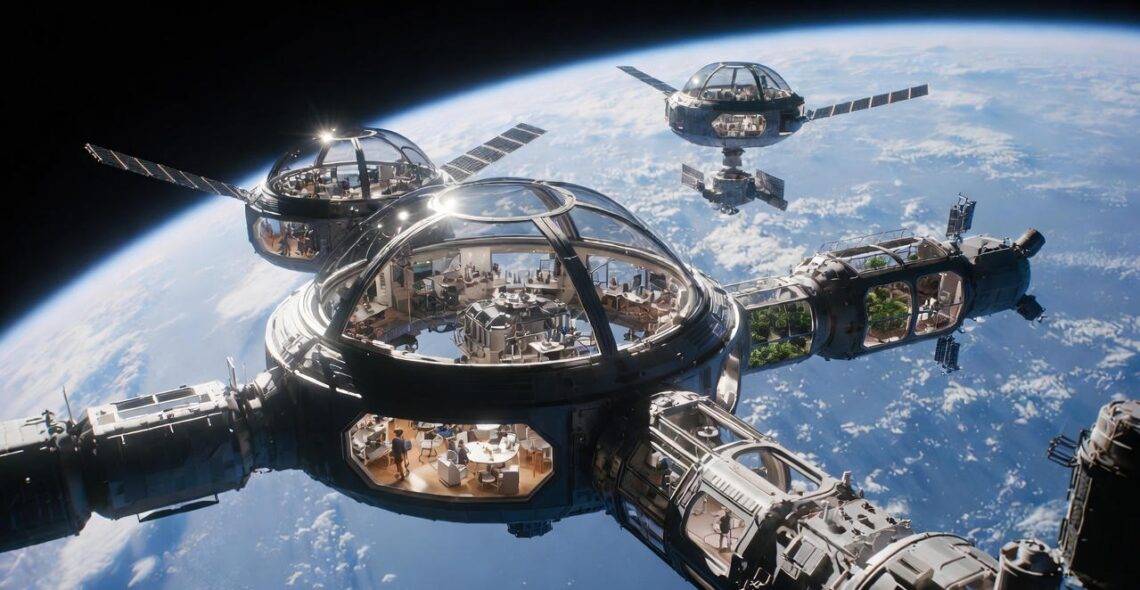
The International Space Station, humanity’s orbital outpost for over two decades, is aging. Its retirement looms. But rather than mourning an ending, we’re witnessing a beginning—the dawn of next-generation space stations that will make the ISS look like a prototype.
Tomorrow’s orbital homes won’t be cramped laboratories where astronauts endure months of discomfort. They’ll be rotating habitats with artificial gravity, commercial hotels with Earth views from every room, manufacturing facilities producing materials impossible on our planet, and permanent communities where people truly live—not just survive—in space.
Welcome to the future of orbital living, where space stations evolve from scientific outposts into humanity’s first off-world homes.
The Rotation Revolution: Artificial Gravity
The ISS’s greatest limitation: Zero gravity causes muscle atrophy, bone density loss, vision problems, and cardiovascular issues. Astronauts exercise two hours daily just fighting deterioration.
The solution: Rotation.
Next-generation stations feature massive rotating rings—400 meters in diameter, spinning at 2 RPM, creating centrifugal force mimicking Earth’s gravity at the rim.
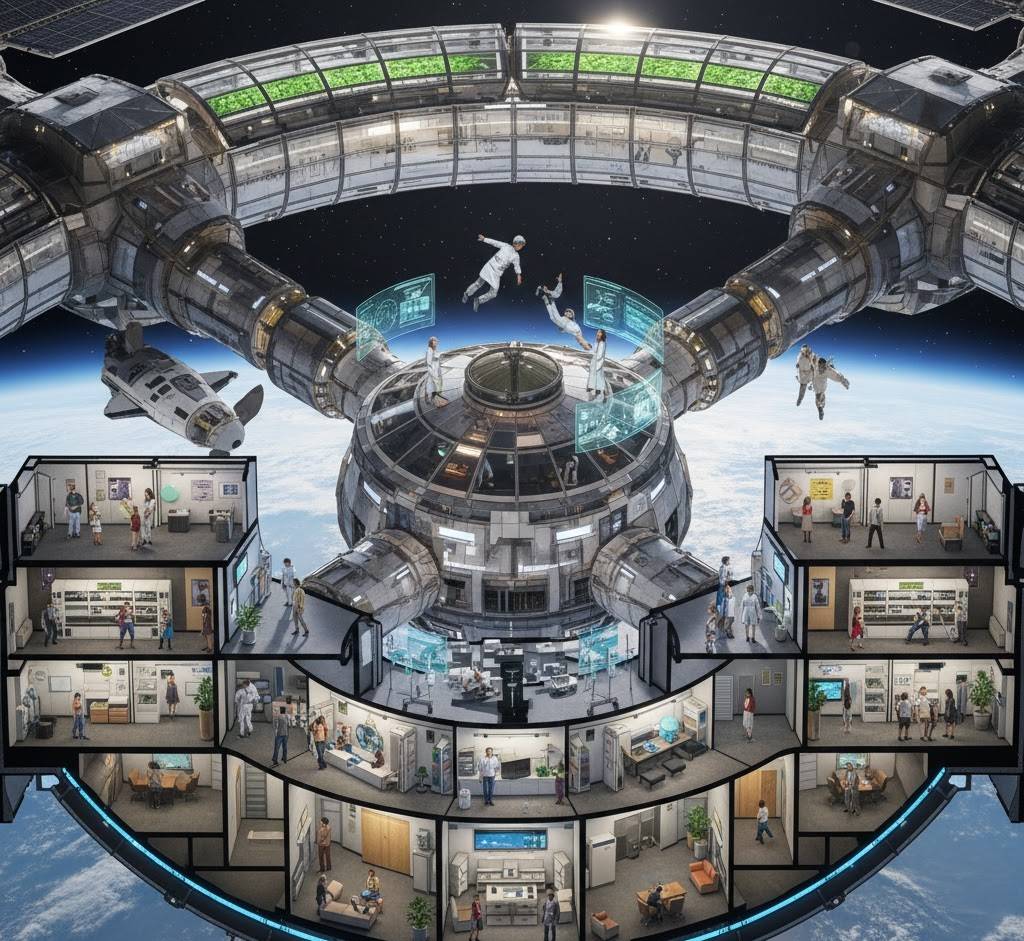
Living in the ring: Residents experience normal gravity—walk, sit, sleep, shower naturally. Coffee pours predictably. Exercise maintains health rather than fighting decay. The human body functions normally.
The transitional zones: Elevator corridors along spokes allow travel from ring (gravity) to hub (zero-G) in minutes, enabling both normal living and microgravity research.
Who’s building them: Axiom Space, Blue Origin’s Orbital Reef, and NASA’s Gateway station all incorporate rotating elements in designs.
Modular Architecture: The Station That Grows
Unlike the ISS (largely complete), next-generation stations are designed for continuous expansion.
Standardized docking ports allow new modules to attach seamlessly:
- Need more residential space? Launch and dock a habitat module
- Expanding manufacturing? Attach an industrial section
- Research programs growing? Add laboratory modules
- Tourism booming? Connect hotel modules
Plug-and-play infrastructure: Power, data, life support, and thermal management connections standardize across modules from different manufacturers—like USB ports for spacecraft sections.
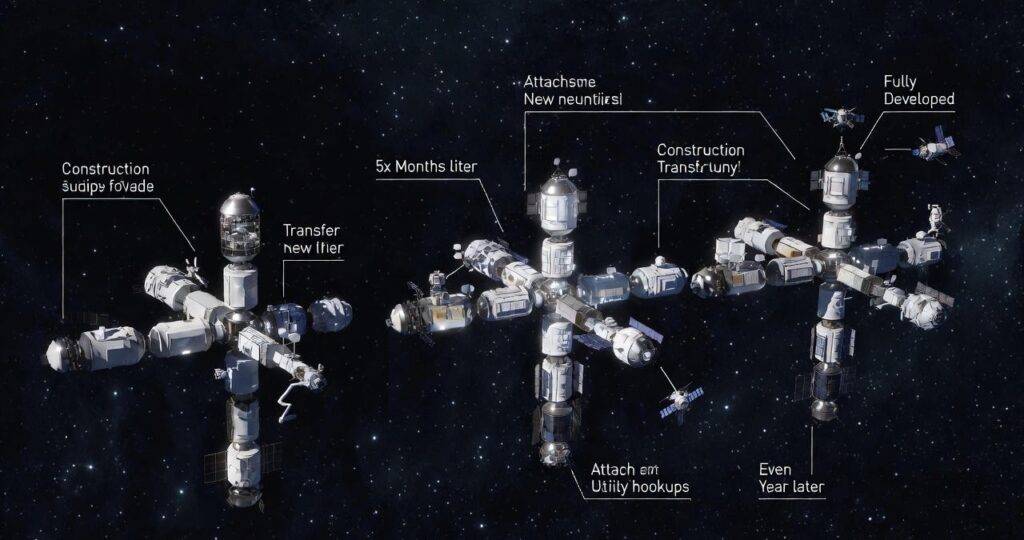
Result: Stations evolve with needs rather than becoming obsolete. Damaged sections detach and replace. Technology updates continuously. International cooperation flourishes as nations contribute modules.
The Commercial Space Hotel
Space tourism isn’t future fantasy—it’s emerging industry.
Orbital Reef (Blue Origin/Sierra Space partnership) plans 830 cubic meters of living space accommodating 10 guests paying $500,000+ per week.
Features:
- Private sleeping quarters with enormous windows
- Observation lounges with 360-degree Earth views
- Fine dining (yes, real meals, not tubes)
- Zero-gravity recreation areas
- Fitness facilities with Earth-normal gravity gym
- Spacewalk experiences for adventurous guests
The business model: Ultra-wealthy tourists funding infrastructure that benefits scientific research and commercial activity.
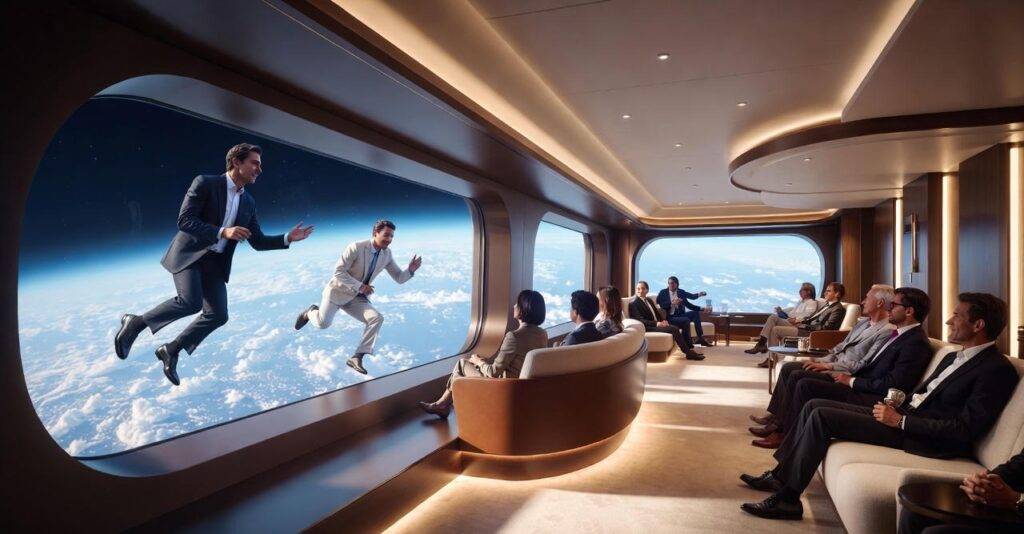
Timeline: First commercial guests by 2027-2029.
Manufacturing in Microgravity
Space stations aren’t just habitats—they’re factories producing materials impossible on Earth.
What’s being manufactured:
Perfect optical fibers: Gravity causes imperfections in Earth-made fiber. Space-manufactured fibers are flawless, transmitting data with minimal loss—revolutionizing telecommunications.
ZBLAN fiber (exotic fluoride glass) produces 100x less signal loss than Earth-made equivalents. Worth $500,000+ per kilogram.
Perfect crystals: Protein crystals for drug development grow larger and more perfect in microgravity, accelerating pharmaceutical research.
Exotic alloys: Metals that separate based on density on Earth mix perfectly in space, creating materials with properties impossible terrestrially.
Bioprinted organs: Tissue engineering works better in zero-G where cells organize three-dimensionally without gravitational distortion.
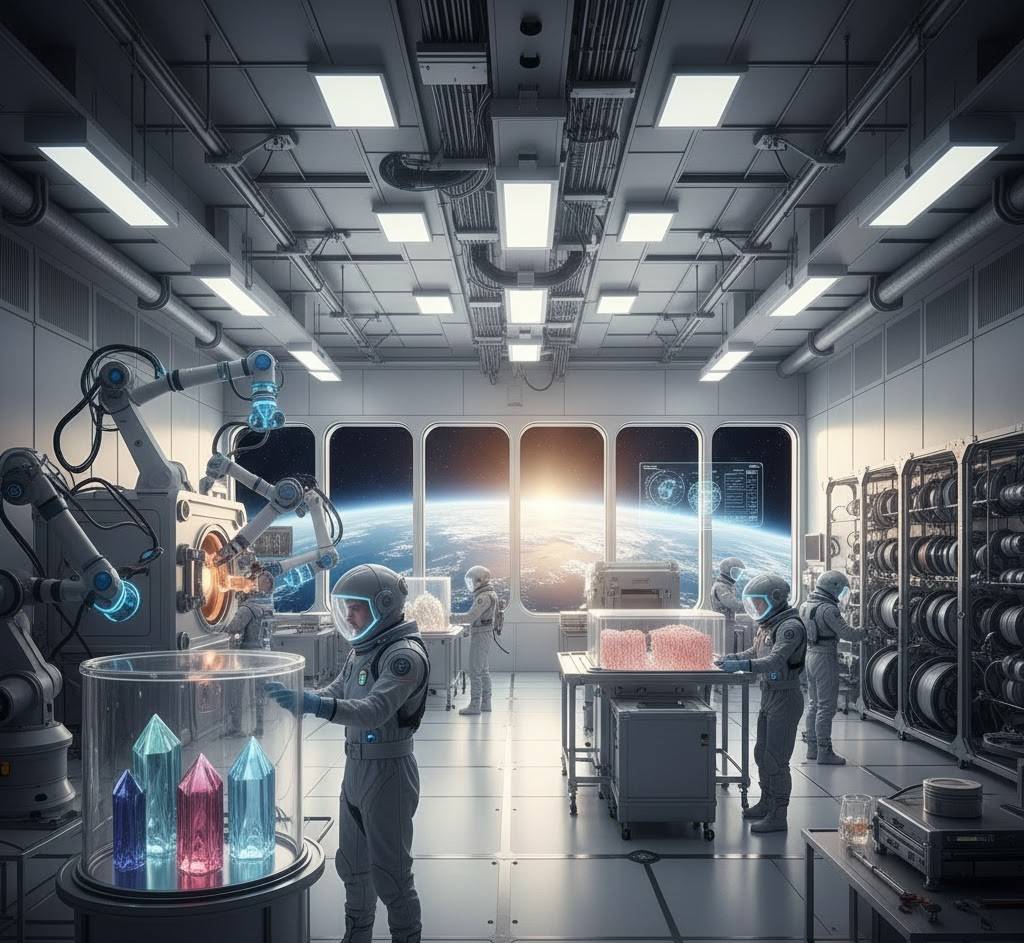
The economic case: Manufacturing revenue makes stations financially sustainable beyond government funding.
Life Support: Closing the Loop
The ISS depends heavily on Earth resupply—water, oxygen, food shipped at enormous expense.
Next-generation stations achieve 95%+ self-sufficiency:
Water recycling: Every drop—from showers, breathing, sweat—is captured, purified, and reused. Advanced systems produce water cleaner than Earth tap water.
Oxygen generation: Electrolysis splits recycled water into hydrogen and oxygen. Oxygen for breathing, hydrogen for propulsion or vented.
Food production: Hydroponic gardens growing fresh vegetables supplement packaged supplies. Imagine eating salad harvested 30 minutes ago, 400 kilometers above Earth.
Algae bioreactors: Producing oxygen through photosynthesis while absorbing CO2 and providing edible biomass.
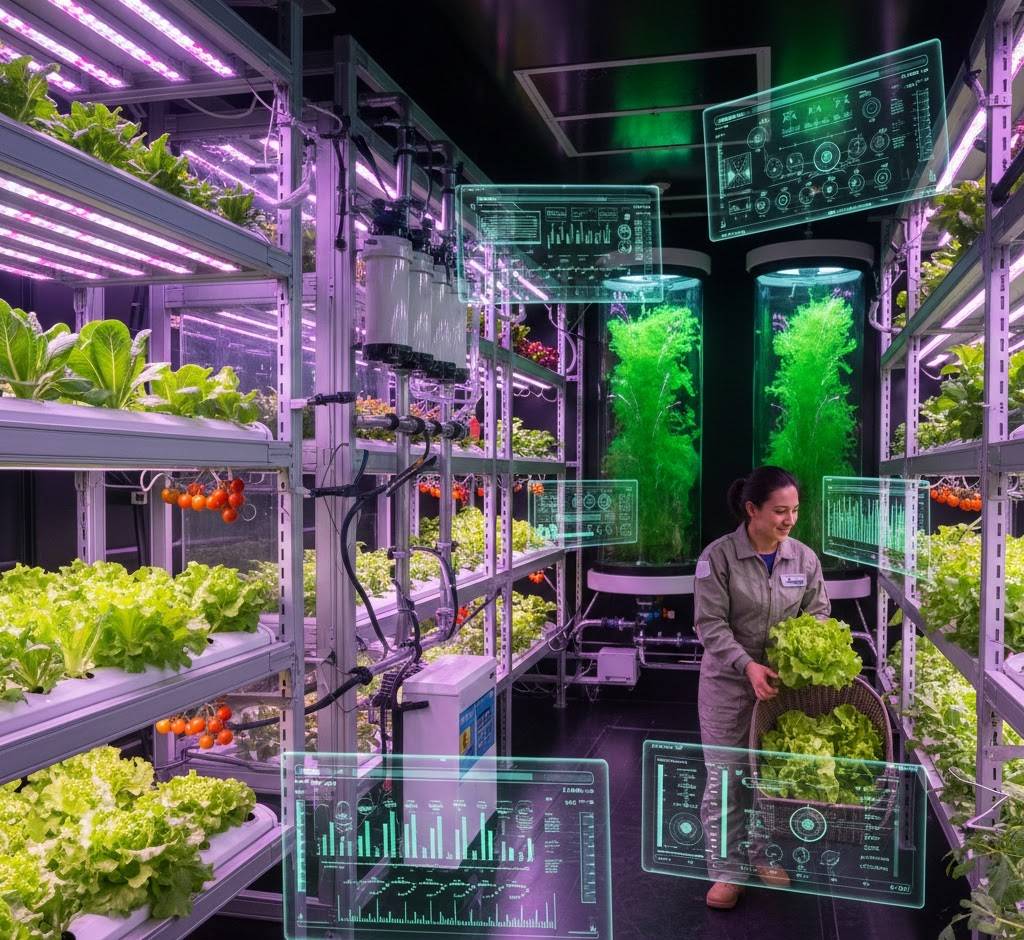
Goal: Resupply missions carrying manufactured goods and specialized equipment rather than basic consumables.
The Observation Experience
The most beloved feature of any space station: Windows.
The ISS’s Cupola—a small windowed module—is astronauts’ favorite spot despite being cramped.
Next-generation stations feature:
Dedicated observation decks 10+ meters in diameter where dozens gather to watch Earth rotate below.
Sleeping quarters with personal windows—imagine drifting to sleep watching auroras dance or city lights twinkle below.
Restaurant modules where dining comes with views changing every 90 minutes—sunrise to sunset to sunrise again as you orbit.
Spacewalk viewing galleries where guests watch astronauts working outside from climate-controlled comfort.
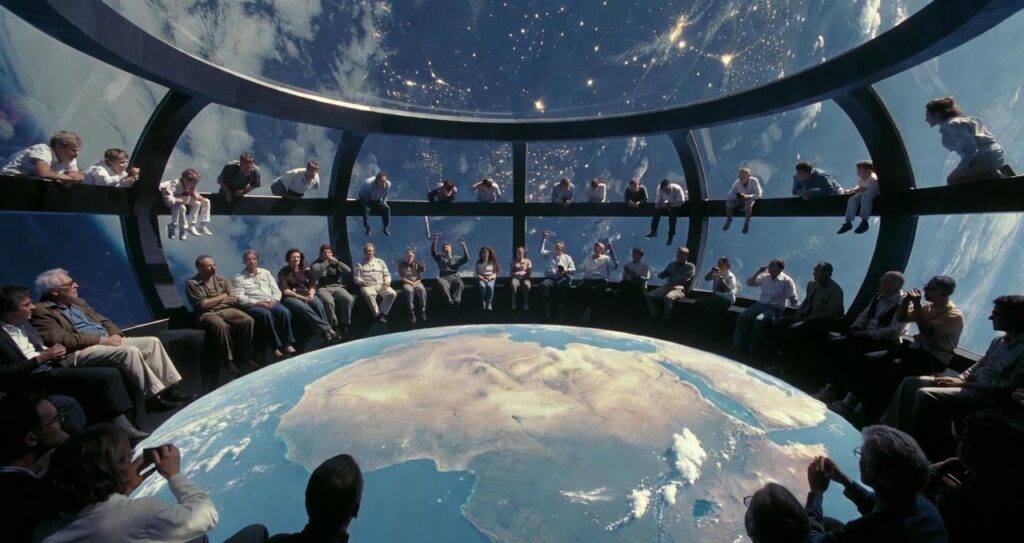
The Overview Effect democratized—thousands experiencing the cognitive shift astronauts report from seeing Earth as fragile blue marble in the void.
Safety Systems: Redundancy Everywhere
Space is unforgiving. Advanced stations incorporate multiple protective layers:
Micrometeorite shielding: Advanced Whipple shields with multiple layers dissipate impacts from space debris.
Compartmentalization: Breach in one section? Automatic bulkheads seal it off immediately, preserving the rest of the station.
Escape vehicles: Sufficient capacity for every occupant to evacuate within minutes—capsules remaining docked permanently for emergencies.
Repair robots: Autonomous drones patrolling exterior, detecting and repairing minor damage before it becomes critical.
Redundant life support: Multiple independent systems—if one fails, backups activate automatically.
Medical facilities: Complete surgical capability, telemedicine links to Earth specialists, pharmaceutical production.
The International Gateway: Hub of Activity
Advanced stations serve as orbital hubs for:
- Crew transfers from Earth
- Cargo resupply missions
- Tourist craft from competing companies
- Satellite servicing missions
- Assembly point for interplanetary vessels heading to Moon or Mars
- Scientific spacecraft launching to deep space
Multiple simultaneous docking: Dedicated ports for different vehicle classes, coordinated by AI traffic management.
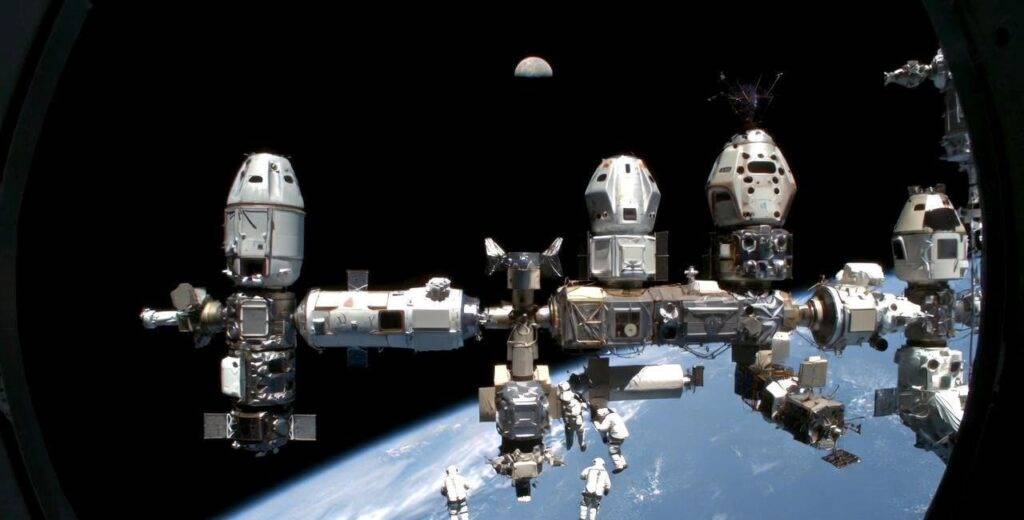
The vision: Space stations becoming to orbital infrastructure what airports are to global travel—essential nodes in expanding space economy.
The Population Question
How many people can live in orbit?
Current: ISS hosts 7 at most, usually 3-6.
Near-term (2028-2032): Commercial stations hosting 10-20 residents plus rotating guests.
Mid-term (2035-2040): Large stations with 50-100 permanent residents—scientists, technicians, hospitality workers, teachers, medical staff, families.
Long-term (2045+): Multiple competing stations, each hosting 200-500 people. Total orbital population exceeding 2,000.
The tipping point: When children are born and raised in orbital communities, humanity becomes genuinely multi-world species.
The Cost Reality
These stations aren’t cheap.
Estimated costs: $50-100 billion to construct and deploy complete next-generation station.
Funding sources:
- Government partnerships (NASA, ESA, JAXA, others sharing costs)
- Commercial operators (Blue Origin, Axiom, SpaceX) building for profit
- Tourism revenue ($500K-$1M per guest)
- Manufacturing income (premium orbital products)
- Research contracts (pharmaceutical, materials science)
- Media and entertainment (unique filming locations)
Break-even: 15-20 years with robust commercial utilization—long timeline but transformative infrastructure.
Living There: The Human Experience
What’s daily life like?
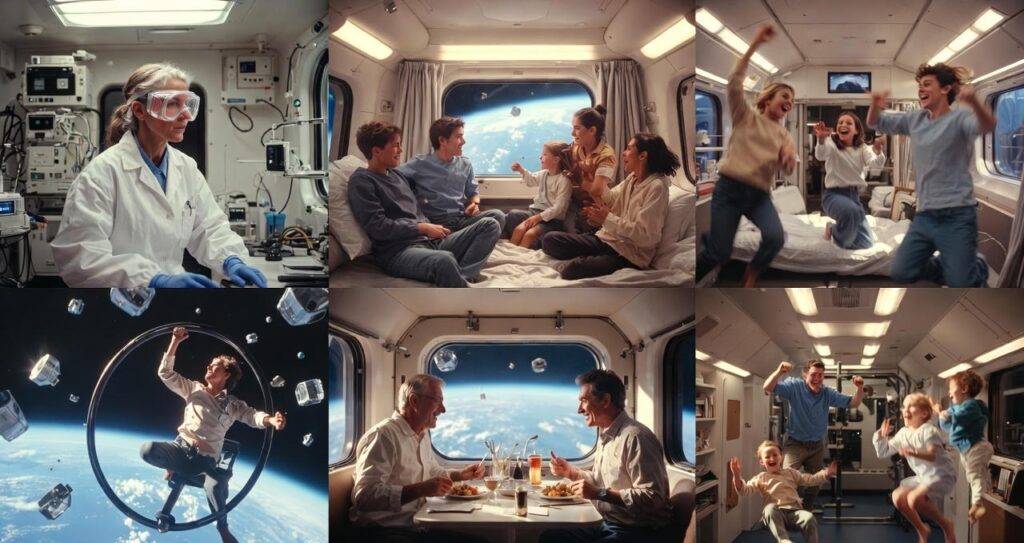
Morning: Wake in personal quarters with Earth-view window. Shower in water that actually falls (gravity ring). Breakfast from station-grown produce.
Work: Research in microgravity hub, or manufacturing in industrial module, or customer service for tourist section—diverse jobs supporting station operations.
Lunch: Communal dining with Earth rotating past windows. Fresh food, not just packaged meals.
Recreation: Gym with Earth-normal gravity, or zero-G sports in hub, or simply floating in observation dome watching planet below.
Evening: Community movie night, or video call with Earth family, or quiet reading while aurora australis dances below.
The adaptation: Most residents report initial disorientation giving way to wonder, then eventually normalcy—space becoming home.
The Timeline to Reality
2026-2027: Axiom commercial modules attach to ISS, testing technologies.
2027-2029: First independent commercial stations launch with basic capabilities.
2030-2035: Rotating habitats with artificial gravity become operational, marking true breakthrough in long-term space living.
2035-2040: Multiple competing stations, robust tourism, significant manufacturing, permanent populations exceeding 100.
2040-2050: Stations as construction yards for interplanetary vessels, departure points for Mars missions, established orbital civilization.
The Cultural Shift
Space stations transform from scientific outposts to human habitats—changing not just where we live but how we see ourselves.
Orbital residents develop new identity: Not quite Earth-bound, not quite spacefaring. The first generation born in orbit will have perspectives alien to terrestrial humans—literally looking down on the planet that’s “home” in abstract sense only.
The art, music, literature created in orbit will reflect unique experiences—sunrise every 90 minutes, Earth as ceiling, three-dimensional living, isolation mixed with unprecedented views.
Why It Matters
Space stations aren’t just engineering projects—they’re insurance policies.
Humanity survives because we’re adaptable and spread out. Every civilization confined to one planet risks extinction from single catastrophic event.
Orbital habitats are first step toward genuine multi-world species—testing technologies, developing expertise, building infrastructure enabling eventual colonies on Moon, Mars, and beyond.
They’re also economic opportunities: Tourism, manufacturing, research generating trillion-dollar industries while advancing technology benefiting Earth.
And they’re inspiring: Millions watching people living in space, reminding us that impossible is just difficult we haven’t solved yet.
Tomorrow’s orbital homes aren’t just about living in space—they’re about humanity growing up, leaving the cradle, and embracing our destiny among the stars.