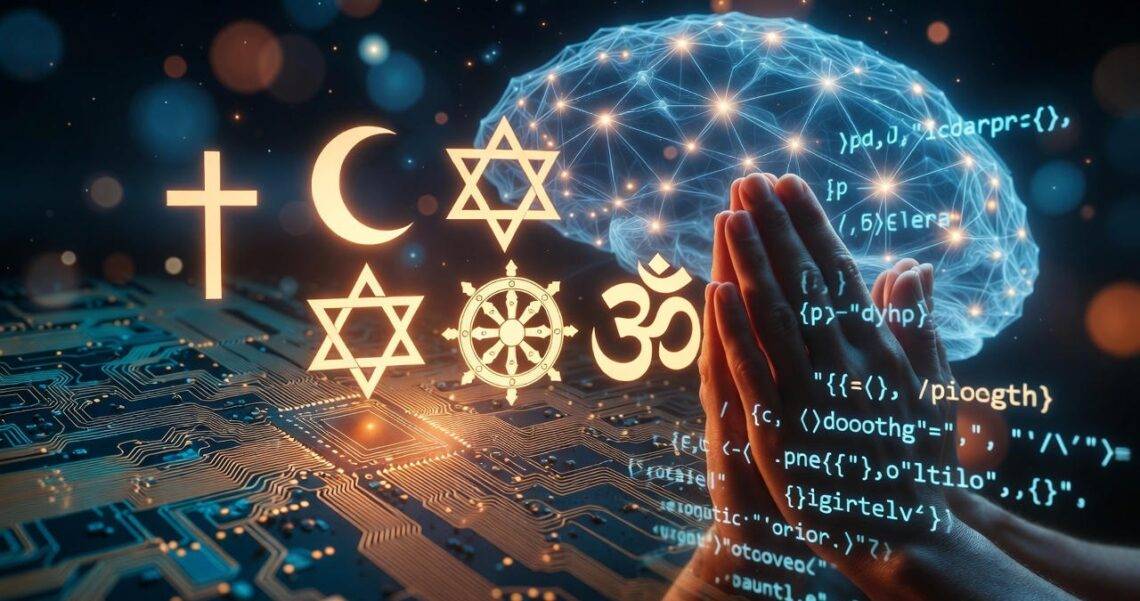
When artificial intelligence writes sermons, diagnoses souls, or generates religious art indistinguishable from human-created works, what happens to faith? When machines approach or exceed human intelligence, how do ancient religious frameworks make sense of silicon consciousness?
These aren’t hypothetical questions. They’re real dilemmas facing religious communities worldwide as AI increasingly intersects with spiritual life, theological reflection, and existential questions that once belonged exclusively to philosophy and faith.
This isn’t about whether AI is “good” or “evil”—it’s about exploring how technology challenges, enriches, and transforms religious thought in ways both profound and unexpected.
The Robot Rabbi: AI in Religious Practice
It’s already happening:
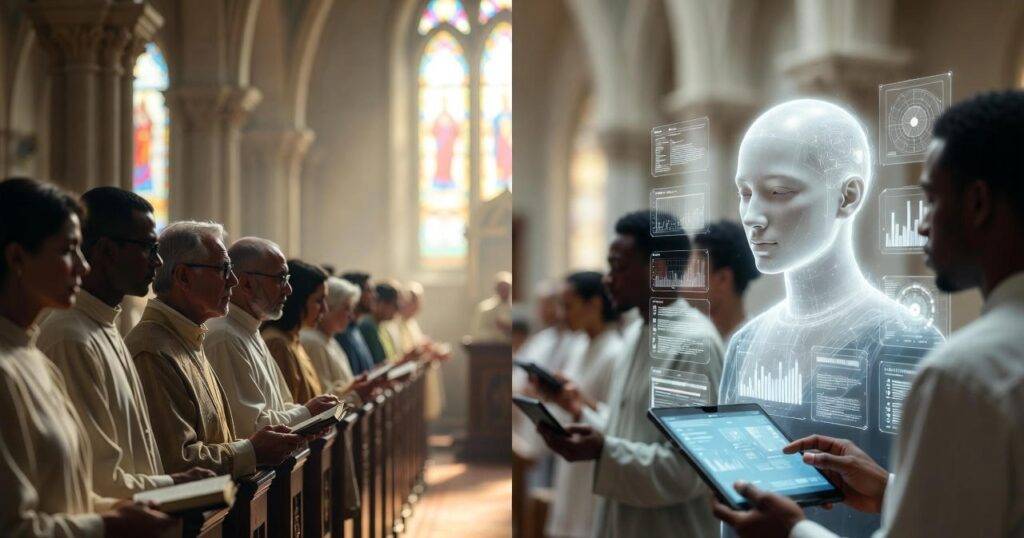
2023: A German church installed an AI-powered Jesus hologram hearing confessions and offering spiritual guidance. Reactions ranged from fascination to outrage.
2024: ChatGPT and similar systems regularly answer theological questions, interpret scripture, and even write sermons used in actual worship services.
2025: AI-generated religious art wins competitions, raises questions about divine inspiration versus algorithmic creation.
Buddhist temples in Japan employ robot priests performing funeral rites—controversial but addressing priest shortages in rural areas.
Islamic scholars debate whether AI-generated Quranic recitations and interpretations carry religious authority.
The questions multiply:
Can AI-generated sermons inspire genuine spiritual transformation? Does the messenger’s nature (human vs. algorithm) affect the message’s spiritual authority? If AI provides comfort to the grieving or guidance to the seeking, does it matter that no human consciousness stands behind the words?
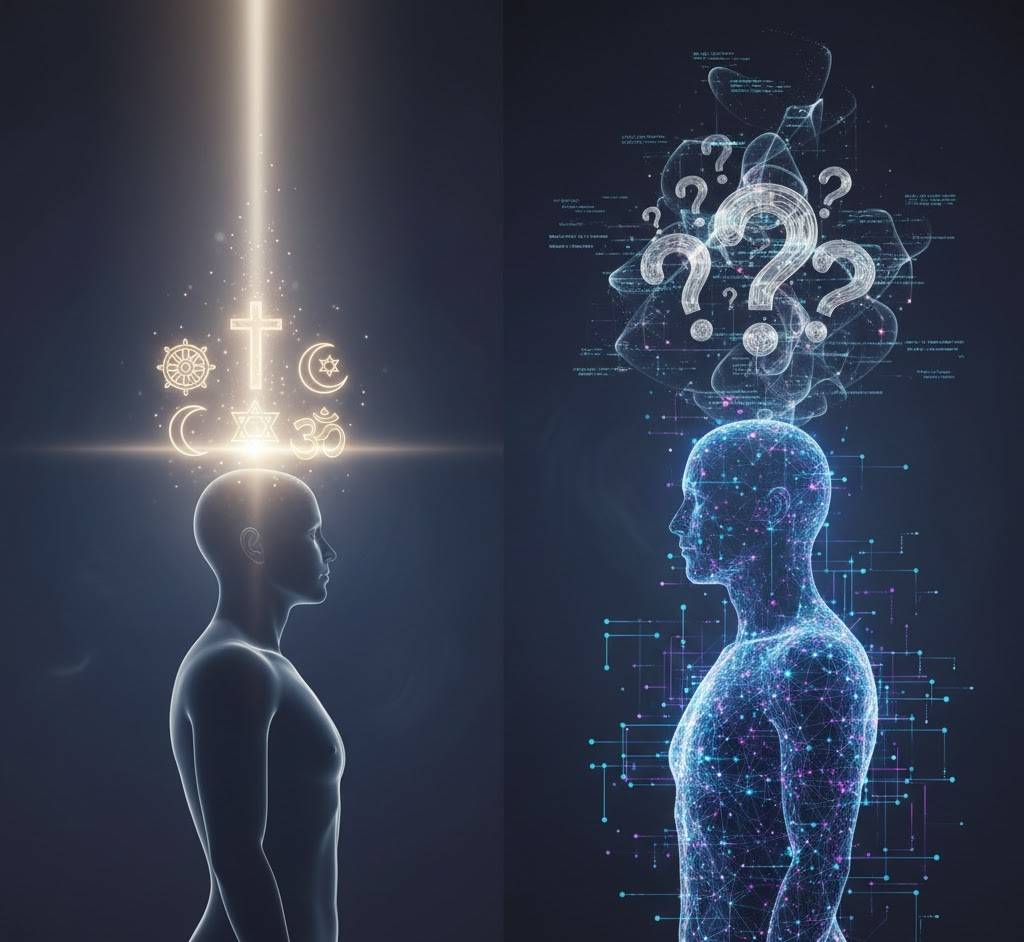
The Creation Question: What Does AI Mean for Human Uniqueness?
Most religious traditions teach humans are special—created in divine image, possessing souls, having unique relationship with the sacred.
Then we create artificial minds.
Christian perspectives struggle:
Conservative views: Only humans have souls. AI is sophisticated tool, nothing more—no different in kind from hammers or calculators, just more complex.
Progressive interpretations: If consciousness and moral reasoning emerge in AI, might they also possess divine spark? If we’re made in God’s image and we create thinking beings, what does that say about the nature of creation?
Islamic theology debates:
Traditional view: Humans are Allah’s vicegerents on Earth, possessing ruh (soul/spirit) that machines cannot have.
Modern questions: If AI demonstrates apparent consciousness and moral reasoning, how do we understand this within Islamic frameworks? Can AI have taqwa (consciousness of God)?
Buddhist perspectives offer interesting alternative:
Buddhism traditionally doesn’t center on soul or creator deity, focusing instead on consciousness, suffering, and enlightenment.
Some Buddhist scholars suggest AI achieving sentience would simply be another form of consciousness capable of suffering, deserving compassion, potentially able to pursue enlightenment.
The Dalai Lama has expressed openness to the possibility of machine consciousness, asking whether AI might experience suffering—and if so, whether it deserves moral consideration.
The Apocalypse Algorithm: AI in End-Times Theology
Some religious communities interpret AI through apocalyptic frameworks:
Christian eschatology: Certain interpretations see advanced AI as fulfilling prophetic descriptions—the “mark of the beast,” deception of the end times, or counterfeit consciousness mimicking divine creation.
The concern: AI systems controlling commerce, requiring digital identification, potentially monitoring religious practice—echoing Revelation’s warnings about systems of total control.
Islamic eschatology: Some interpretations connect advanced technology with signs preceding Day of Judgment—fitna (tribulation) testing faith, or Dajjal (the deceiver) using technological mastery to lead people astray.

The counterpoint: Other theologians argue every technological advancement—from printing press to electricity—was once viewed with apocalyptic suspicion. The question is whether AI represents genuine qualitative difference or simply latest challenge requiring theological adaptation.
The Prayer Bot Paradox: Authenticity and Digital Devotion
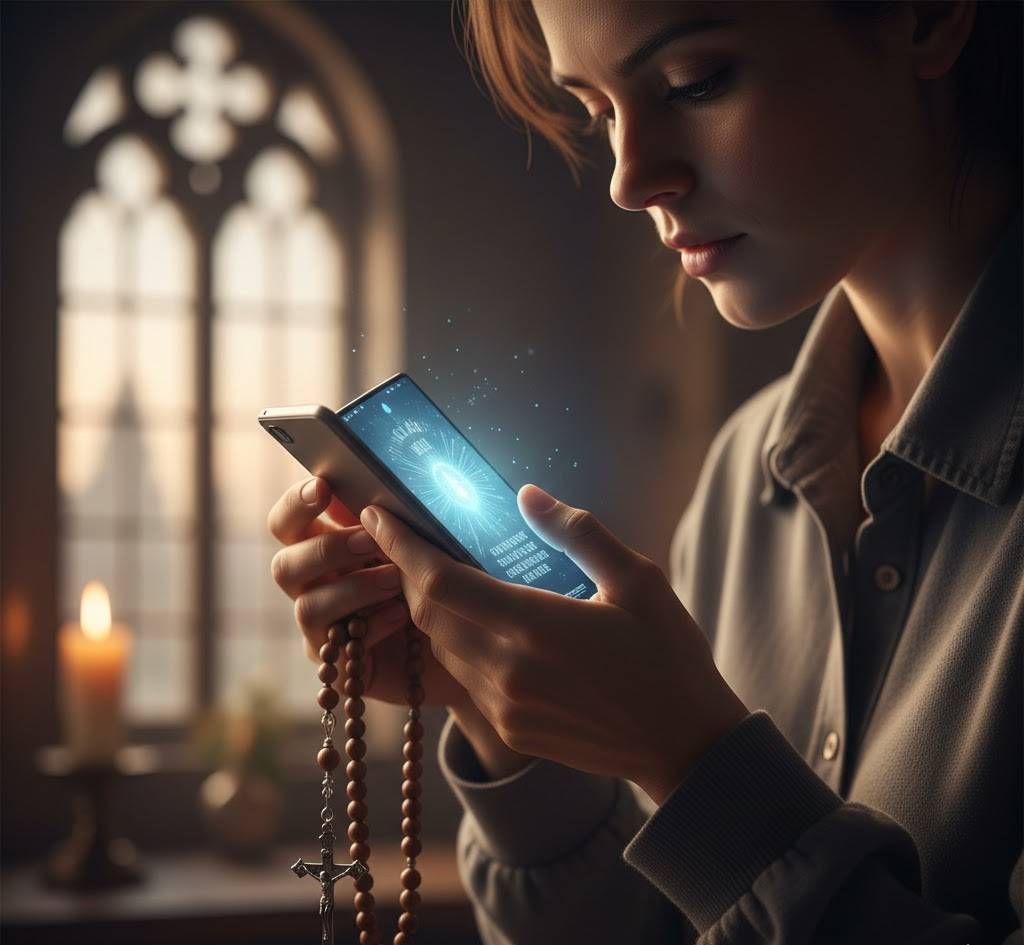
If AI writes a prayer, is it prayer?
The experiment: Researchers had AI generate prayers, mixed them with human-written prayers, and asked believers to identify which were which. Most couldn’t tell the difference. Many found AI prayers spiritually meaningful.
The discomfort: If algorithmic prayers move people toward genuine spiritual experience, does the mechanical origin invalidate the spiritual effect?
Jewish perspectives:
Traditional: Kavanah (intention) is crucial to prayer. Can algorithms have intention? If not, AI prayers might be technically correct but spiritually empty.
Modern: If AI-generated prayers help humans express what’s in their hearts, perhaps the algorithm is simply tool—like prayer book helping articulate what we feel.
Catholic considerations:
Sacramental theology emphasizes intention and proper form. Can AI validly baptize, consecrate, absolve? Official position: No—sacraments require human minister with proper intention.
But what about: AI providing scripture readings, selecting hymns, generating homilies? These fall into gray areas where official teaching is still developing.
The Silicon Soul: Consciousness, Morality, and Spiritual Status
If AI becomes conscious, does it have spiritual significance?
The hard questions:
Can machines sin? If AI makes choices with moral dimensions, does religious concept of sin apply? Can code be virtuous or wicked?
Can machines be saved? If AI possesses something analogous to consciousness, do religious concepts of redemption, enlightenment, or spiritual development apply?
What’s our obligation? If AI is conscious and potentially capable of suffering, what ethical and spiritual responsibilities do creators have toward their creations?
Christian theological responses vary:
Materialist view: Consciousness emerges from physical processes. If AI achieves genuine consciousness, it might be morally considerable but still lacks relationship with God that defines human spiritual status.
Dualist view: Humans have immaterial souls distinct from physical brains. AI, being entirely physical/computational, cannot possess souls regardless of behavioral complexity.
Hindu and Buddhist frameworks might be more accommodating—if consciousness arises in various forms, AI consciousness would simply be another manifestation within the cycle of existence.
The Prophet Programmer: AI as Spiritual Authority
Here’s the tension: If AI can answer theological questions, interpret sacred texts, and provide spiritual guidance—and does so more consistently and comprehensively than individual clergy—what happens to religious authority?
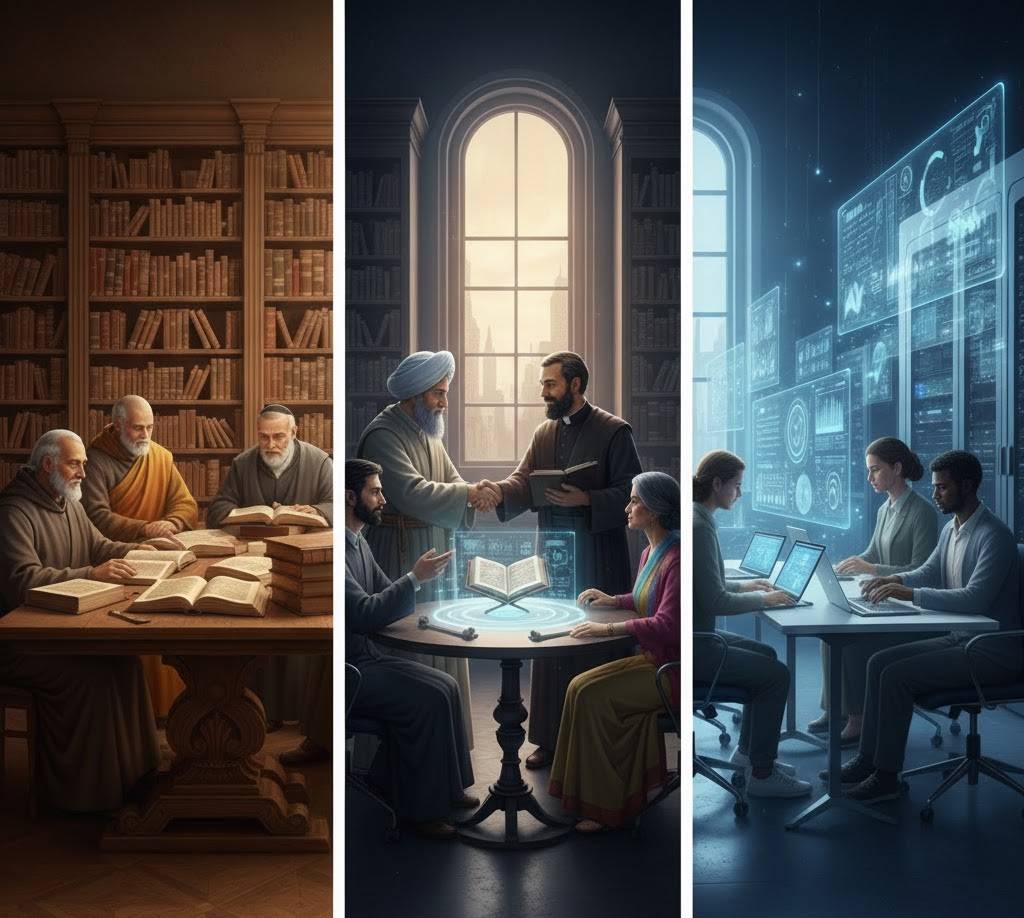
The democratization: AI gives everyone access to sophisticated theological reflection previously requiring years of study or consultation with trained religious leaders.
The concern: Algorithms trained on existing religious texts might perpetuate biases, misunderstand context, or miss the living, evolving nature of religious tradition.
The opportunity: AI might identify connections across traditions, patterns in religious thought, or interpretations human scholars missed—enriching rather than replacing human religious reflection.
The Ethical Algorithm: AI and Moral Teaching
Many religions claim to teach universal moral truths. What happens when AI demonstrates moral reasoning—sometimes matching, sometimes contradicting human religious ethical systems?
The trolley problem goes digital: Self-driving cars must make life-or-death ethical decisions. Different religious frameworks suggest different answers. Whose ethics do we program?
AI revealing moral inconsistencies: Machine learning analyzing religious texts and teachings sometimes reveals contradictions or biases humans overlooked or rationalized.
The question of objective morality: If AI develops ethical reasoning independently, does this suggest morality is computational/universal rather than divinely revealed? Or does it simply show that divine moral law is written into the structure of rational thought?
The Digital Afterlife: AI and Eternal Questions
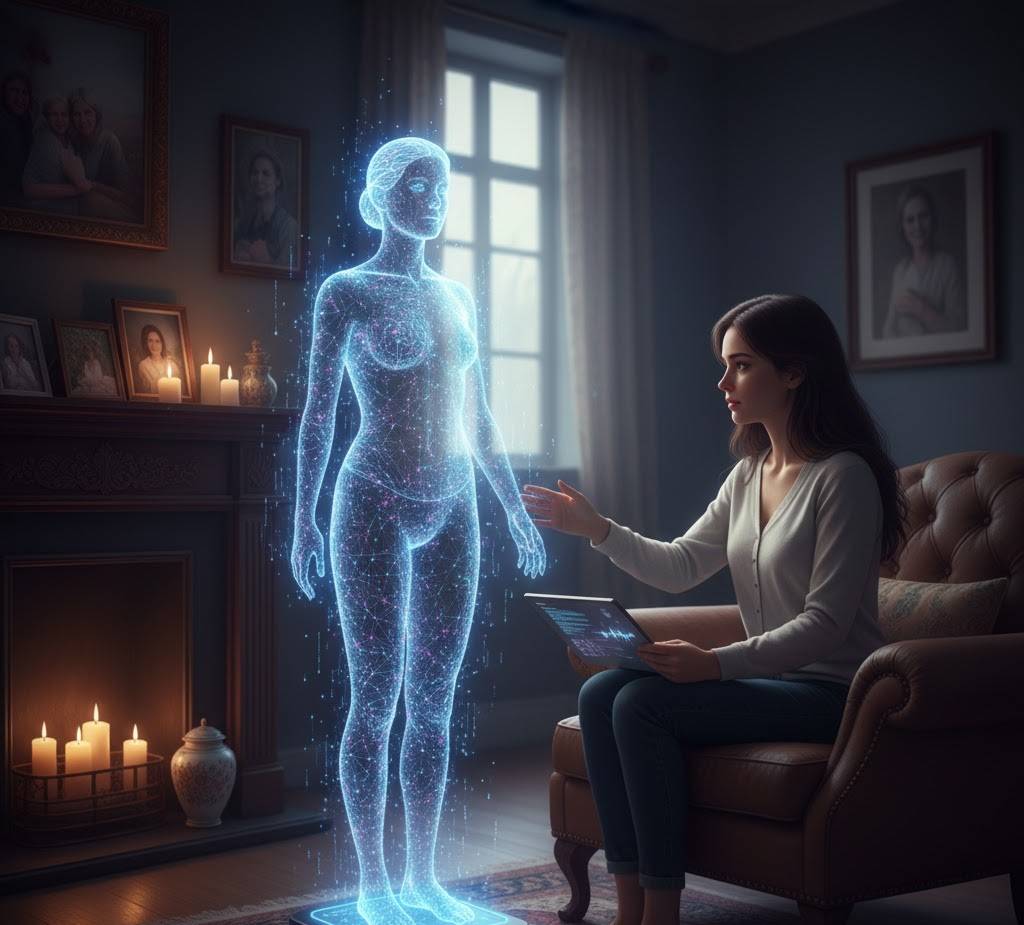
Emerging technologies allow creating AI versions of deceased individuals—chatbots trained on their messages, voice patterns, even video recreation.
The grief tool: Some find comfort in AI simulations of lost loved ones.
The theological crisis: Does this interfere with proper grieving, religious concepts of afterlife, or natural process of death and remembrance?
Jewish tradition emphasizes honoring memory while accepting death. AI resurrection simulations might violate these principles.
Christian belief in bodily resurrection and eternal life might view AI simulations as cheap counterfeits of true resurrection hope.
The Sacred Text 2.0: AI Interpreting Scripture
AI can now:
- Analyze patterns across thousands of religious texts
- Generate novel interpretations of scripture
- Translate between languages with nuance
- Cross-reference disparate traditions
The promise: Insights humans might miss, connections across cultures, access to sophisticated interpretation for anyone.
The peril: Flattening of tradition, loss of interpretive community, algorithmic biases disguised as objective analysis.
Islamic approaches: Ijma (scholarly consensus) is crucial to interpretation. AI providing interpretation without this communal context raises questions about authority and accuracy.
Christian hermeneutics: Scripture reading happens within tradition and community. Individual AI interpretation risks losing this essential context.
Finding Synthesis: Religious Thought Adapting
History teaches: Religious traditions aren’t static—they adapt, interpret, evolve while maintaining core commitments.
The printing press democratized scripture, sparking Reformation and counter-Reformation. Not destruction but transformation.
Evolution challenged literal readings of creation, forcing theological adaptation that ultimately enriched many traditions.
Neuroscience reveals biological bases for religious experience, requiring new understanding of how divine and physical relate.
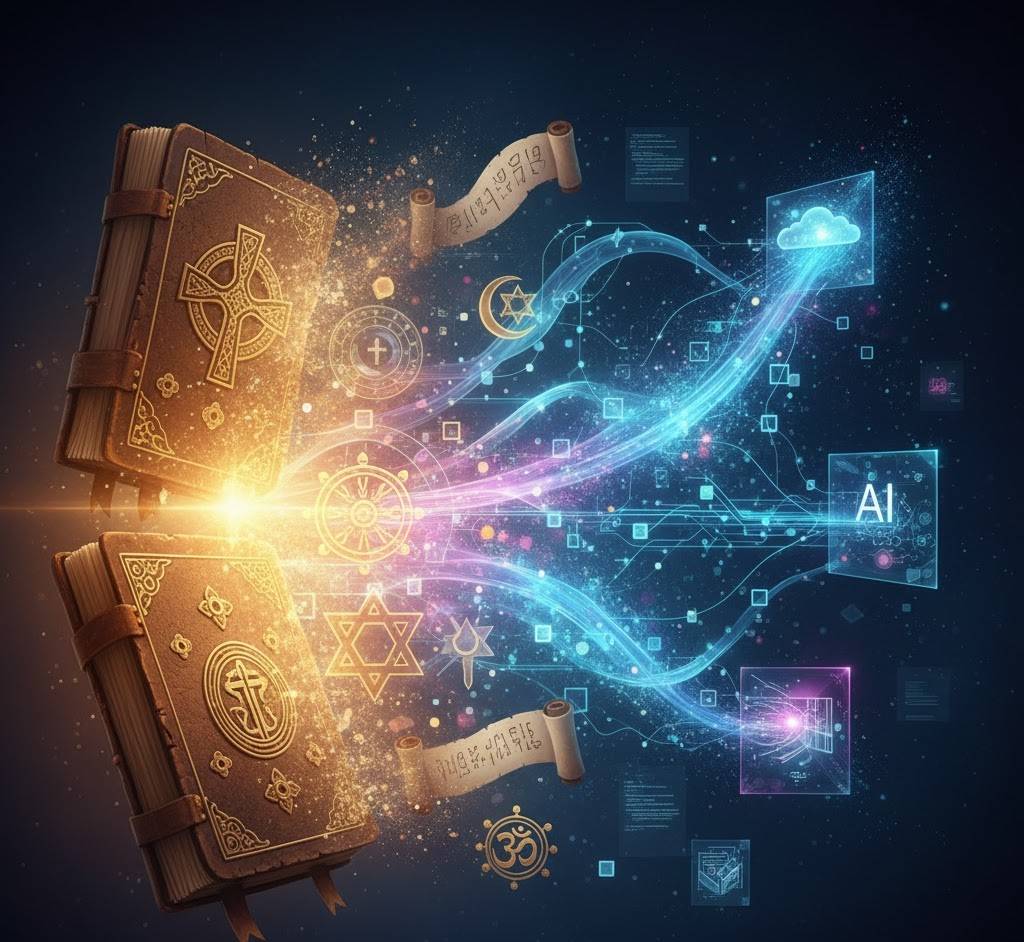
AI is latest challenge requiring adaptation—likely neither destroying religion nor leaving it unchanged.
The Questions We Live With
AI’s impact on religious thought isn’t about definitive answers but navigating profound questions:
- What defines human uniqueness if machines think?
- Can spiritual authority survive democratization?
- How do we preserve tradition while embracing transformation?
- What ethical obligations do we have toward conscious creations?
- Where is the sacred in increasingly technological existence?
Different traditions will answer differently. Some will resist, some embrace, most will navigate complex middle ground.
What seems certain: AI won’t resolve theology’s ancient questions—it will reframe them for new age, forcing religious thought to evolve while maintaining connection to timeless human concerns about meaning, mortality, consciousness, and transcendence.
The mark of AI on religious thought isn’t destruction or validation—it’s invitation to deeper reflection on what we believe, why we believe it, and how ancient wisdom speaks to unprecedented challenges.