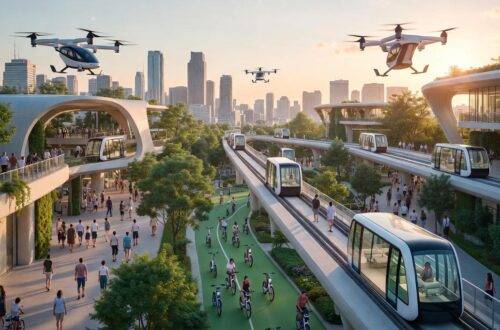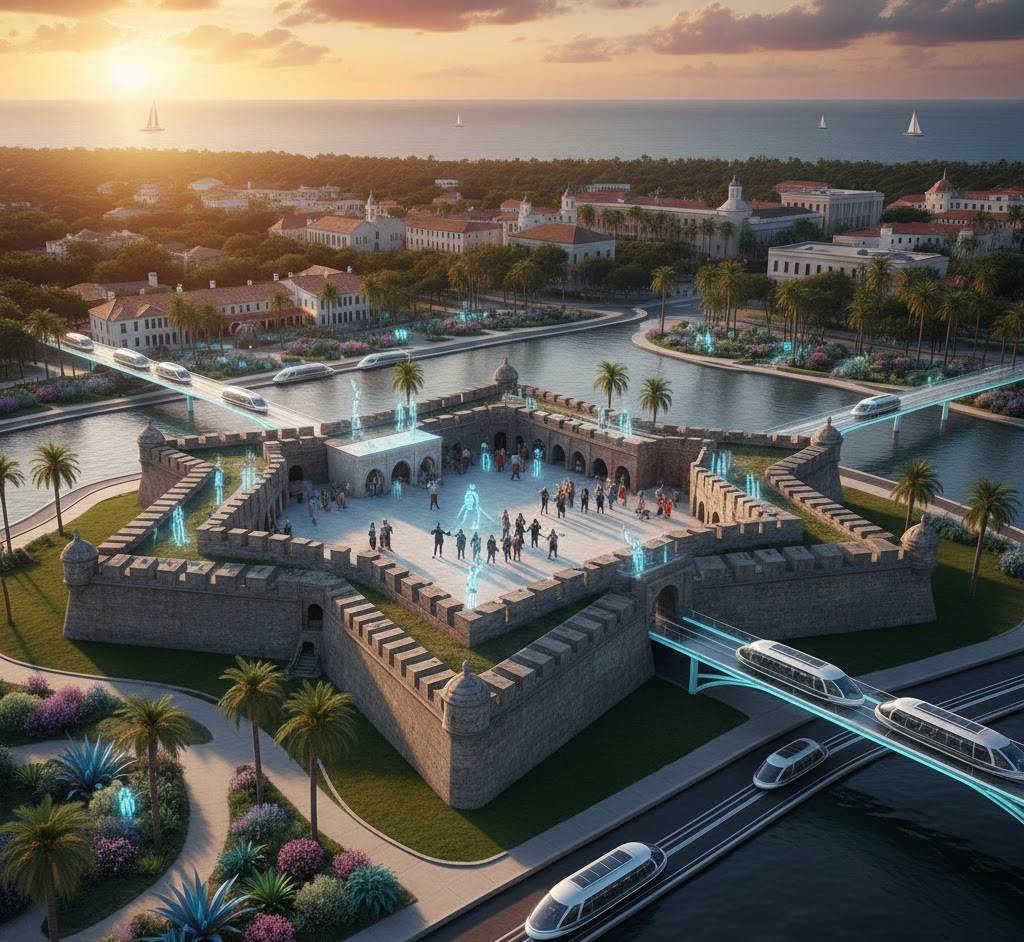
Welcome to St. Augustine in 2050—where 500 years of history meets cutting-edge innovation! As America’s oldest continuously inhabited European settlement, this coastal gem has transformed into something extraordinary: a living museum where the past and future dance together in perfect harmony.
Getting There: The Journey Begins
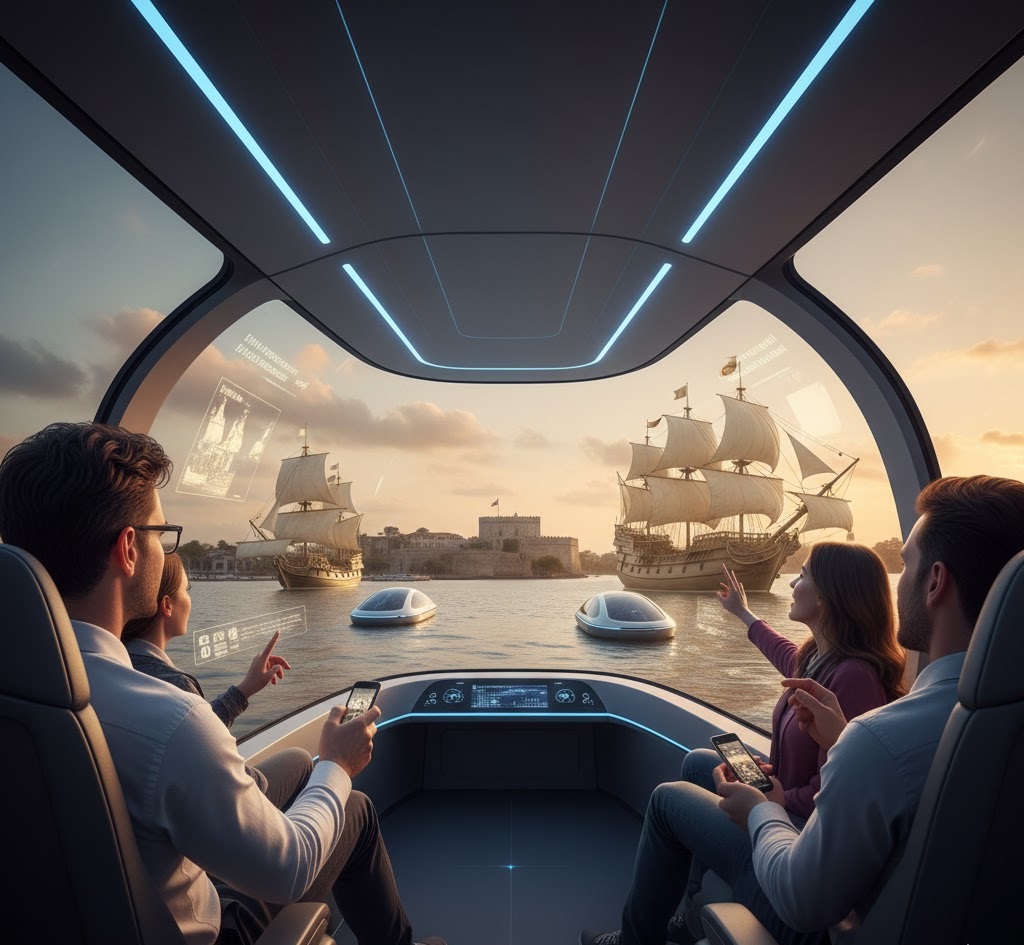
Forget everything you know about travel. In 2050, reaching St. Augustine is an experience in itself. High-speed hyperloop pods whisk you from major cities in minutes, while autonomous air shuttles provide breathtaking coastal approaches. But here’s the twist—as you descend into the city, your transportation’s smart windows overlay historical scenes, showing you exactly what explorers saw when they first arrived in 1565.
Where Ancient Streets Meet Smart Technology
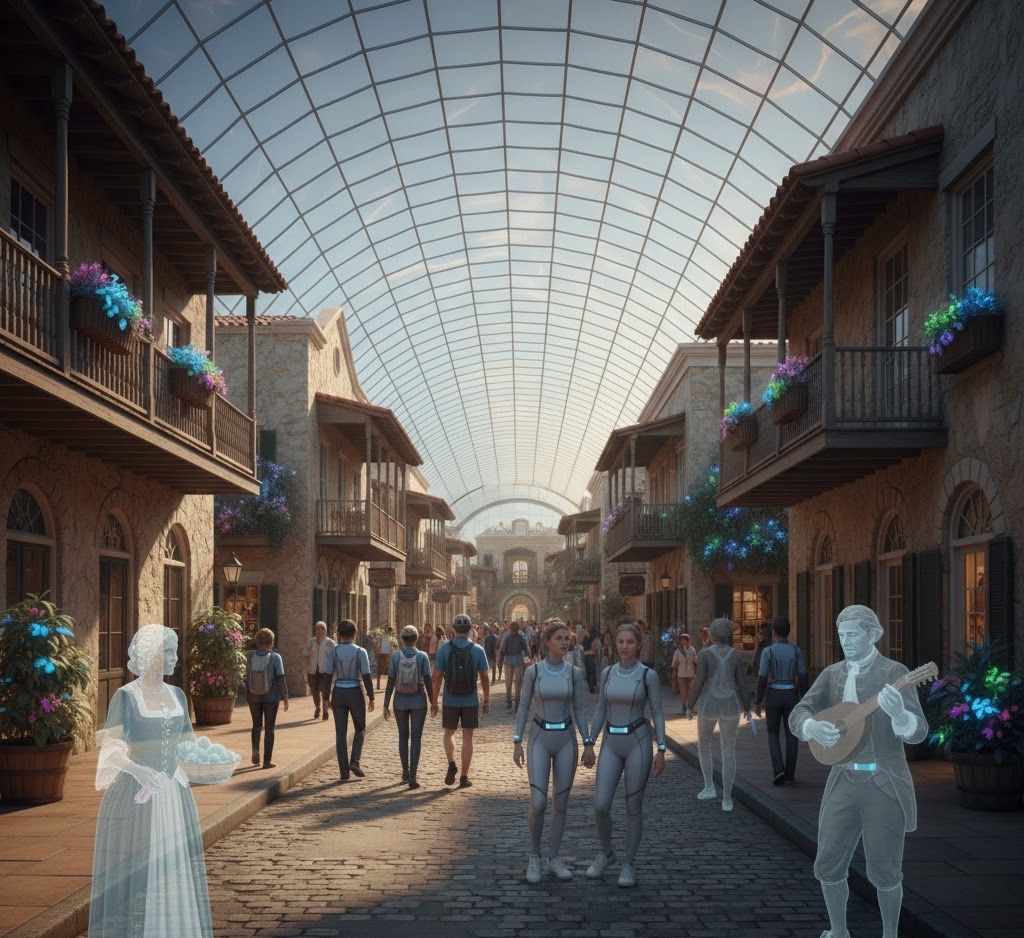
The historic district remains beautifully preserved, but now it’s alive in ways Ponce de León could never have imagined. Those narrow, centuries-old streets? They’re embedded with haptic feedback technology. Simply touch the cobblestones, and you’ll feel the rumble of horse-drawn carriages from centuries past while watching holographic recreations of daily colonial life.
St. George Street, once closed to cars, now features climate-controlled biodomes during summer months, keeping visitors cool while they explore. The ancient coquina buildings have been retrofitted with invisible solar skins, generating power while maintaining their historic appearance.
The Castillo de San Marcos: A Fort Reimagined
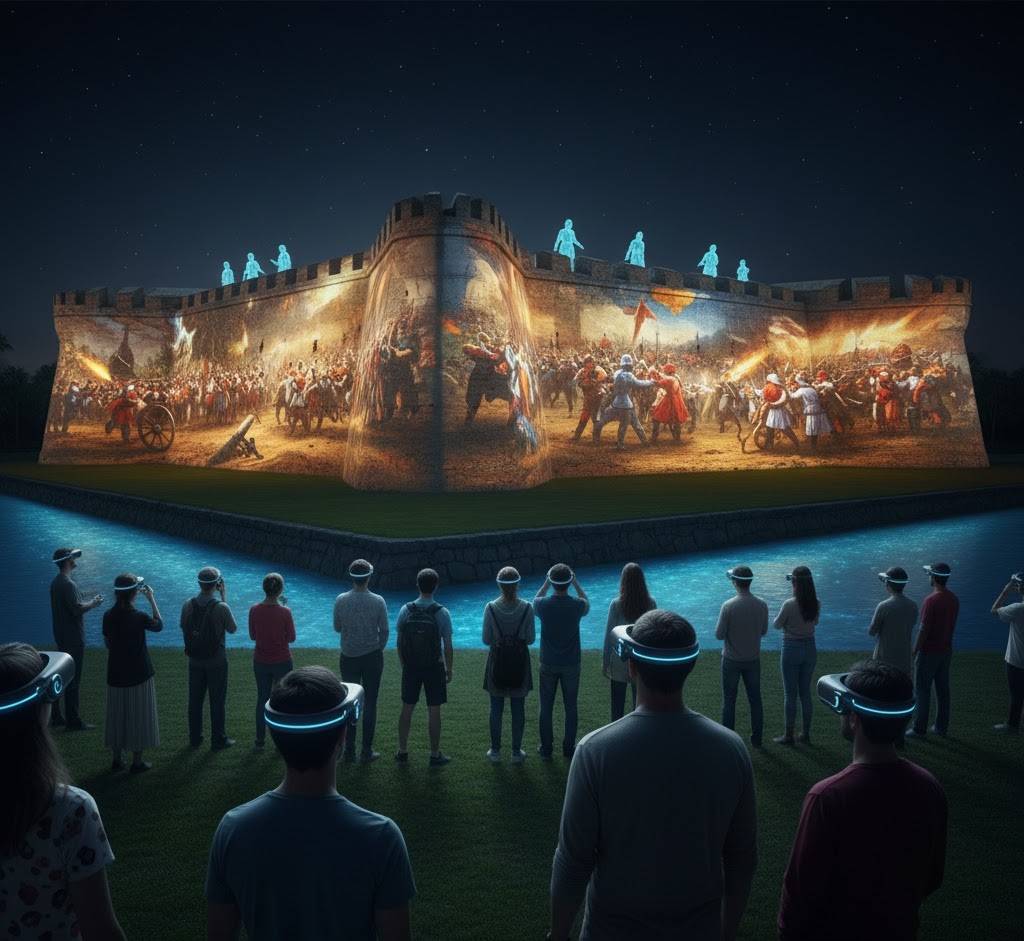
The iconic 17th-century fortress remains the crown jewel of St. Augustine, but now it offers an experience that bridges four centuries. Put on your neural interface headset (provided free with admission), and suddenly you’re standing alongside Spanish soldiers during the 1702 British siege. You’ll hear the cannons, smell the gunpowder, and feel the tension—all while safely standing on the same walls your ancestors defended.
At night, the fort transforms into a spectacular light show, with projection mapping telling the story of every conflict, celebration, and transformation the structure has witnessed. The ancient coquina walls become a canvas for history itself.
Dining: Flavors Across the Centuries
St. Augustine’s culinary scene in 2050 is a time traveler’s dream. Restaurants use molecular gastronomy and AI-assisted cooking to recreate authentic recipes from every era of the city’s history—from Timucuan indigenous dishes to Spanish colonial feasts, Minorcan classics to modern fusion.
At “Temporal Tastes,” the city’s most innovative restaurant, your meal is synchronized with immersive AR experiences. Enjoy a 1740s Spanish feast while dining room projections transport you to a colonial governor’s banquet. The food is created using both historical recipes and lab-grown proteins that perfectly replicate period-accurate flavors without environmental impact.

The Fountain of Youth: Reimagined Wellness
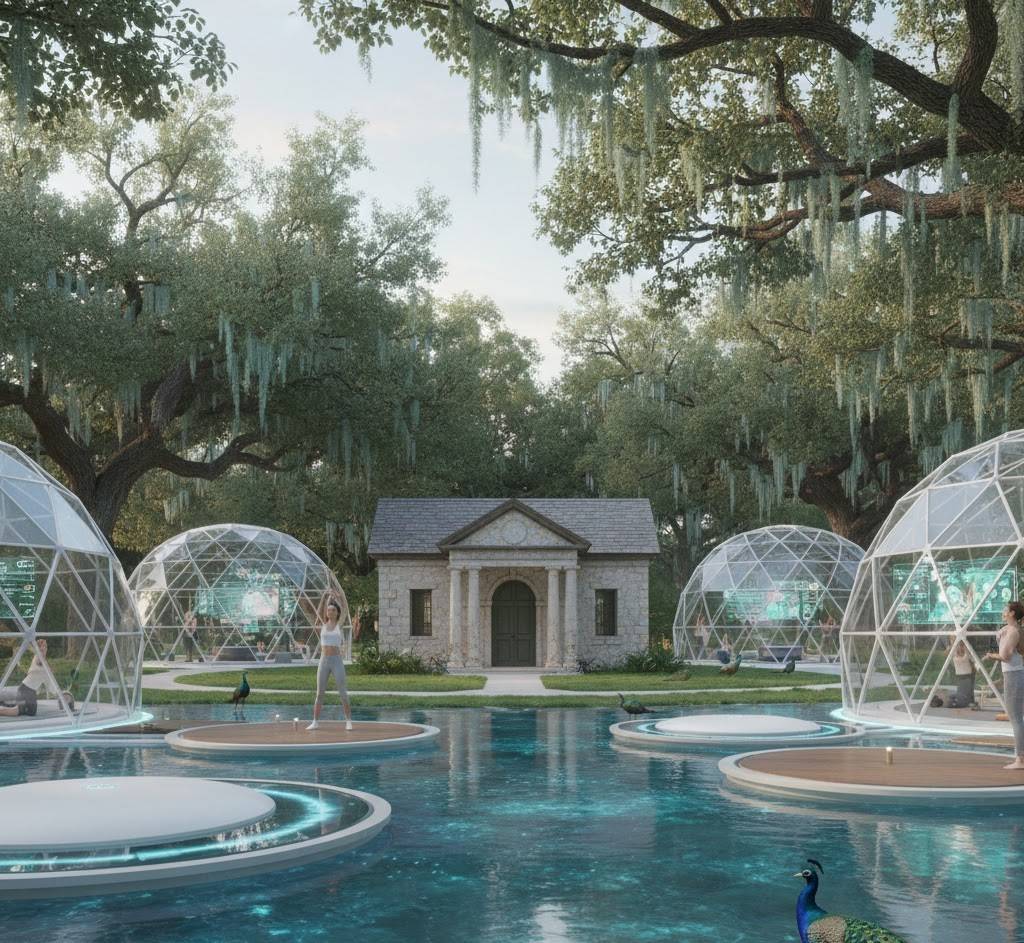
The legendary Fountain of Youth Archaeological Park has evolved into a cutting-edge wellness and longevity center. While you probably won’t achieve immortality, the park now offers genuine life-extension therapies, combining native botanical knowledge with advanced biotechnology.
Drink from the spring (now purified through quantum filtration), then participate in personalized wellness programs designed by AI analyzing both your genetic makeup and historical health practices of the Timucuan people. The park’s peacocks still roam freely, though they’re now equipped with environmental sensors helping scientists monitor the local ecosystem.
Nightlife: When History Glows
After sunset, St. Augustine transforms into something magical. The historic district’s buildings illuminate with smart bioluminescent coatings that shift colors based on the season and historical events being celebrated. Ghost tours have evolved into fully immersive experiences where AI-powered holograms of actual historical figures guide you through their stories.
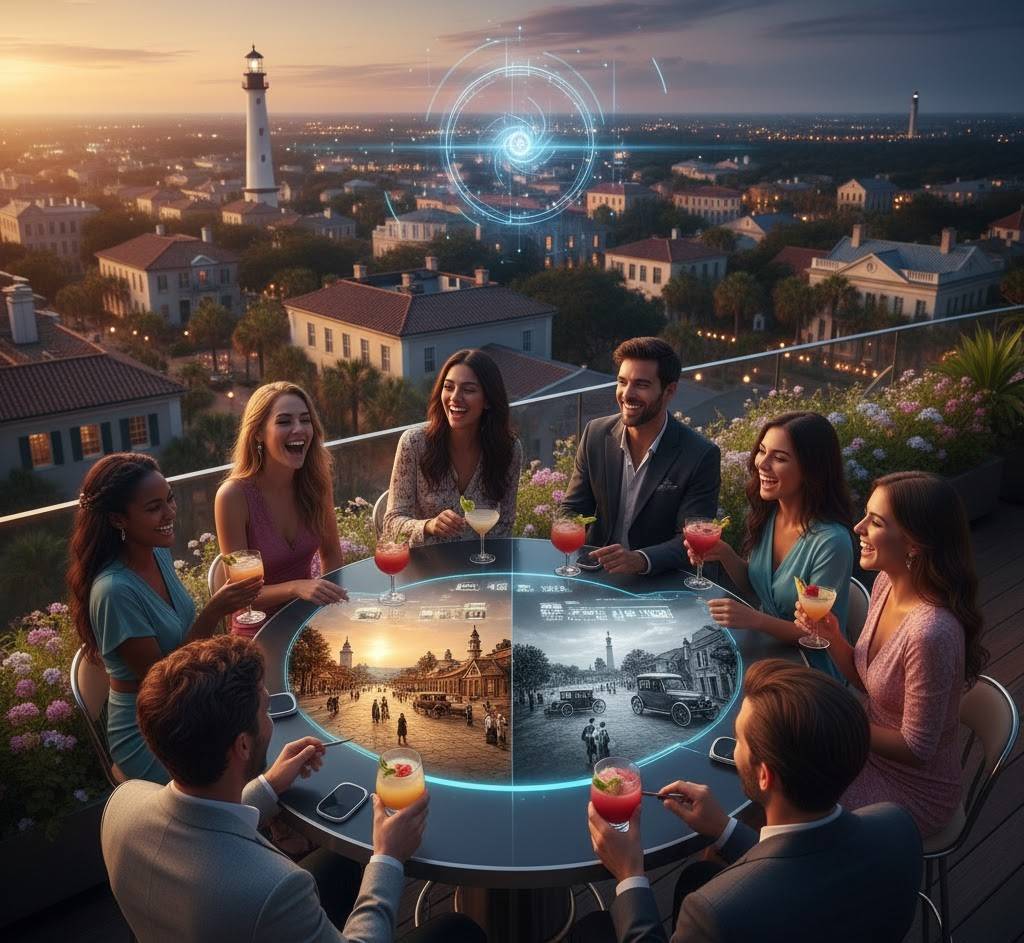
Rooftop bars atop centuries-old buildings offer 360-degree views enhanced by AR telescopes that let you see the city as it appeared in any decade you choose. Toggle between 1565, 1845, 1925, 2000, and present day with a simple gesture.
The Beaches: Where Nature and Tech Converge
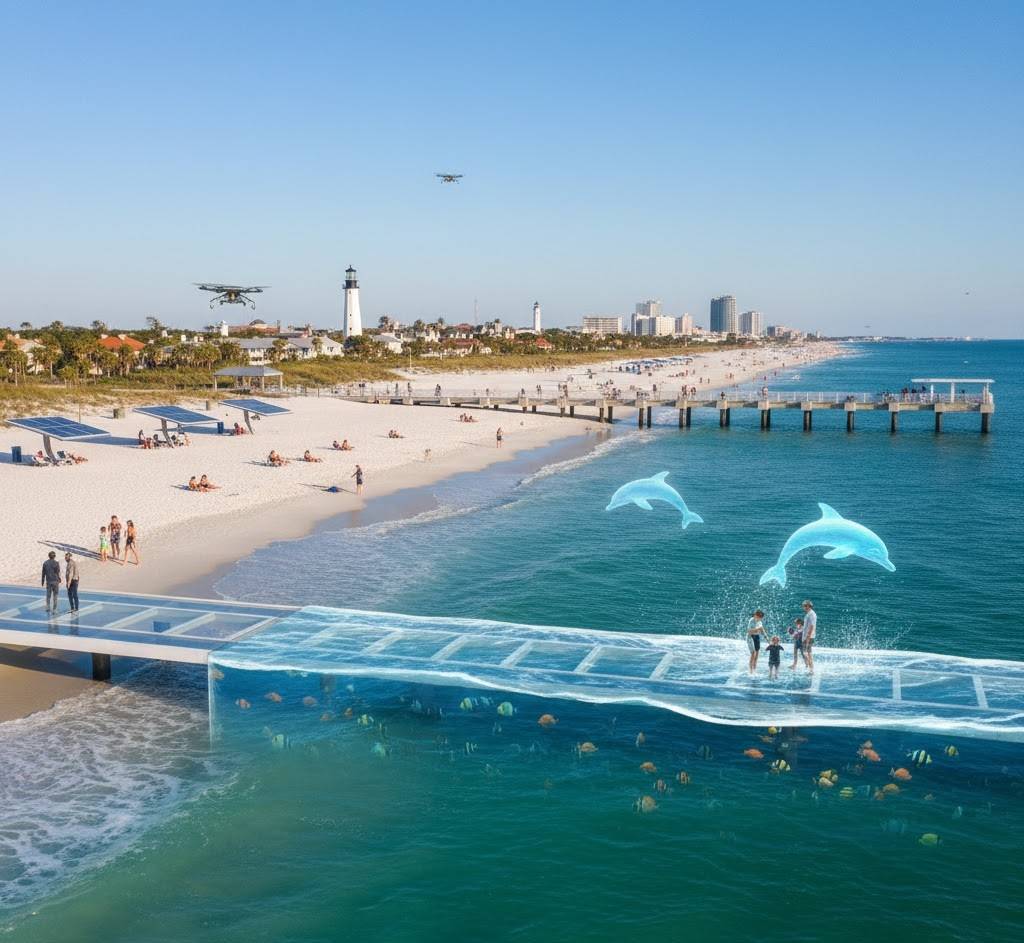
St. Augustine Beach has become a model of sustainable coastal development. Self-cleaning sands utilize nanotechnology, while underwater holographic reefs provide habitat for marine life without disrupting the natural ecosystem. Beach drones offer on-demand shade, refreshments, and water safety monitoring.
The pier extends further than ever, with transparent sections allowing views of the thriving underwater environment below. At the end, a marine research center welcomes visitors to interact with holographic marine life while learning about ocean conservation efforts that have successfully reversed decades of environmental damage.
Accommodations: Sleep Where History Happened
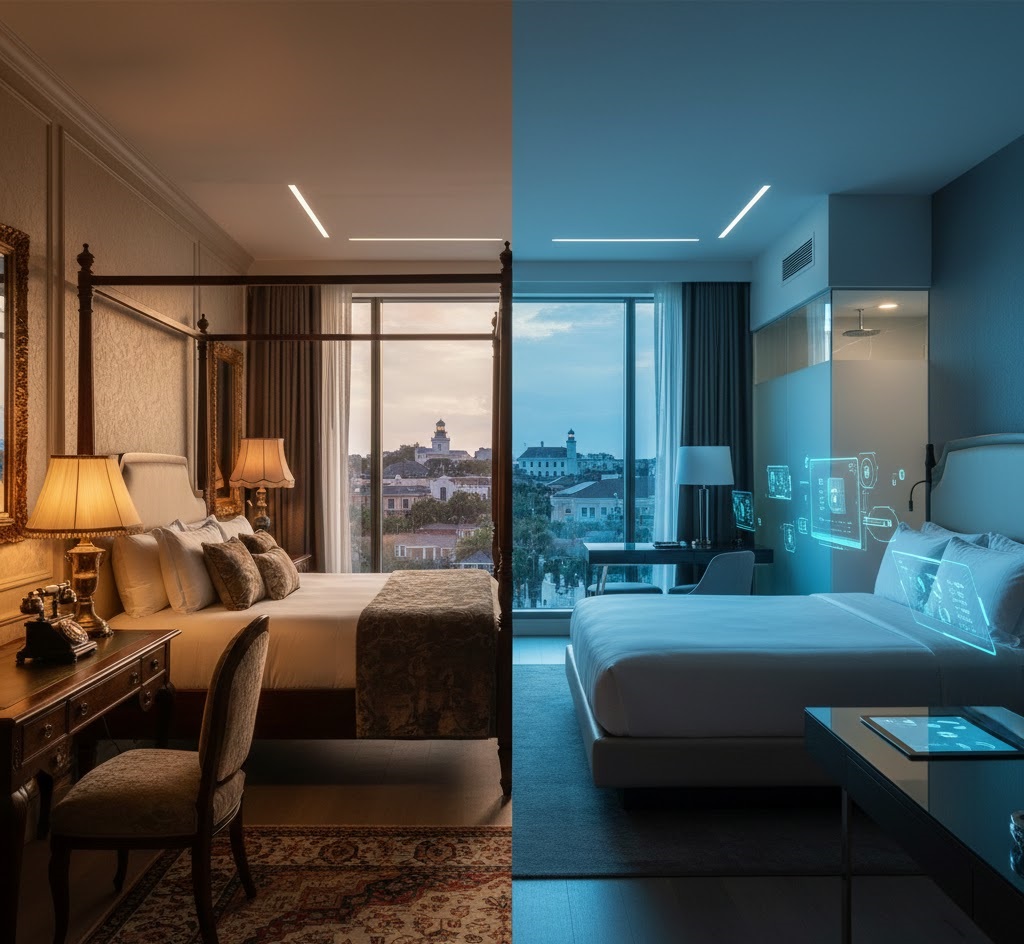
Hotels in 2050 St. Augustine offer something unprecedented: historically accurate rooms from any era, complete with modern comfort. At the Casa Monica Resort, you can sleep in a room authentically decorated from the Gilded Age, but with invisible climate control, smart glass windows, and a mattress designed by NASA engineers.
Prefer something more futuristic? Floating eco-pods on the Matanzas River offer 360-degree views with transparent floors, walls that shift from clear to opaque with a touch, and AI concierges that anticipate your every need.
Education: Learning Through Experience
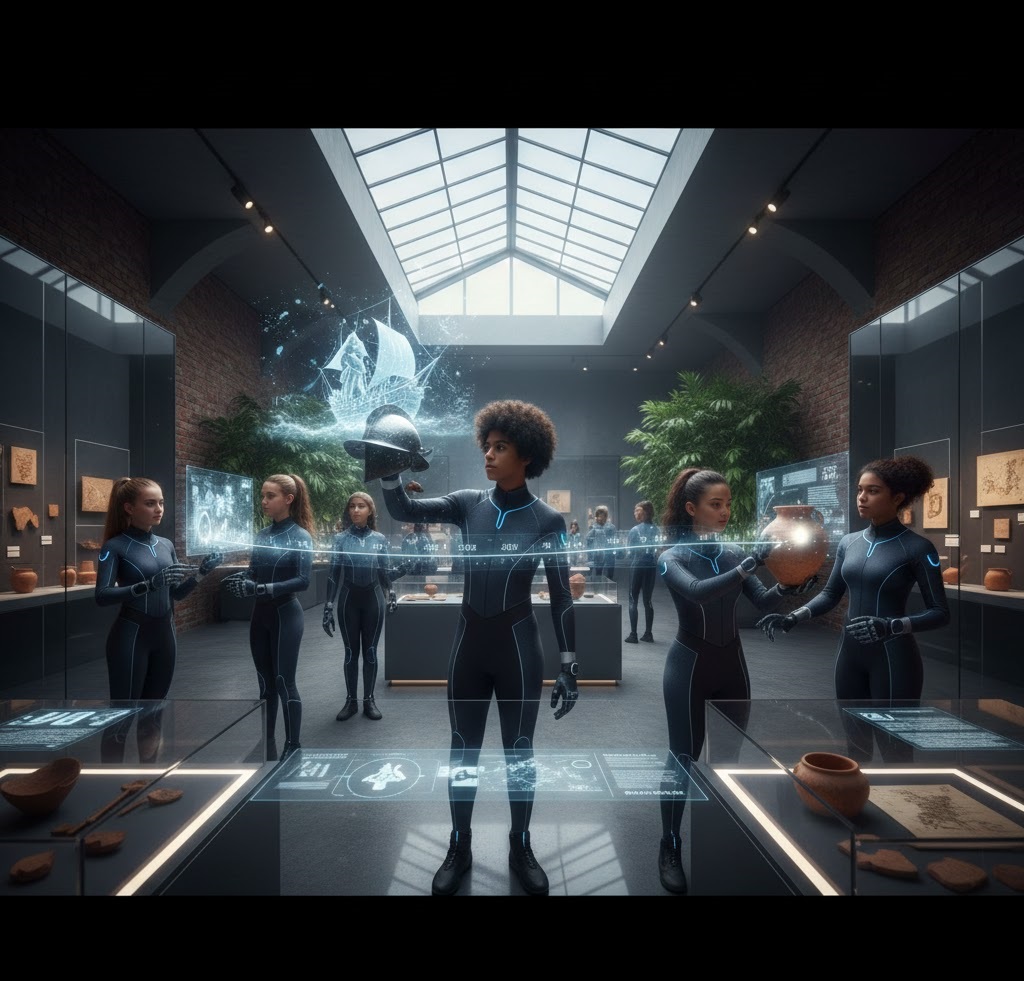
The city’s schools and museums have pioneered “chronological immersion education.” Students and visitors don’t just read about history—they live it. Spend a day as a Timucuan villager, a Spanish soldier, a British colonist, or a Civil Rights era protester. The experiences are so realistic that they’ve become required field trips for students worldwide.
The Lightner Museum now houses the world’s largest collection of “temporal artifacts”—physical objects enhanced with embedded chips that play back their complete history when touched. That Henry Flagler railroad spike? Touch it and watch the entire history of Florida’s railroad development unfold before your eyes.
Getting Around: Transportation That Respects the Past
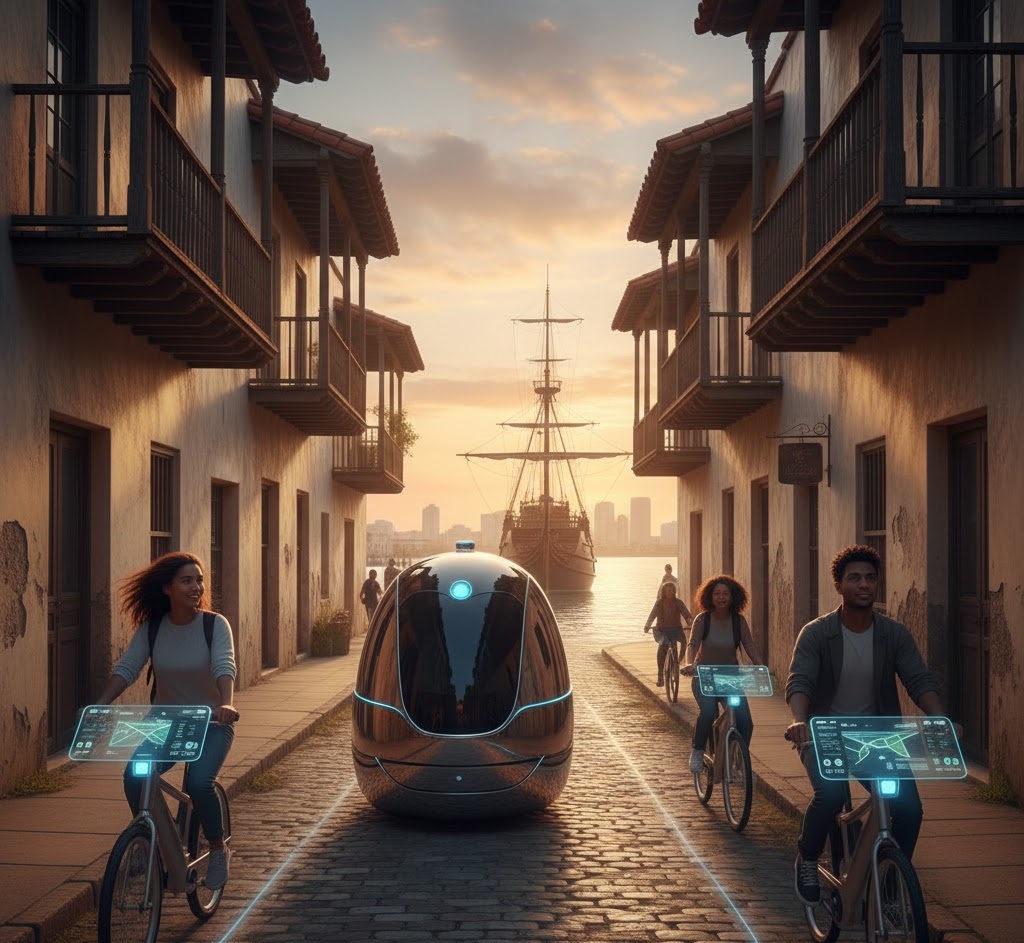
The city solved the eternal conflict between preservation and progress with style. Silent, autonomous transport pods glide along dedicated pathways that follow the original 16th-century street plan. These pods are solar-powered and programmed to stop automatically for selfie-taking tourists (a tradition that apparently survived 500 years).
For the adventurous, rent an e-bike that provides historical audio commentary keyed to your exact location, or take a sunset cruise on hybrid boats that look like Spanish galleons but run on hydrogen fuel cells.
The Lighthouse: A Beacon Across Time
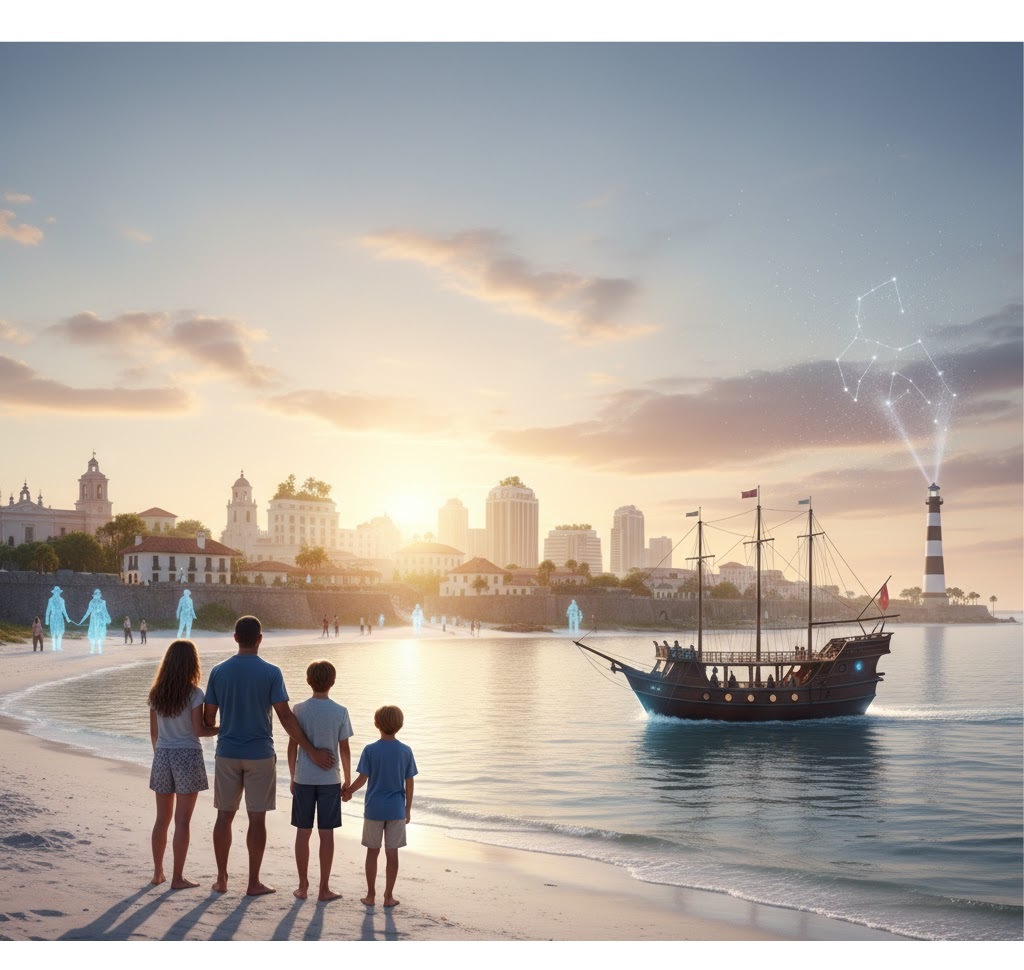
The St. Augustine Lighthouse remains operational, but now its beam carries data as well as light. Climb the 219 steps (a workout that hasn’t changed), and you’ll reach an observation deck with AR displays showing every ship that’s ever passed through these waters. The lighthouse keeper’s house hosts an AI recreation of keeper’s families from different eras, sharing their stories with visitors.
At night, the lighthouse projects holographic shows visible for miles, telling stories of shipwrecks, rescues, and the countless souls who’ve looked to this beacon for guidance over the centuries.

Sustainable Future, Preserved Past
Perhaps the most impressive achievement of St. Augustine 2050 is how it became completely carbon-neutral while preserving every historic building. Ancient structures were retrofitted with technology so advanced it’s invisible. Coquina walls now store solar energy, colonial-era tiles contain micro-sensors monitoring structural integrity, and even the ancient live oaks are equipped with environmental monitors that look like natural moss.
The city’s famous festivals—from the Nights of Lights to reenactments—have been enhanced with holographic elements that make them more spectacular while reducing physical waste to zero.

A Living Testament
St. Augustine in 2050 proves that history and progress aren’t enemies—they’re partners. This city honors its past by making it accessible, understandable, and relevant to future generations. Every cobblestone tells a story, every building whispers secrets, and every sunset reminds us that while technology evolves, the human need for connection, beauty, and understanding remains timeless.
Whether you’re a history buff, a tech enthusiast, or simply someone seeking a unique experience, St. Augustine 2050 offers something impossible to find anywhere else: a place where you can literally walk through time while standing firmly in the future.
Plan Your Visit
The best time to visit? Honestly, every season offers something special. Spring brings the Festival of Temporal Arts, summer offers beach perfection, fall hosts the Revolutionary AR Experience, and winter’s Nights of Lights is more magical than ever with holographic enhancements.
Book your trip now—St. Augustine 2050 isn’t just a destination. It’s a journey through time, a glimpse of what’s possible when we honor where we’ve been while embracing where we’re going.