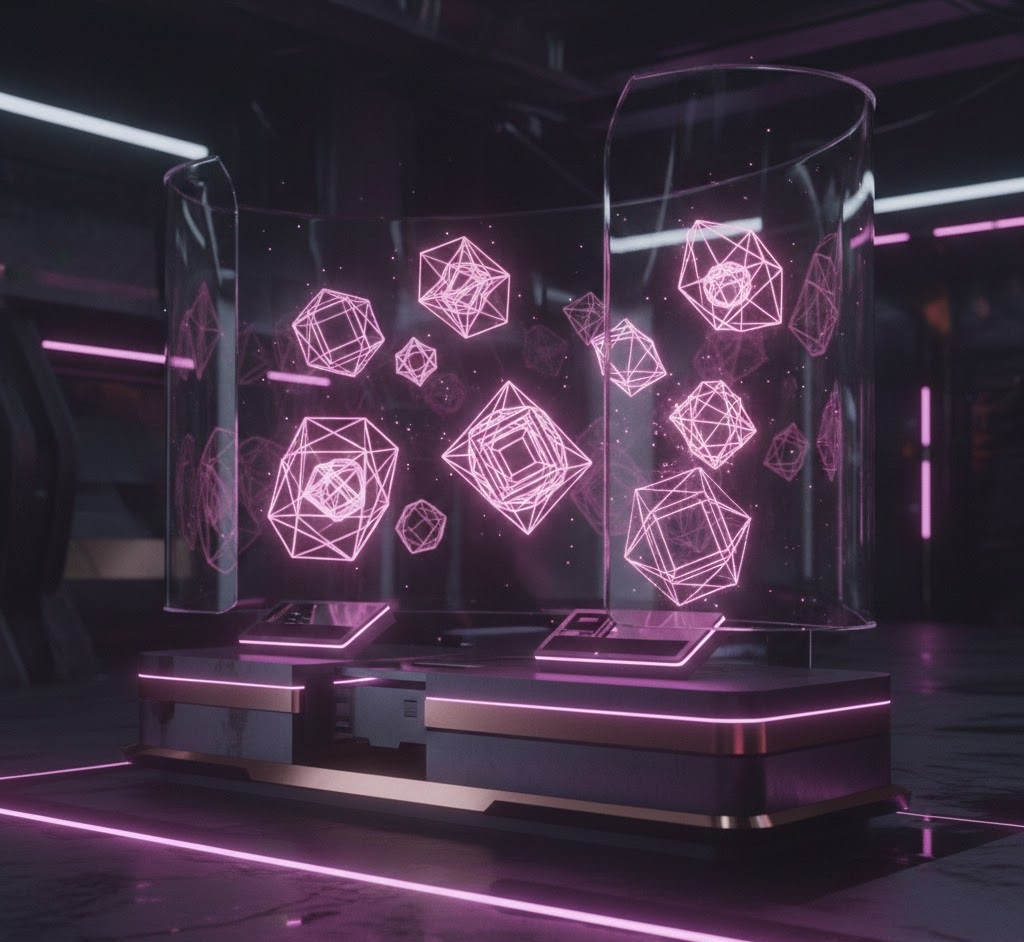
The future doesn’t have to be chrome and sterile. As we stand on the precipice of unprecedented technological advancement, a bold new aesthetic is emerging that challenges our preconceptions about what tomorrow should look like. Welcome to the world of pink sci-fi, where cutting-edge 3D design concepts are reimagining our technological future through a lens of warmth, optimism, and yes, shades of pink that range from soft pastels to vibrant magentas.
The Rise of Warm Futurism
For decades, science fiction has painted our future in cool tones—metallic grays, electric blues, and clinical whites. Think of iconic films like Blade Runner or The Matrix, where dystopian futures are rendered in rain-slicked darkness punctuated by cold neon. But a new movement in 3D design is flipping this script entirely. Pink sci-fi represents more than just a color choice; it’s a philosophical statement about the kind of future we want to inhabit.
This aesthetic revolution draws inspiration from multiple sources: the optimistic futurism of the 1960s space age, the playful energy of vaporwave culture, and contemporary desires for technology that feels approachable rather than alienating. When designers incorporate pink into their 3D tech concepts, they’re creating worlds that feel human-centered, emotionally intelligent, and surprisingly hopeful.
The Psychology Behind Pink Technology
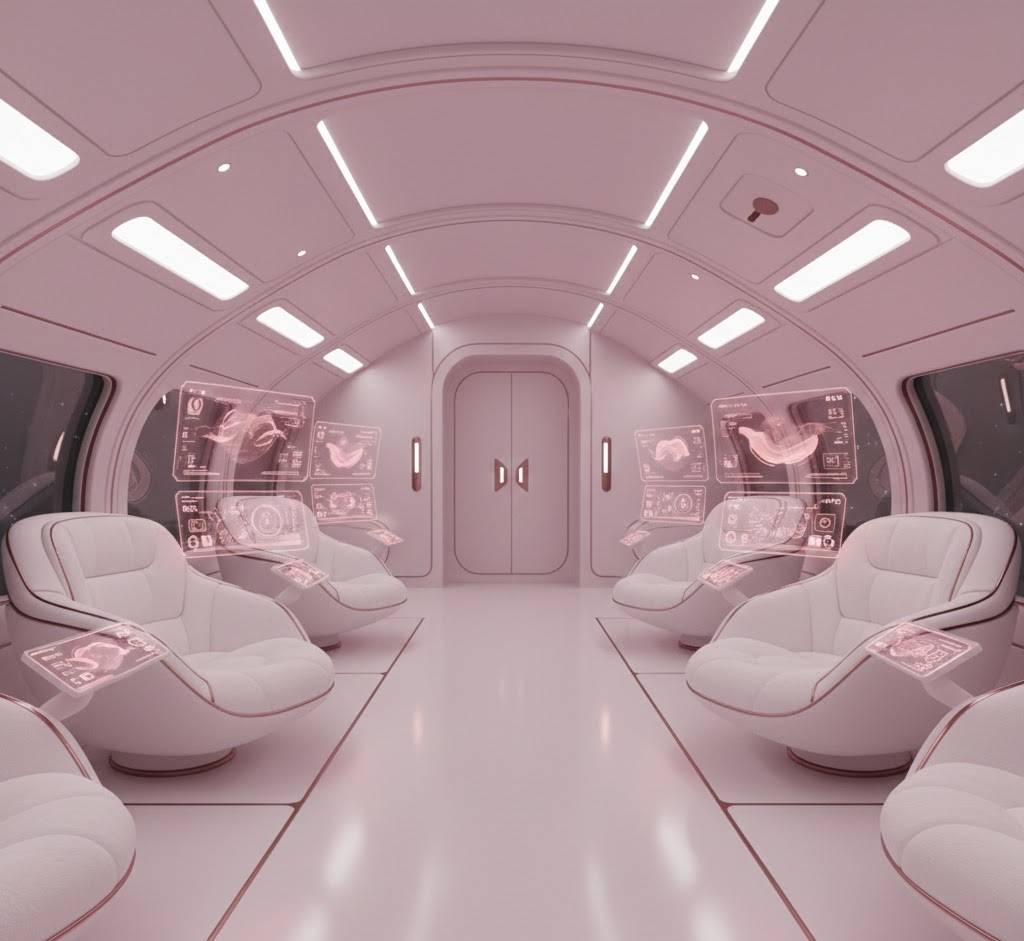
Color psychology tells us that pink evokes feelings of compassion, nurturing, and playfulness. It softens hard edges and makes the unfamiliar feel more accessible. When applied to futuristic technology concepts, pink transforms intimidating machinery into something that invites interaction. It suggests that our future tools won’t just be powerful—they’ll be designed with empathy and user experience at their core.
In 3D design, pink serves another crucial function: it provides stunning visual contrast. Against dark backgrounds or paired with complementary colors like teal, mint green, or deep purple, pink elements pop with dramatic intensity. This makes it perfect for showcasing the intricate details of complex technological interfaces, from swirling particle effects to delicate holographic projections.
Key Elements of Pink Sci-Fi Design
Holographic Interfaces
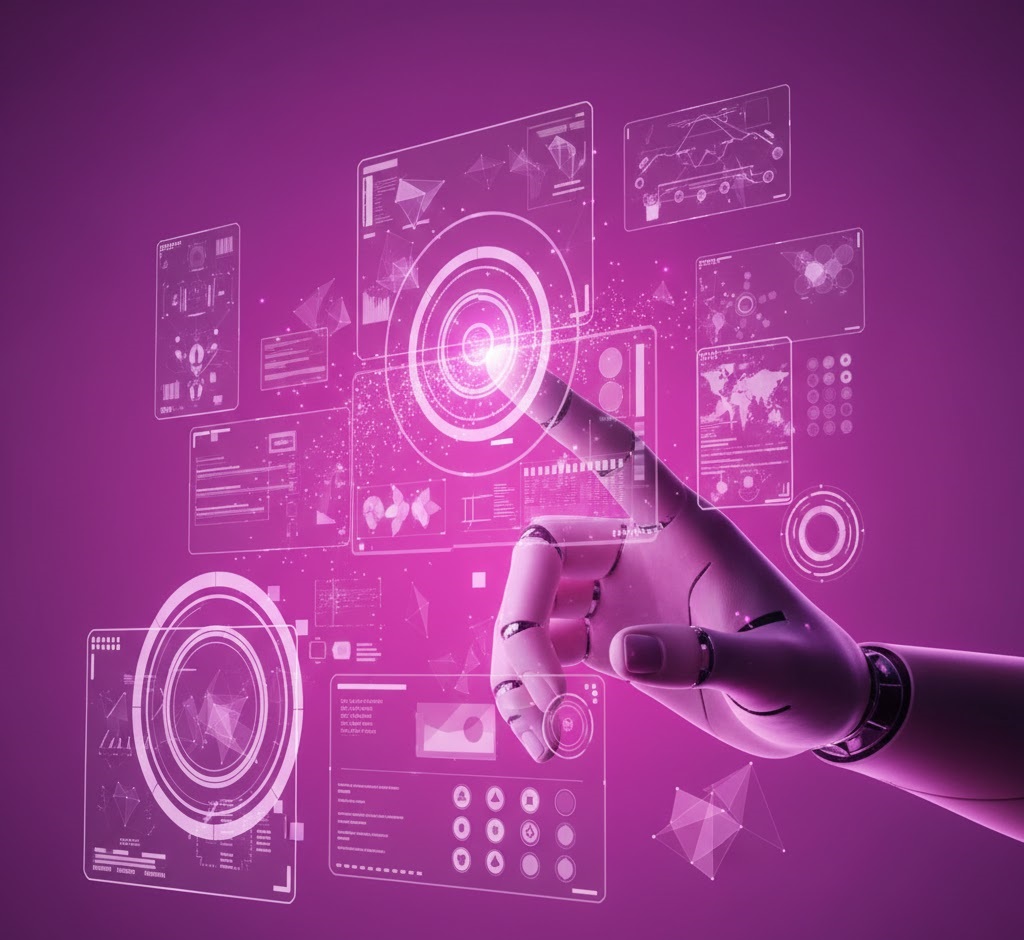
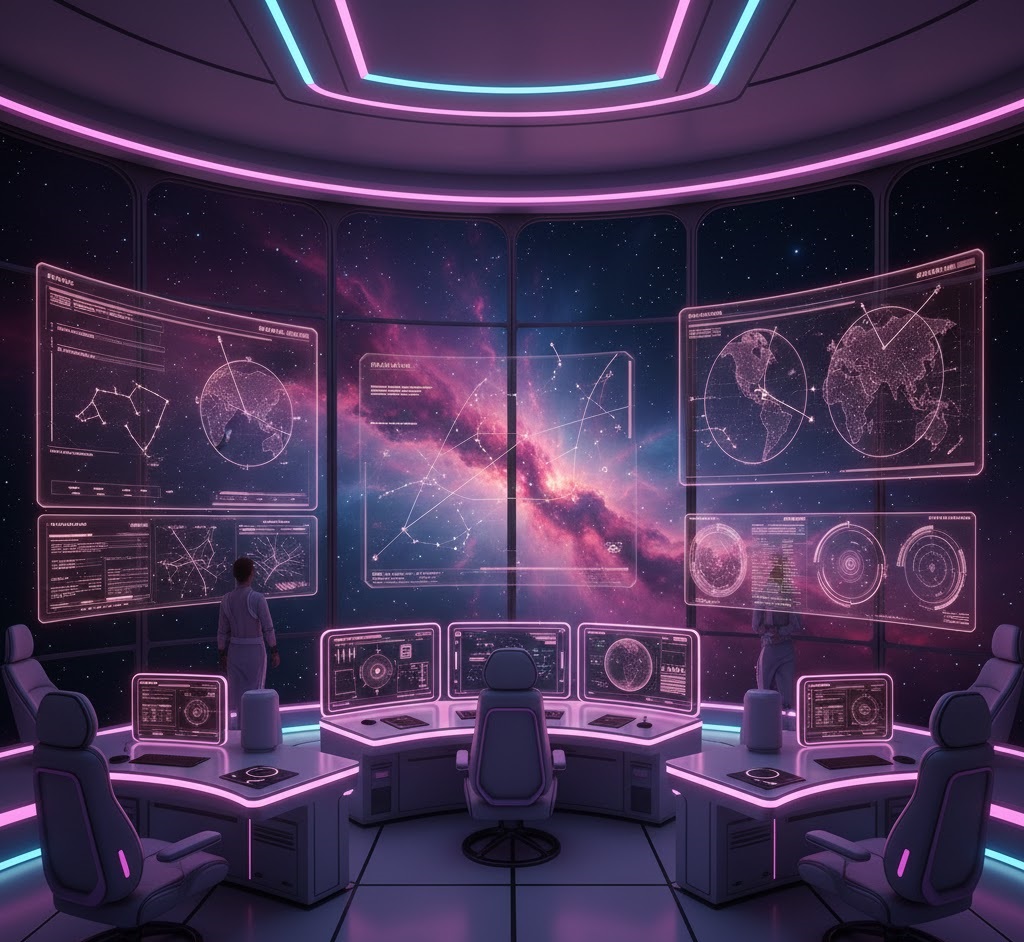
Modern 3D artists are creating breathtaking holographic interface concepts that float in mid-air, rendered in translucent pinks and purples. These designs often feature layered information displays, where data streams cascade like digital waterfalls. The pink coloration makes these interfaces feel less like cold computer readouts and more like extensions of human consciousness—intuitive, flowing, and almost organic in their movement.
Biomechanical Integration
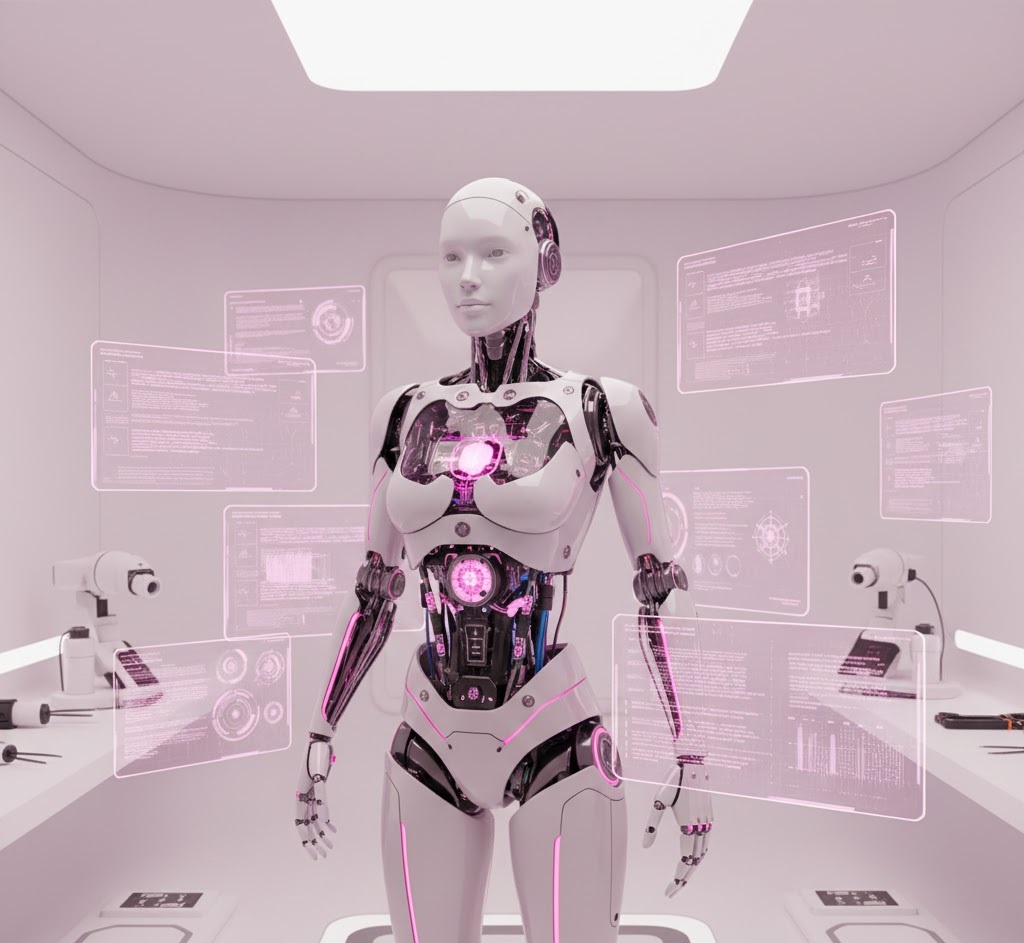
One of the most fascinating aspects of pink sci-fi is how it handles the merger of biology and technology. Rather than presenting cybernetic enhancements as cold metal implants, designers are creating concepts that blur the lines between organic and synthetic. Pink lighting pulses through semi-transparent materials, mimicking the glow of living tissue. Smooth, curved surfaces suggest growth rather than manufacturing. These designs propose a future where technology doesn’t replace humanity but enhances it while preserving our essential nature.
Architectural Wonders
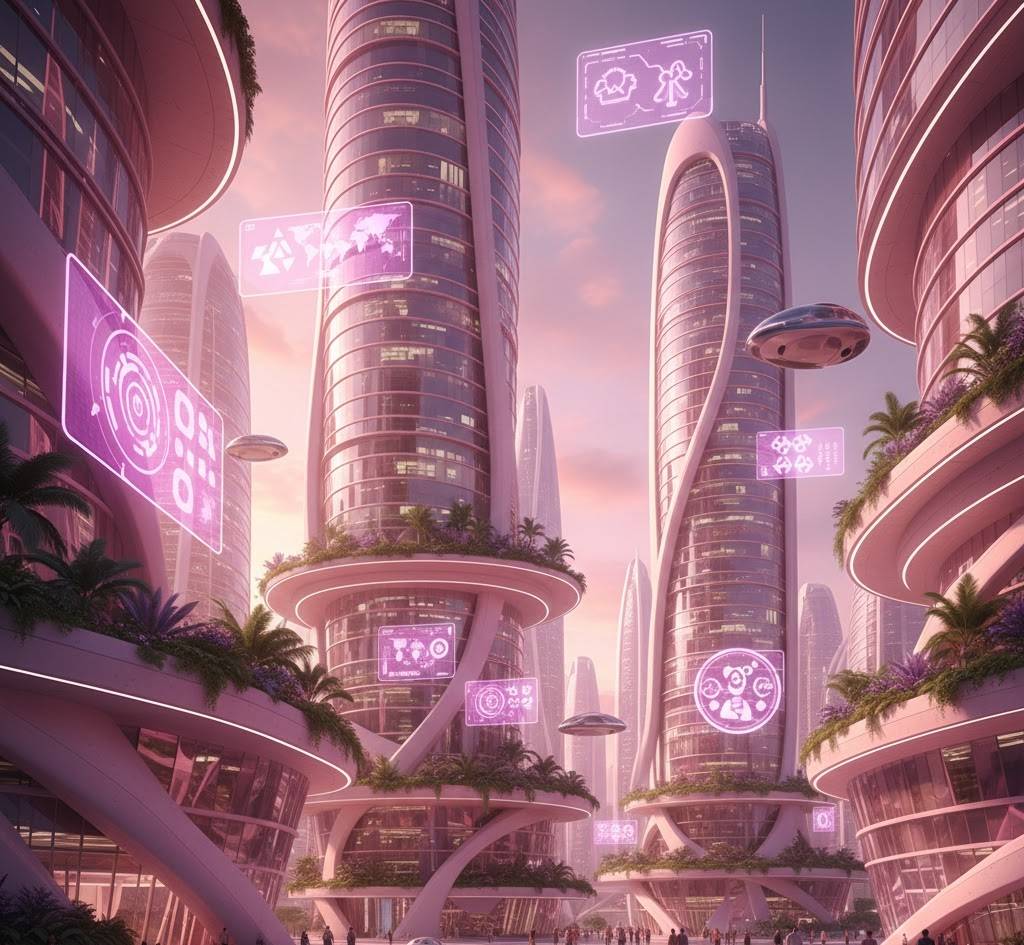
Pink sci-fi architecture abandons the hard angles and imposing structures of traditional futurism. Instead, we see flowing, organic forms—buildings that look like they’ve been grown rather than built. Soft pink lighting emanates from walls that curve like petals. Spaces are designed for comfort and contemplation, with an emphasis on natural forms translated through advanced materials. Think of inhabitable sculptures where every surface serves both aesthetic and functional purposes.
Breaking Gender Stereotypes in Tech Design
It’s worth addressing the elephant in the room: some might dismiss pink futurism as “girly” or less serious than traditional sci-fi aesthetics. But this perspective misses the point entirely. The use of pink in these designs isn’t about gender—it’s about expanding our visual vocabulary for what the future can be. It challenges the assumption that advanced technology must look harsh, cold, or militaristic.
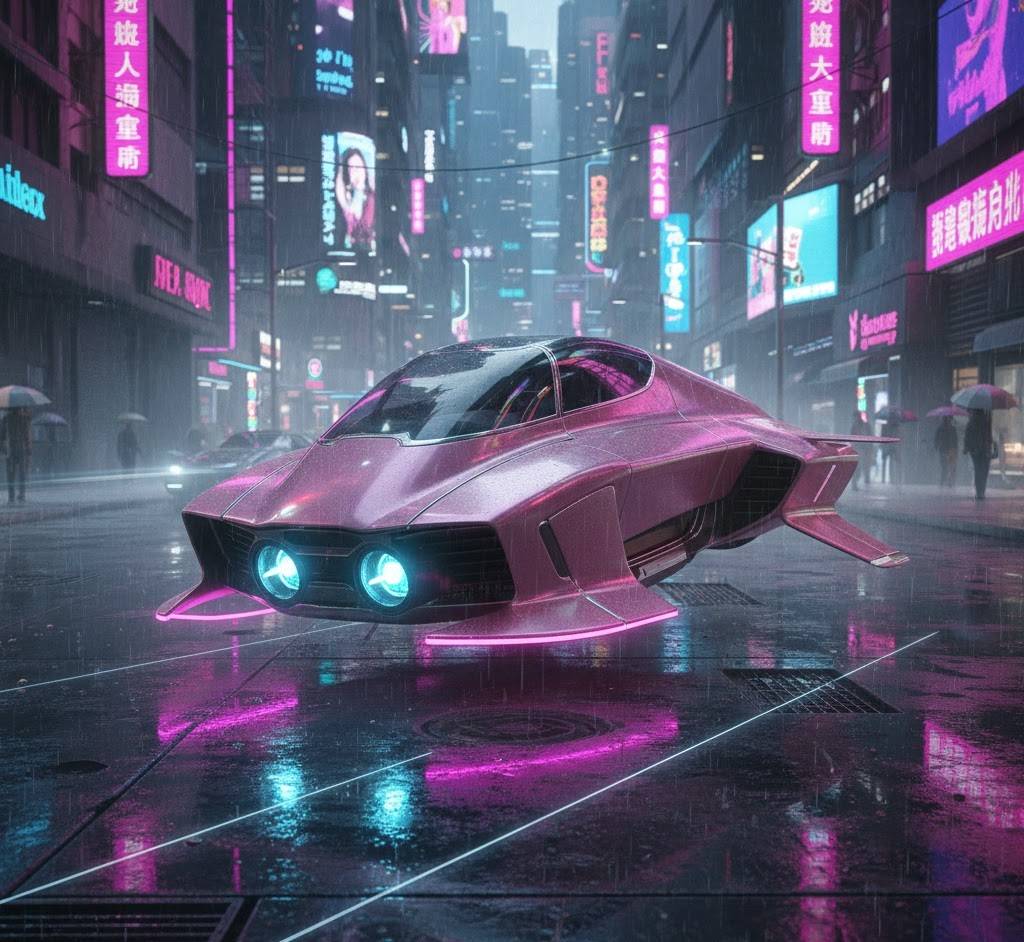
In fact, many of the most compelling pink sci-fi concepts deliberately play with and subvert expectations. They pair soft colors with hard-edged technology, creating tension and visual interest. A weapon might glow with pink energy, making us reconsider our assumptions about power and aggression. A massive spaceship might feature pink accent lighting, suggesting that even in the vastness of space, we carry warmth and humanity with us.
The Technical Artistry
Creating these pink sci-fi concepts requires mastery of multiple 3D design techniques. Artists use advanced rendering engines to achieve the perfect balance of luminosity—pink light sources must glow without overwhelming the scene. Transparency and refraction become crucial when designing holographic elements, requiring careful attention to how light passes through and reflects off surfaces.
Material design is equally important. Pink metallic surfaces need to look futuristic rather than toy-like, which means perfecting the interplay between color, specularity, and roughness values. Glass and crystal elements must catch and scatter light in ways that feel both realistic and magical. Particle systems create ambient effects—floating dust motes, energy streams, data fragments—that bring static scenes to life.
Practical Applications and Industry Trends
While pink sci-fi might seem purely aesthetic, it’s influencing real-world design. Tech companies are increasingly moving away from purely utilitarian interfaces toward designs that prioritize user emotion and experience. We’re seeing pink accents in gaming peripherals, LED lighting systems, and even UI design for apps and operating systems.
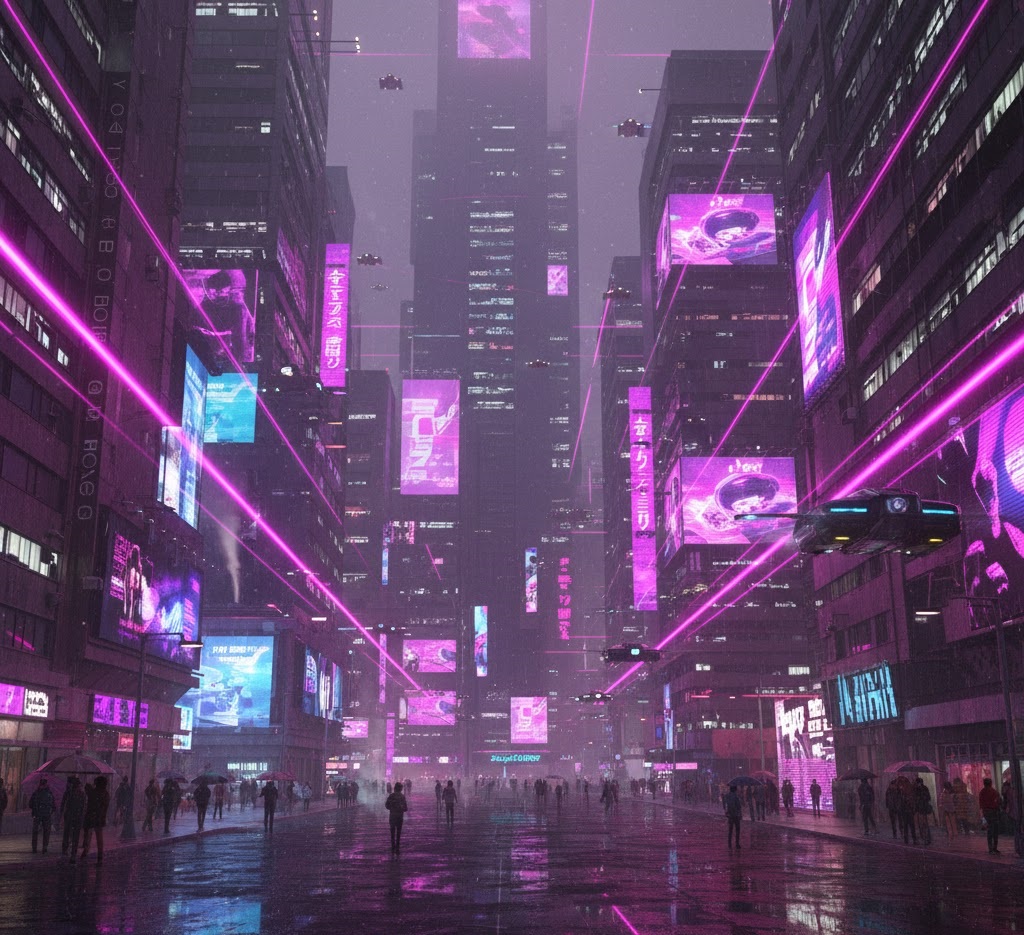
The gaming industry has particularly embraced these aesthetics. Many contemporary games feature pink-tinted cyberpunk worlds, neon-soaked environments, and user interfaces that wouldn’t look out of place in a vaporwave art piece. Virtual reality developers are exploring how color psychology can make immersive experiences feel more welcoming and less disorienting.
The Future of Pink Futurism
As 3D design tools become more sophisticated and accessible, we’re likely to see even more experimental and boundary-pushing pink sci-fi concepts. Real-time rendering technology means artists can now create complex, dynamic scenes that respond to viewer interaction. Imagine holographic displays that shift their pink hues based on the time of day or user mood, or architectural spaces that literally grow and evolve, their pink bioluminescence brightening and dimming like breathing.
Virtual production techniques used in filmmaking are also opening new possibilities. Directors can now place actors in fully realized pink sci-fi environments, shot in-camera rather than added in post-production. This means we’ll see these aesthetics not just in still concept art but in moving, immersive narratives.
Creating Your Own Pink Sci-Fi Concepts
For aspiring 3D artists interested in exploring this aesthetic, start by studying light behavior. How does pink neon interact with fog? How do translucent pink materials scatter light? Build a library of reference images—everything from jellyfish bioluminescence to sunset clouds can inform your color choices.
Experiment with contrast. Pink works beautifully against dark backgrounds, but try unexpected combinations—pink and gold, pink and olive green, pink and rust orange. Each pairing creates a different emotional tone and can suggest different technological philosophies or fictional worlds.
Don’t be afraid to mix eras and influences. Combine sleek minimalism with baroque detail, or pair retro-futuristic curves with cutting-edge holographic effects. The most memorable designs often come from unexpected juxtapositions.
Conclusion: A More Human Tomorrow
Pink sci-fi future concepts represent more than a trending aesthetic—they embody a philosophy about the relationship between humans and technology. By incorporating warmth, playfulness, and emotional intelligence into our visions of tomorrow, designers are proposing futures we’d actually want to inhabit. These aren’t dystopian warnings or cold technological utopias. They’re invitations to imagine progress that enhances rather than diminishes our humanity.
As 3D design continues to evolve, the line between concept art and reality grows thinner. Today’s pink-hued holographic interfaces and organic architecture might be tomorrow’s actual products and spaces.