Your alarm didn’t wake you this morning. Your apartment did—gradually brightening lights mimicking sunrise, adjusting temperature, and brewing coffee timed precisely to your sleep cycle’s optimal wake point. The AI managing your building knew you’d been restless and gave you an extra 15 minutes.
As you step outside, the city greets you personally. Your AR glasses highlight the fastest route to work, avoiding a water main break the city AI predicted 20 minutes ago. The coffee shop you’re thinking about visiting sends a notification: “Your usual order ready in 3 minutes.”
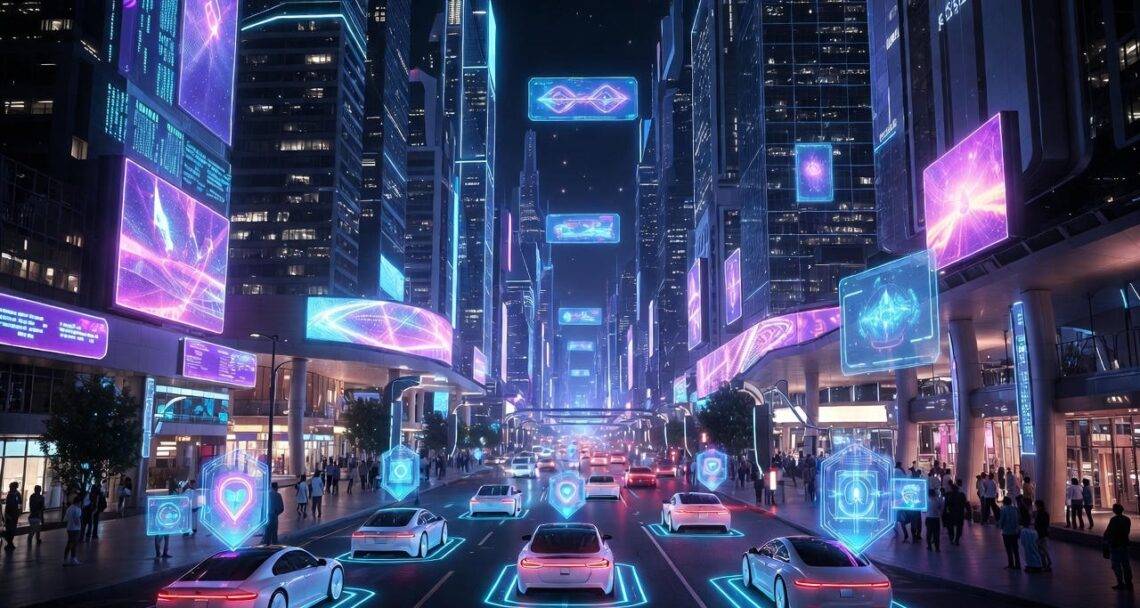
Welcome to 2026’s AI-integrated urban landscape—where cities don’t just contain technology, they are technology. Where artificial intelligence isn’t an app you open but the invisible fabric connecting every element of urban life.
This isn’t dystopian surveillance or cold automation. This is responsive architecture, predictive infrastructure, and personalized urban experiences creating cities that adapt to residents rather than forcing residents to adapt to cities.
Let’s explore what daily life looks like when AI becomes the nervous system of the metropolis.
The Morning Commute: Traffic That Thinks
You leave your apartment building, and the city knows.
Predictive transit systems have already adjusted:
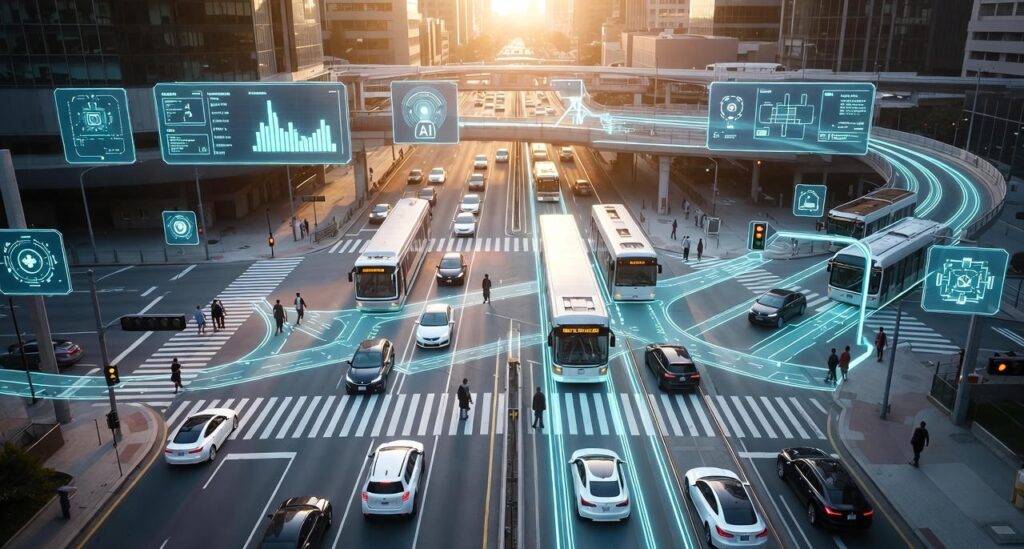
Your usual bus route? An extra vehicle deployed because the AI predicted higher demand based on weather patterns, local event schedules, and historical data. No crush of passengers—just comfortable seating.
Traffic lights coordinate not through fixed timing but real-time flow optimization. The AI sees every vehicle, predicts every turn, and adjusts signals to minimize stops. Your commute that used to take 40 minutes? Consistently 28 now.
Autonomous vehicles communicate with infrastructure and each other, creating orchestrated movement that feels less like traffic and more like choreography.
Your personal AI assistant (housed in your phone, glasses, or watch) already knows:
- You have a 9 AM meeting
- There’s construction on your usual route
- The café near your office has your favorite pastry today
- Your colleague is running late, giving you extra time
It suggests leaving 5 minutes later than usual and stopping for breakfast—you’ll still arrive 10 minutes early.
The Intelligent Workplace: Offices That Adapt
The building recognizes you as you approach. Doors unlock automatically. The elevator, already called, opens as you arrive.
Your workspace prepares itself:
Climate adjusts to your preference (2 degrees cooler than building default, slightly less humid). Your ergonomic chair remembers your exact position settings. The smart desk rises to your preferred standing height. Displays power on, loading your morning briefing.
The conference room you booked? Already configured—temperature set, screens connected to your device, video conferencing optimized, even ambient lighting adjusted for the 9 AM meeting’s purpose (brainstorming session gets energizing cool white; afternoon strategy meeting gets warmer, calming tones).
The building’s AI manages thousands of variables:
- Energy usage optimized in real-time
- Maintenance scheduled during low-occupancy periods
- Air quality adjusted based on occupancy and outdoor pollution
- Noise levels monitored and controlled through acoustic systems
- Security seamless and invisible until needed
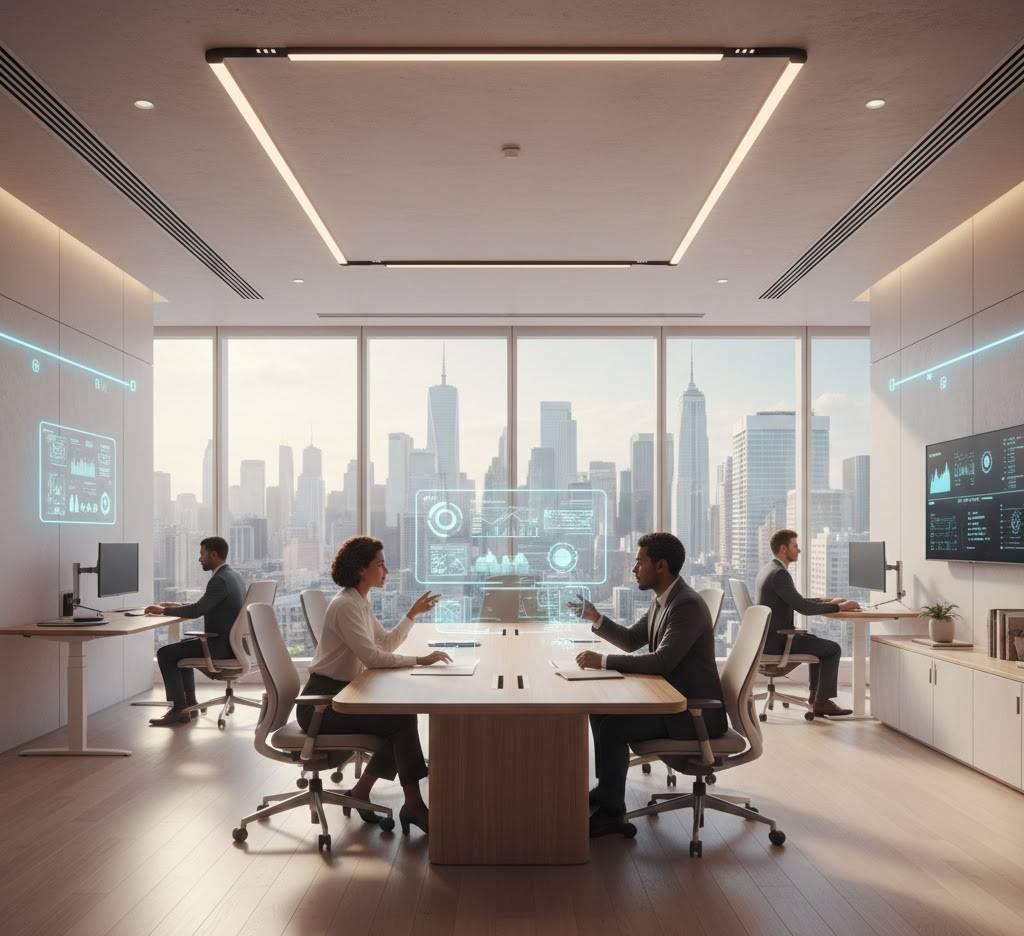
Collaborative AI tools assist your work:
- Real-time language translation for international video calls
- Meeting notes automatically transcribed and summarized
- Action items extracted and added to calendars
- Research queries answered instantly
- Document drafts generated from brief outlines
But here’s the key difference from earlier AI: It assists without intruding. The technology fades into background, enabling work rather than demanding attention.
Lunch Break: The Personalized City
Noon approaches. Your AI knows you usually eat around 12:30 and suggests restaurants based on:
- Your dietary preferences and restrictions
- Places you haven’t tried recently
- Current wait times and crowd levels
- Weather (outdoor seating recommended today)
- Your afternoon energy needs (protein-heavy options suggested before your 3 PM presentation)
You choose a new Thai place two blocks away. The restaurant AI already knows you’re coming—your preferences shared with permission. When you arrive, suggested dishes appear on the digital menu, customized to your taste profile and nutritional needs.
The streets themselves are intelligent:
Smart crosswalks with LED strips that light your path, pedestrian countdown timers that actually reflect real-time traffic conditions, and tactile feedback for visually impaired residents.
AR navigation overlaying the physical world with helpful information—building directories, business hours, even friend locations if they’ve shared.
Public spaces with adaptive features:
- Benches that gently heat in cold weather
- Shade structures that deploy during peak sun
- Public WiFi that’s actually fast and reliable
- Charging stations everywhere
- Air quality monitors with real-time displays
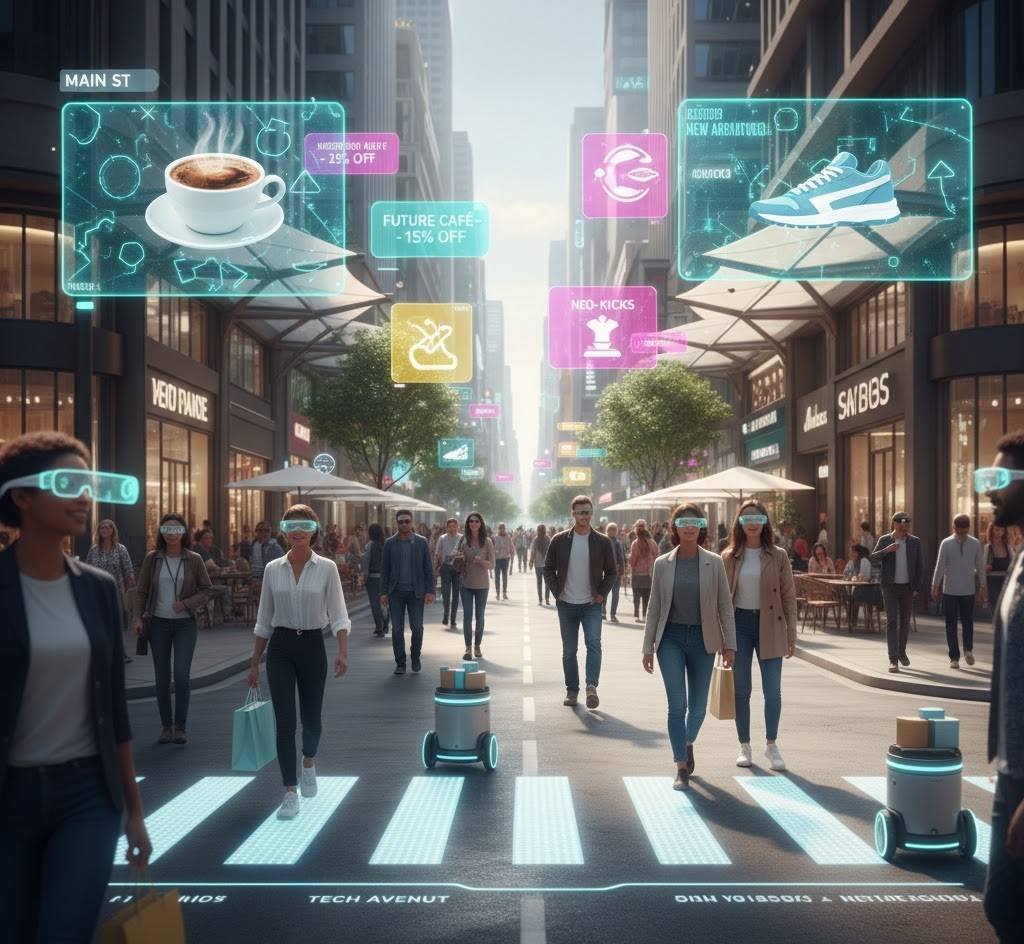
Food delivery has evolved: Autonomous robots and drones handle last-mile delivery. Your order arrives at your office 12 minutes after placement, still hot, delivered by wheeled robot that navigated building security, called the elevator, and found your floor automatically.
The Afternoon: Productivity and Wellness
Back at work, the building’s AI notices aggregate stress levels rising (measured through anonymized data—no individual surveillance). It responds:
- Lighting shifts to more calming wavelengths
- Air circulation increases slightly (research shows it improves alertness)
- Ambient white noise adjusts to mask distracting sounds
- Suggestion for 5-minute break appears on screens citywide
The AI doesn’t force compliance—it nudges toward healthier choices while respecting autonomy.
Your personal AI reminds you:
- Stand and stretch (you’ve been sitting 90 minutes)
- Hydrate (your smart water bottle reports low intake)
- Quick walk recommended (step count below usual)
These aren’t annoying interruptions—the AI learned your tolerance for notifications and times them during natural work breaks.
Evening: The City That Never Sleeps (But Helps You)
Work ends. As you leave, the building’s AI aggregates departure patterns, ensuring elevators are positioned optimally and building systems begin energy-saving transitions.
Your evening plans:
The AI suggests a new art installation downtown, tickets available, perfect timing between work and your 7:30 dinner reservation (which it made yesterday when you mentioned wanting to try that new fusion restaurant).
Transportation adapts:
- Bike-share station at building entrance has available bikes (predicted demand led to afternoon rebalancing)
- Or the autonomous shuttle running express route to arts district
- Or your personal car (if you own one) already en route from parking garage, climate controlled and route planned
The arts district greets you:
Smart lighting creates ambiance while maintaining safety—bright enough to see clearly, artistic enough to enhance the evening atmosphere.
Crowd management through subtle guidance—popular installations show wait times, suggested alternative routes prevent bottlenecks, timed entry reservations spread visitors.
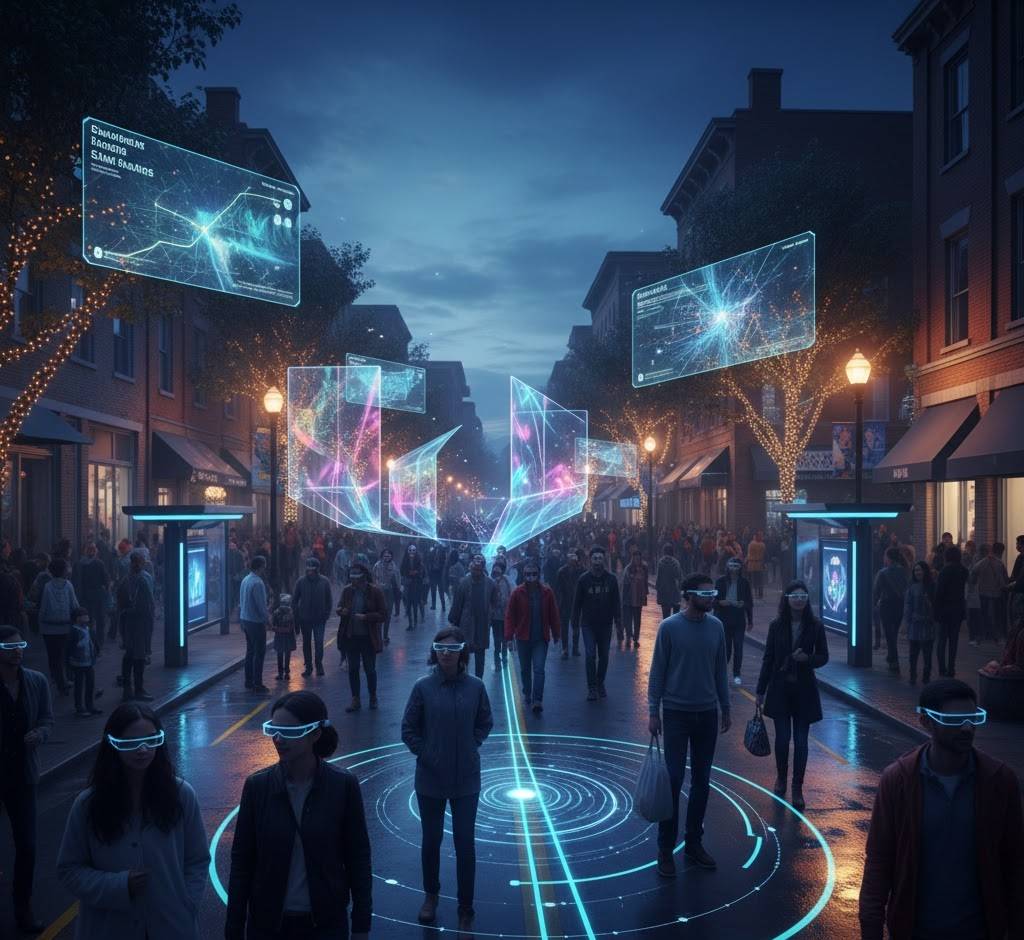
Interactive art experiences enhanced by AR—sculptures that come alive when viewed through your glasses, paintings with hidden layers visible only digitally, installations that respond to your presence and emotions.
Dinner: Culinary Experience Optimized
Your 7:30 reservation knows you’re running 5 minutes late (traffic slightly heavier than predicted). No problem—table held, kitchen notified, your arrival updated automatically.
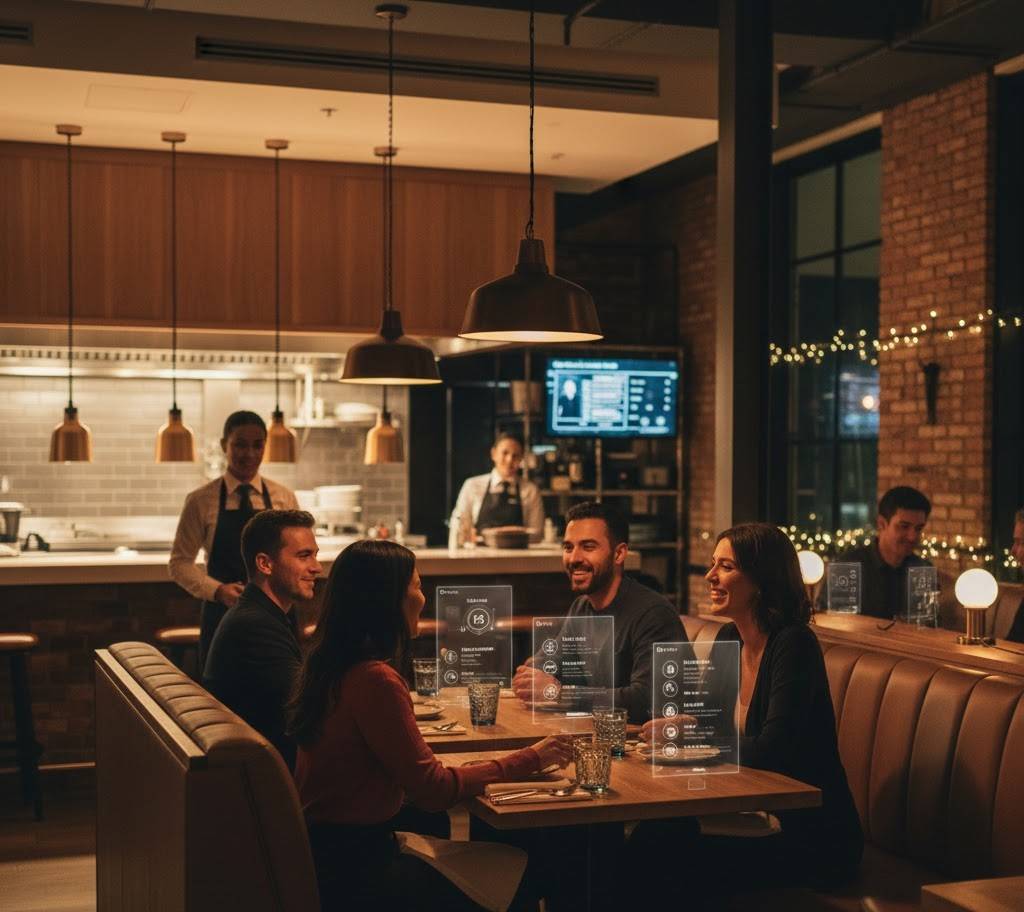
The restaurant’s AI assists invisibly:
- Allergies and dietary restrictions already noted
- Suggested wine pairing based on your order and preferences
- Courses timed perfectly (not rushed, not dragging)
- Ambient music and lighting adjusted for optimal dining experience
- Bill calculated and payment processed seamlessly when you’re ready (glance at check, confirm with eye contact, done)
The evening entertainment:
AI-curated suggestions based on your tastes:
- Live music venue with artist you’d enjoy
- Cinema showing film matching your preferences
- Or simply perfect route home for an evening walk
Street safety enhanced:
- Well-lit paths with emergency call points
- Police and security optimally positioned based on AI prediction
- Suspicious activity flagged instantly
- But feeling safe, not surveilled
Night: The City That Cares
Walking home (your AI suggested the route—15 minutes, well-lit, interesting shops still open), the city continues adapting:
Lighting follows need:
- Busy streets remain bright
- Quiet residential areas dim (saving energy, reducing light pollution)
- But pathways illuminate as pedestrians approach
Soundscape managed:
- Noise ordinances enforced through IoT monitoring
- Construction limited to appropriate hours
- Entertainment districts contained through acoustic design
Safety maintained:
- Emergency services positioned based on predictive algorithms
- Response times averaged under 4 minutes citywide
- Crime rates dropped 40% since AI integration (through prevention, not just response)
Home: Your Personal Sanctuary
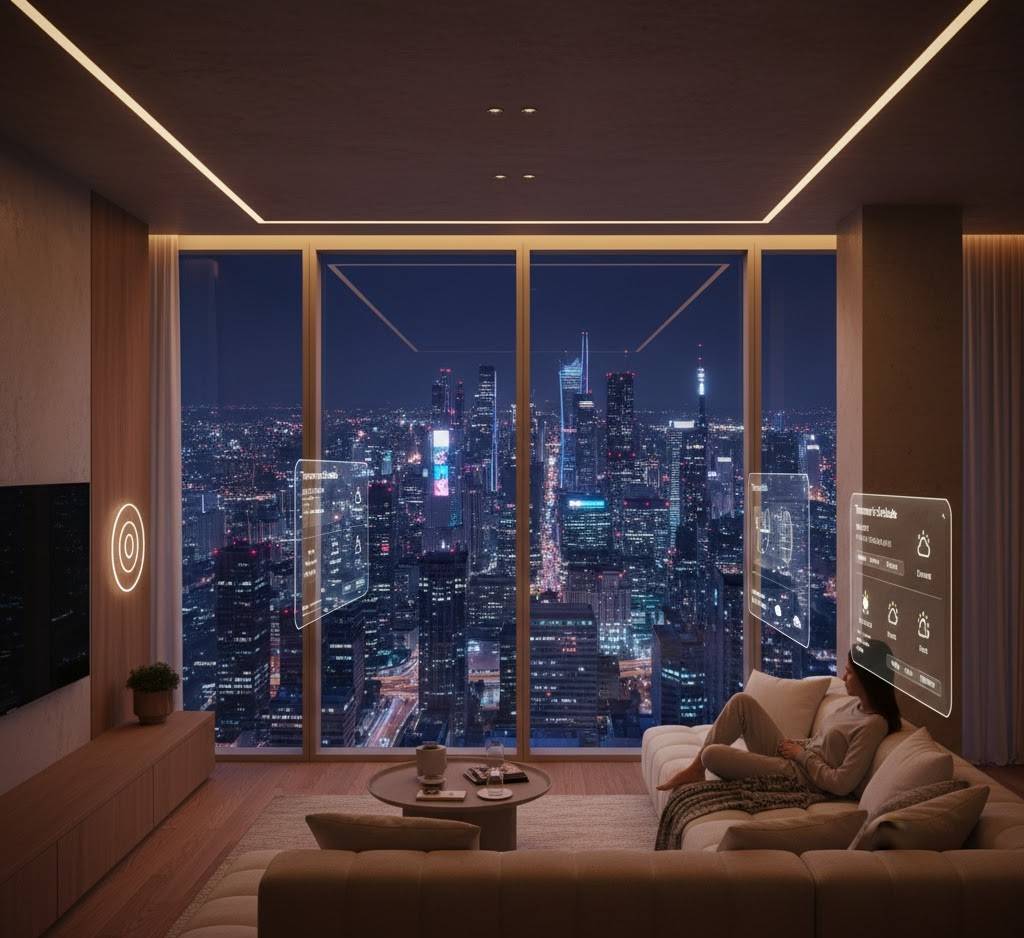
Your apartment welcomes you back. Lights, temperature, ambiance—already perfect. The AI learned your evening preferences through months of subtle adjustments.
Smart home integration:
- Doors unlock as you approach
- Entertainment options queued based on mood (determined from subtle biometric cues)
- Tomorrow’s schedule reviewed, adjustments suggested
- Sleep optimization begins—lights gradually warm and dim, temperature slowly decreasing
Privacy guaranteed:
- All data encrypted, anonymized, user-controlled
- No surveillance, only sensors responding to your preferences
- You can disable any system anytime
The city’s AI sends final updates:
- Tomorrow’s weather
- Suggested departure time (accounting for predicted traffic)
- Reminder about morning appointment
- Air quality forecast (suggesting indoor vs. outdoor exercise)
The Data Question: Privacy in AI Cities
The obvious concern: Doesn’t this require invasive surveillance?
2026’s ethical framework:
Data minimization: Systems collect only necessary information, delete after use.
Anonymization: Aggregate patterns analyzed, not individual tracking. The traffic AI knows “300 vehicles approaching intersection,” not “Sarah Johnson in her Honda.”
User control: Granular privacy settings. Opt out of personalization while keeping safety features. Choose which systems access your data.
Transparency: Regular reports showing what data exists, how it’s used, who accessed it.
Regulation: Strict laws with meaningful penalties for violations. Independent oversight boards with citizen representation.
The balance: Convenience through AI while maintaining fundamental privacy rights. Not perfect, but improving through ongoing dialogue between technologists, policymakers, and citizens.
The Inequality Challenge
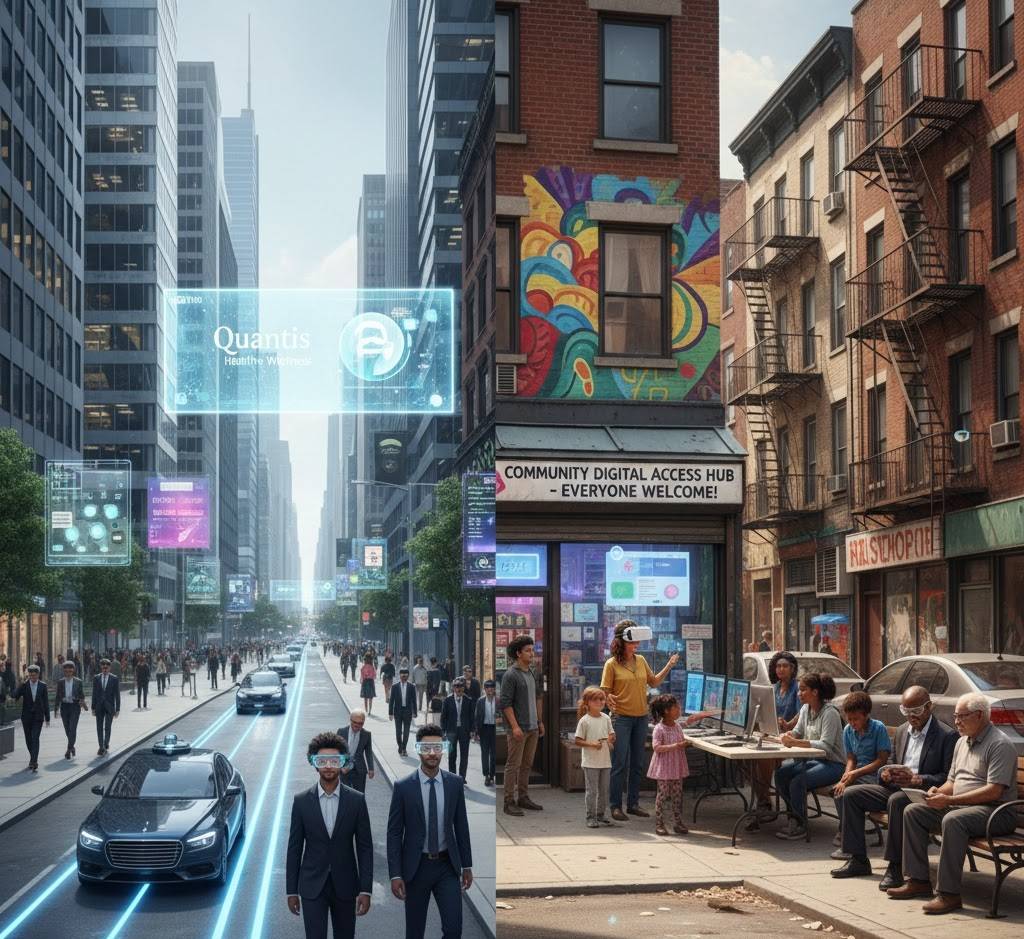
The hard truth: Not everyone experiences 2026’s AI city equally.
Digital divide persists:
- Premium AI services require expensive devices
- Older residents struggle with interfaces
- Lower-income neighborhoods get fewer smart infrastructure investments
Ongoing efforts:
- Public AR devices available at libraries and community centers
- Simplified interfaces for less tech-savvy residents
- Deliberate infrastructure equity programs
- Universal basic internet access
The goal: Ensuring AI benefits entire community, not just wealthy neighborhoods.
Living With AI: The Adaptation
How do residents actually feel?
Initial adjustment: First weeks feel overwhelming. Constant digital stimulation, notification fatigue, learning curves.
Gradual comfort: Systems learn your preferences. You learn to filter information. Balance emerges.
New normal: After months, the AI fades into background. You notice it only when it fails—like electricity or running water.
Generational differences:
- Young people (digital natives) adapt instantly
- Middle-aged residents appreciate convenience after adjustment period
- Elderly citizens either embrace assistance or feel alienated
The consensus: Life is objectively better—more efficient, safer, healthier—but something intangible feels lost. Perhaps the friction that made cities feel human.
The Human Element Remains Essential
Despite AI integration, 2026’s city still needs:
Human judgment: AI assists decisions but doesn’t make them.
Human connection: Technology enables interaction but can’t replace it.
Human creativity: AI augments art but doesn’t create it.
Human empathy: Algorithms optimize systems but don’t understand suffering.
The best outcome: AI handling routine optimization, freeing humans for higher-order thinking, creativity, and genuine connection.
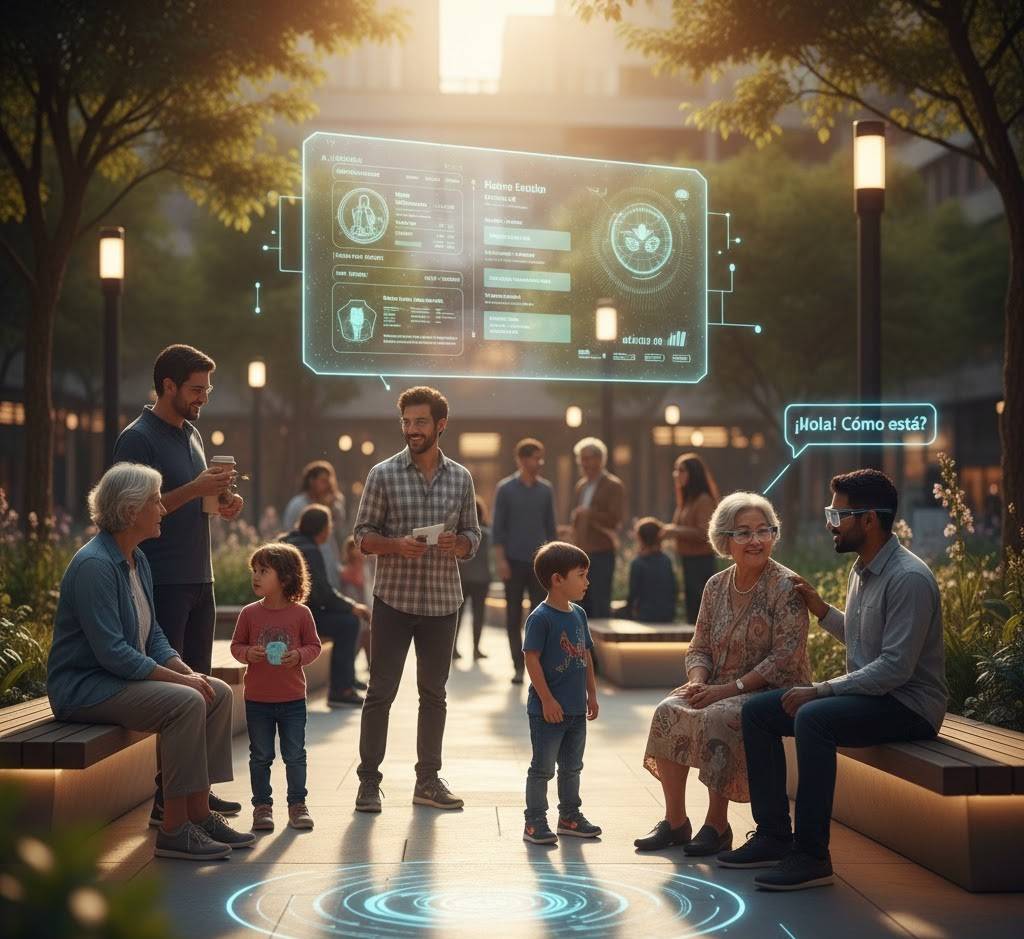
The Neon Horizon
The city at night, seen from above, glows with millions of data points, billions of connections, countless AI decisions being made every second.
But zoom in, and you see people:
- Couple on first date, nervously talking
- Parent comforting crying child
- Friends celebrating reunion
- Elderly man feeding pigeons
- Teenager discovering passion
- Artist creating beauty
The AI makes their lives easier, safer, more efficient. But it doesn’t make their lives meaningful. That remains profoundly, essentially human.
2026’s AI-integrated city isn’t science fiction dystopia or techno-utopia. It’s simply the next phase of urban evolution—cities that respond, adapt, and optimize, creating space for humans to be more human.
The neon horizon glows not just with technology’s light, but with the promise of what humans might achieve when freed from urban friction—when the city itself becomes partner in human flourishing.