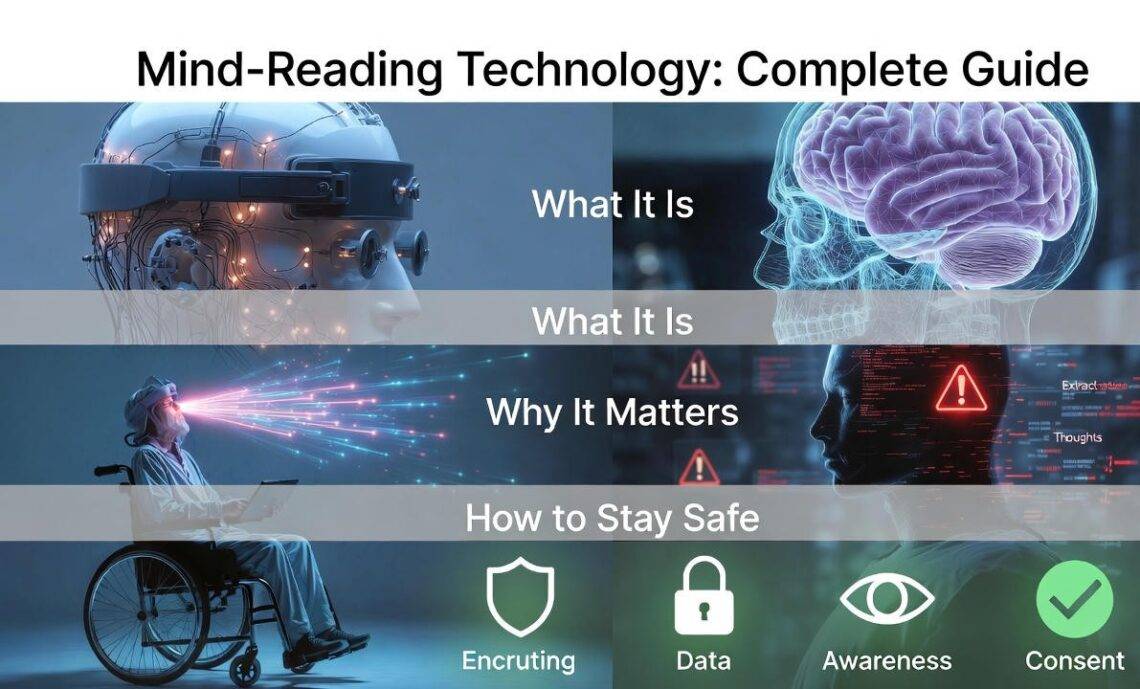
Mind-reading technology—once the stuff of sci-fi movies—is slowly becoming real.
From brain-computer interfaces (BCIs) to neural sensors that decode thoughts, this technology has the power to transform communication, medicine, and daily life.
But like all powerful tools, it also raises important questions about privacy, ethics, and safety.
Let’s break down what mind-reading tech really is, why it matters, and how you can protect yourself as it evolves.
1. What Is Mind-Reading Technology?
Mind-reading technology doesn’t literally read your private thoughts like a book.
Instead, it uses devices—such as brain sensors, EEG headbands, or implants—to detect electrical patterns in the brain.
These signals can be translated into:
- Commands (like moving a cursor)
- Emotions
- Intentions
- Very rough decoded images or words (still experimental)
This field is called neurotechnology or brain-computer interfaces (BCIs).

2. How Does It Actually Work?
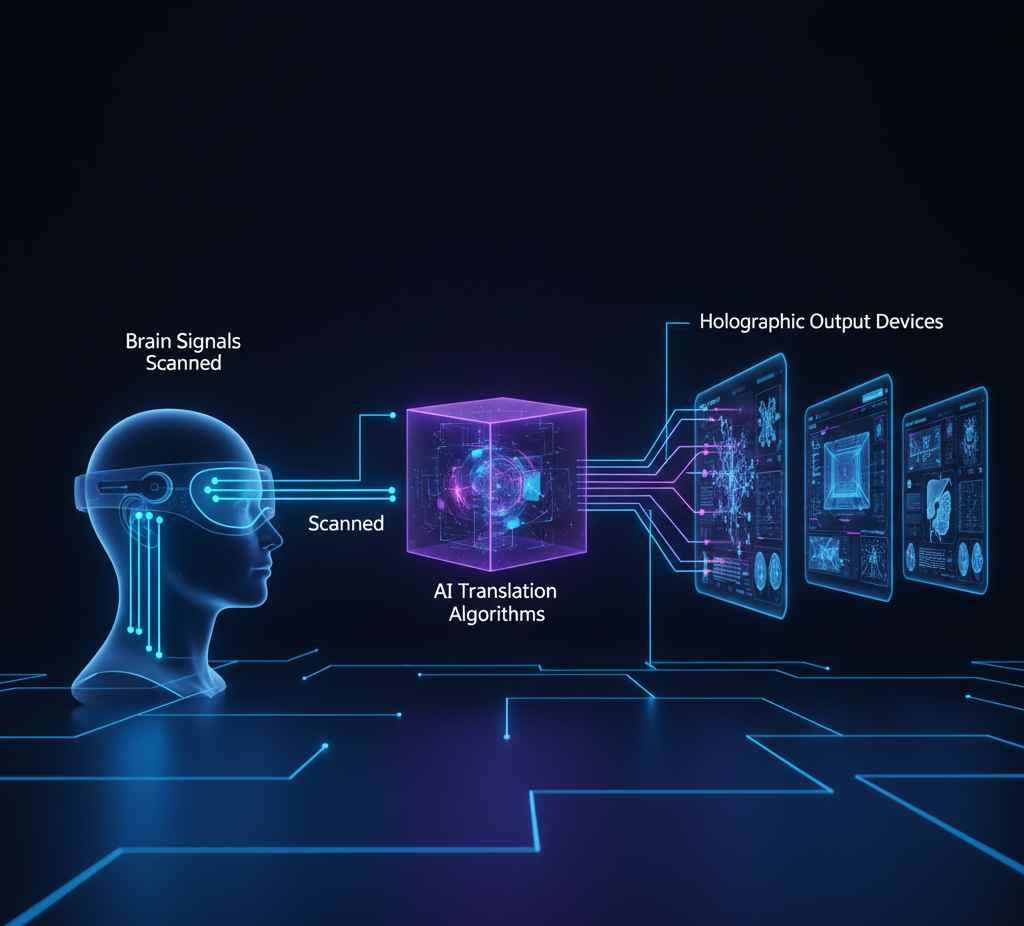
Mind-reading tech relies on three key steps:
- Detect brain activity using sensors
- Translate the signals through machine-learning models
- Output a command, image, or piece of text
For example, someone with paralysis can think about moving a hand, and a BCI can convert that intention into a robotic arm movement.
The tech doesn’t decode complex thoughts—it interprets patterns.
3. Why Does Mind-Reading Tech Matter?
This technology has huge potential to help millions:
Medical breakthroughs
- Helping paralyzed patients communicate
- Restoring movement through brain-controlled prosthetics
- Detecting mental health patterns early
Communication
People unable to speak may soon communicate through thought-driven devices.
Productivity & Interaction
Future computers may be controlled by thought instead of touch or voice.

4. The Risks: Privacy, Control & Misuse
With great power comes great responsibility—and serious concerns:
- Neural data theft (brain signals being collected without consent)
- Unwanted surveillance
- Misinterpretation of brain signals
- Manipulation or targeting through neural responses
This is why many experts call for NeuroRights—laws protecting mental privacy.

5. How to Stay Safe (Even Today)
Even though advanced mind-reading tech isn’t widely available yet, you can prepare by:
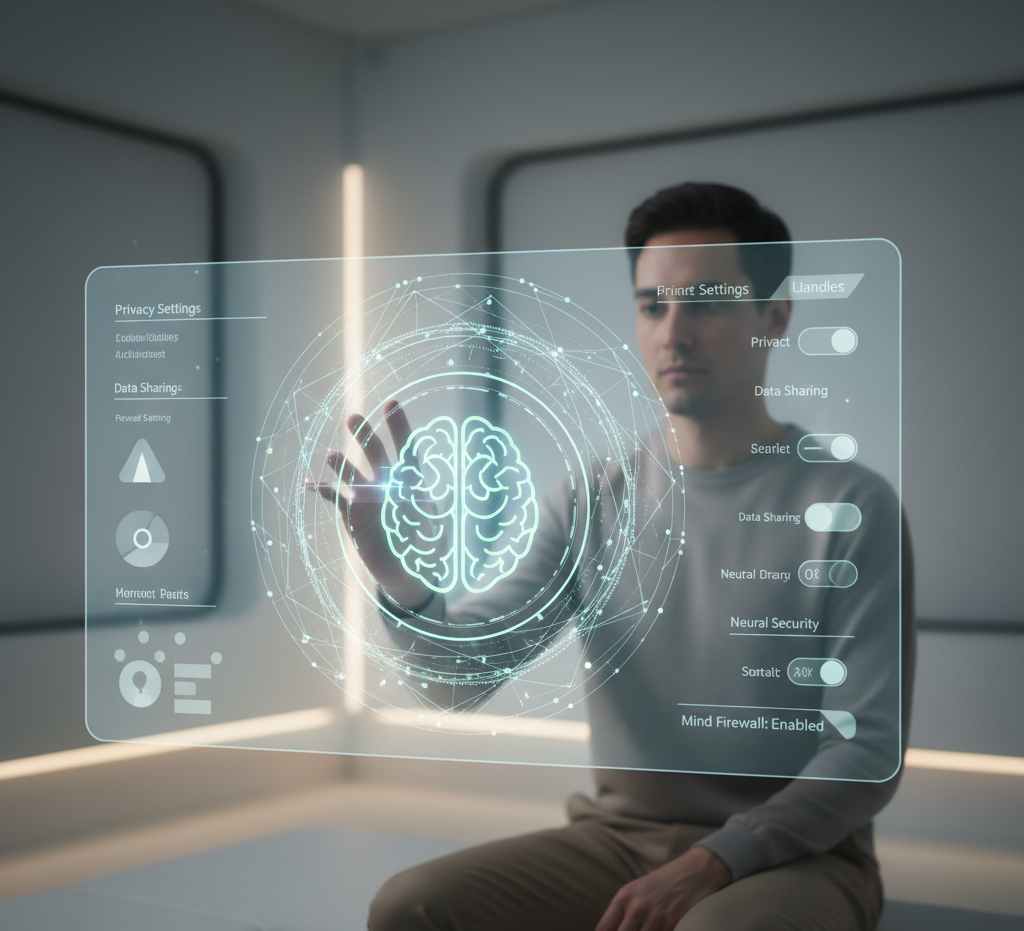
✔ Understanding your rights
Support emerging “right to mental privacy” laws.
✔ Being careful with consumer neurotech
EEG headbands, meditation devices, or neural trackers often collect data.
✔ Reading privacy policies
Check how companies store or share neural signals.
✔ Avoiding unregulated devices
If a device claims “thought decoding” without scientific backing—stay away.
✔ Supporting ethical AI practices
Transparency, consent, and limits on data use are essential.
6. The Future: Helpful, But Needs Boundaries
Mind-reading technology could empower humanity:
- Giving a voice to people who can’t speak
- Helping treat neurological conditions
- Boosting creativity and communication
But without strong rules, it could become invasive.
The best future is one where innovation and safety grow together.

Conclusion
Mind-reading tech is no longer fantasy—it’s the next frontier of human-tech interaction.
It promises incredible benefits, but only if we guide its development responsibly.
The more we understand it now, the safer and more empowering our future will be.