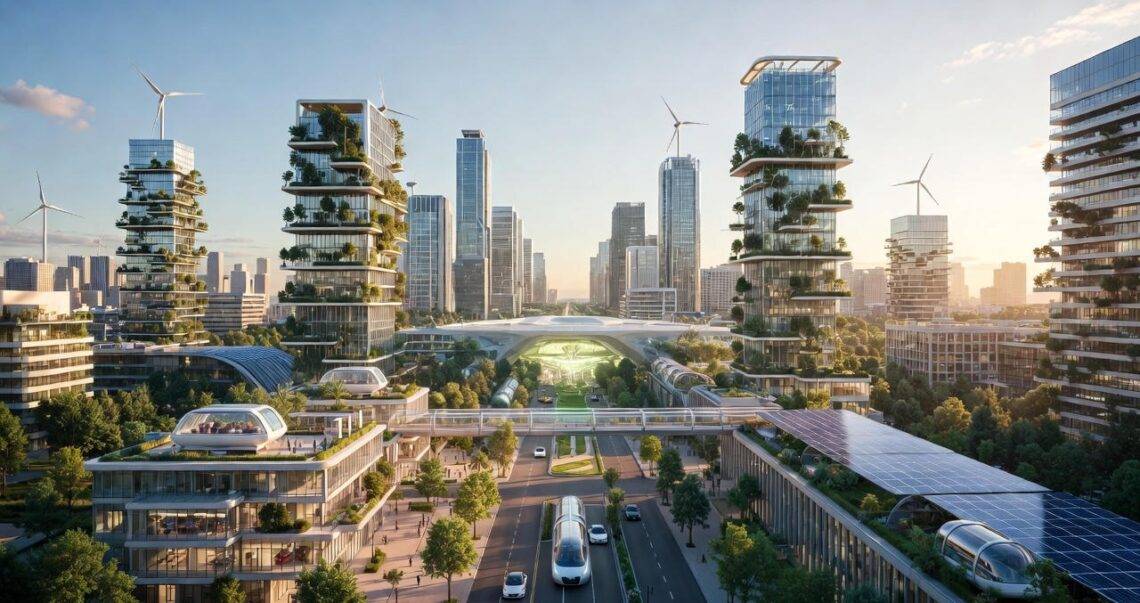
Imagine a city that breathes out as much oxygen as it consumes. Where every building generates more energy than it uses. Where waste doesn’t exist—only resources cycling endlessly. Where air quality rivals a mountain forest, and wildlife thrives alongside millions of residents.
This isn’t fantasy. It’s engineering.
Carbon-neutral metropolises are being designed right now—cities planned from first principles to eliminate net carbon emissions while providing exceptional quality of life. These aren’t retrofits of old cities, but purpose-built ecosystems where sustainability isn’t an add-on but the foundation.
Let’s explore what living in a zero-emission city actually looks like.
Energy: The Solar-Powered Skyline
Every surface generates power:
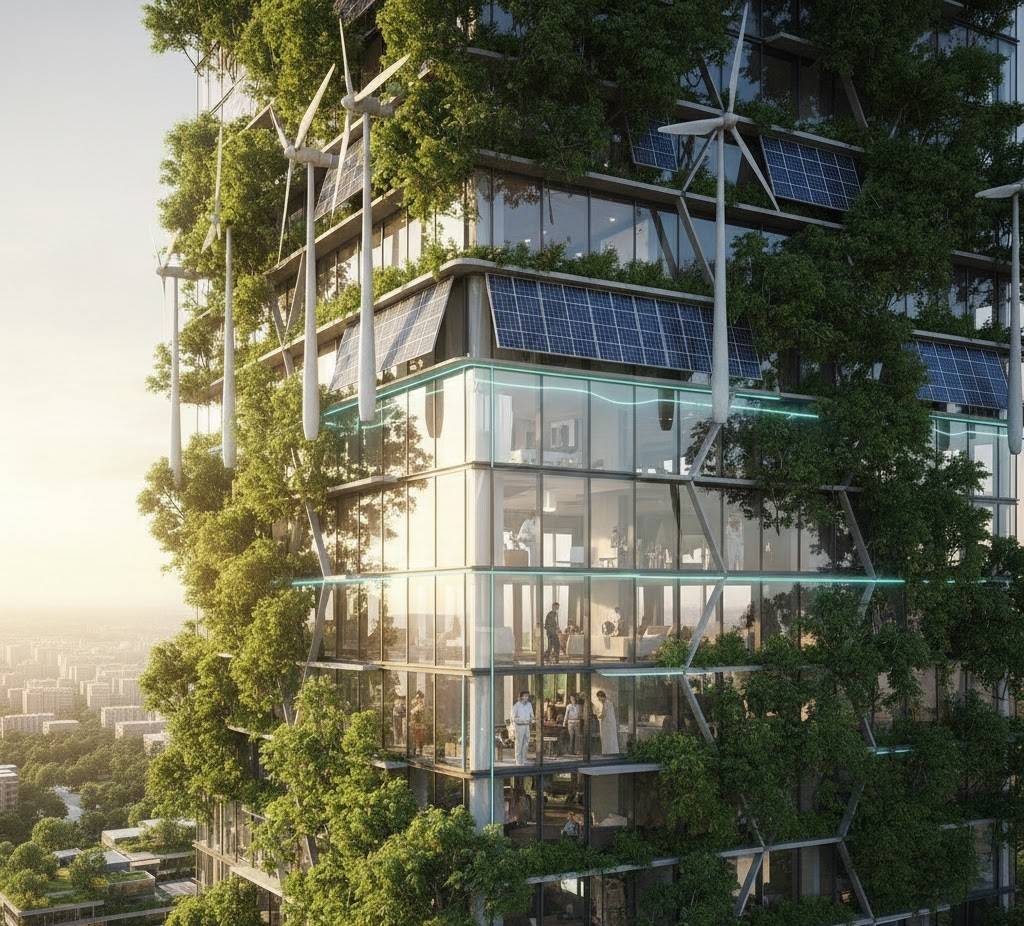
Building facades aren’t just walls—they’re photovoltaic arrays. Windows? Transparent solar panels. Rooftops? Dense solar farms with gardens underneath. Parking structures? Covered in panels providing shade and power simultaneously.
Singapore’s Oasia Hotel demonstrates this—a 27-story tower generating 30% of its electricity needs while being covered in 21 species of plants. Scale this citywide and buildings become power stations.
Wind integration: Vertical axis turbines built into skyscrapers capture urban wind currents without the massive footprints of traditional turbines.
Geothermal networks: Underground heat exchange systems regulate temperature using earth’s constant subsurface temperature—minimal energy for heating/cooling.
Energy storage: Massive battery installations and hydrogen fuel cells store excess production, ensuring 24/7 renewable power.
Result: Cities producing 120-150% of energy needs, exporting surplus to surrounding regions.
Transportation: Zero-Emission Mobility
No combustion engines allowed—period.
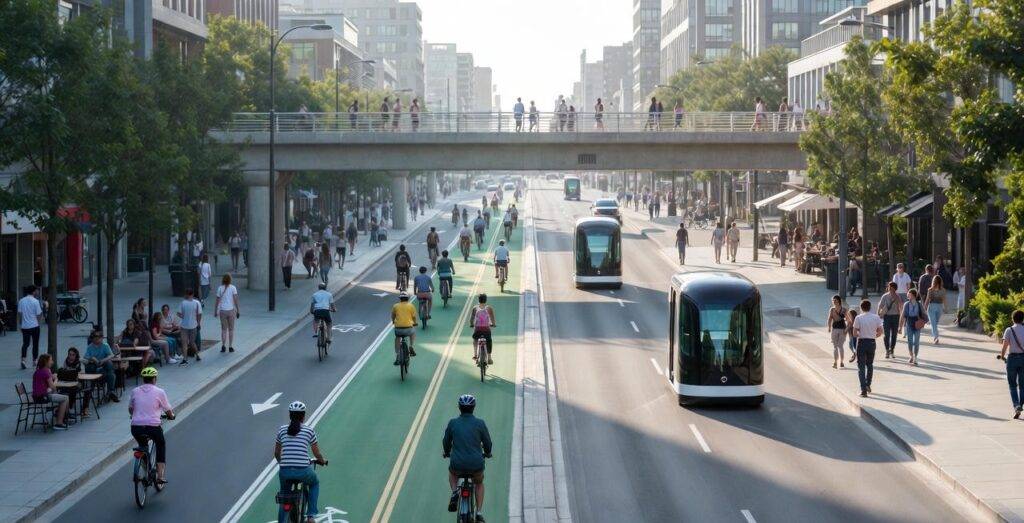
Autonomous electric vehicles handle all motorized transit:
- Shared fleets (why own when summon-on-demand?)
- Optimized routing eliminating congestion
- 90% reduction in vehicles needed (shared usage)
Cycling infrastructure prioritizes human power:
- Protected lanes on every street
- E-bike sharing stations every 200 meters
- Bike highways connecting districts
Walking elevated: Pedestrian networks at multiple levels—street, elevated walkways, rooftop paths—create a 3D walking city.
Hyperloop connections: Between districts and nearby cities—electric, efficient, fast.
Zero transport emissions within 5 years of operation.
Buildings: Living Architecture
Carbon-neutral construction from foundation to rooftop:
Materials: Cross-laminated timber (CLT) from sustainable forests, recycled steel, bio-concrete that absorbs CO2, hempcrete insulation, reclaimed materials.
Design: Passive solar orientation, natural ventilation, thermal mass regulation, rainwater harvesting, greywater recycling.
Operations: Net-zero energy through generation and efficiency, smart systems optimizing every watt.
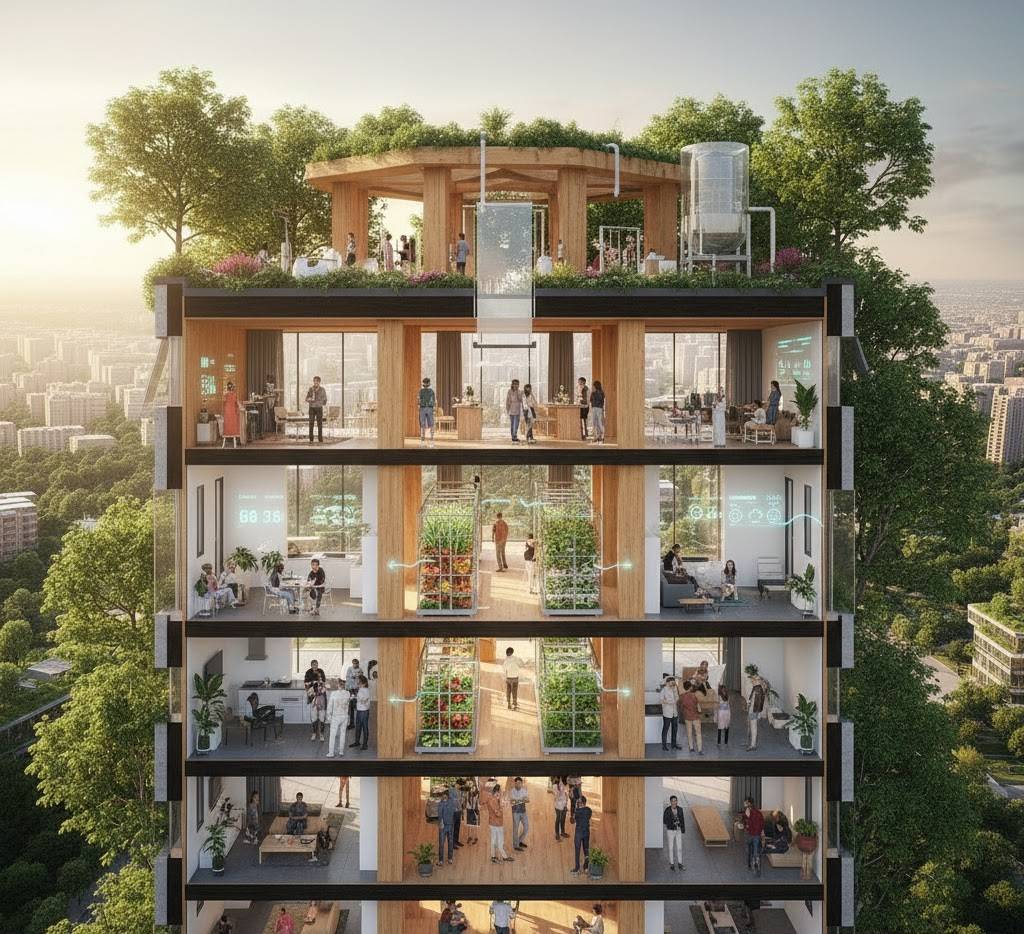
Vertical farms integrated into residential towers—residents grow food on their balconies and in communal spaces, reducing transportation emissions while creating green buffer zones.
Every building achieves LEED Platinum or equivalent as baseline, not aspiration.
Waste: The Circular Economy
Zero waste to landfill isn’t a slogan—it’s enforced policy.
Organic waste: Composted locally, feeding urban farms and green spaces.
Recyclables: Automated sorting facilities processing materials for reuse.
Non-recyclables: Incineration with energy recovery (waste-to-energy plants with emission scrubbing).
Manufacturing: Designed-for-disassembly requirements mean products become resources at end-of-life.
Sharing economy: Repair cafes, tool libraries, clothing swaps—reducing consumption through communal access.
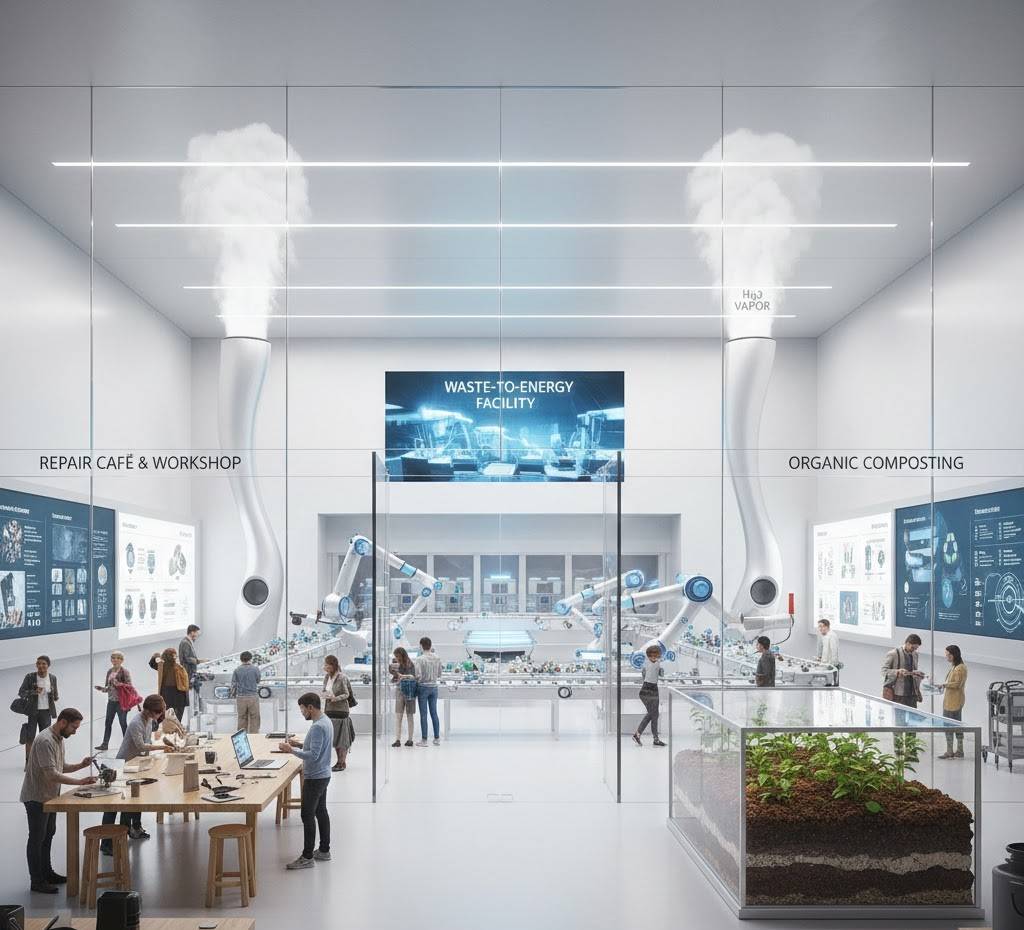
Result: 95% waste diversion from landfills, compared to typical 35%.
Nature: The Green Matrix
30-40% of city area is green space:
Vertical forests on buildings, parks connecting every neighborhood, urban forests providing wildlife corridors, wetlands for water filtration and biodiversity.
Singapore’s Gardens by the Bay scaled citywide—integrating nature so thoroughly that cities become ecosystems supporting thousands of species.
Air quality rivals rural areas—plant coverage and zero emissions create crystalline atmospheric clarity.
Urban agriculture provides 40% of food locally—rooftop farms, vertical growing systems, aquaponics facilities, community gardens.
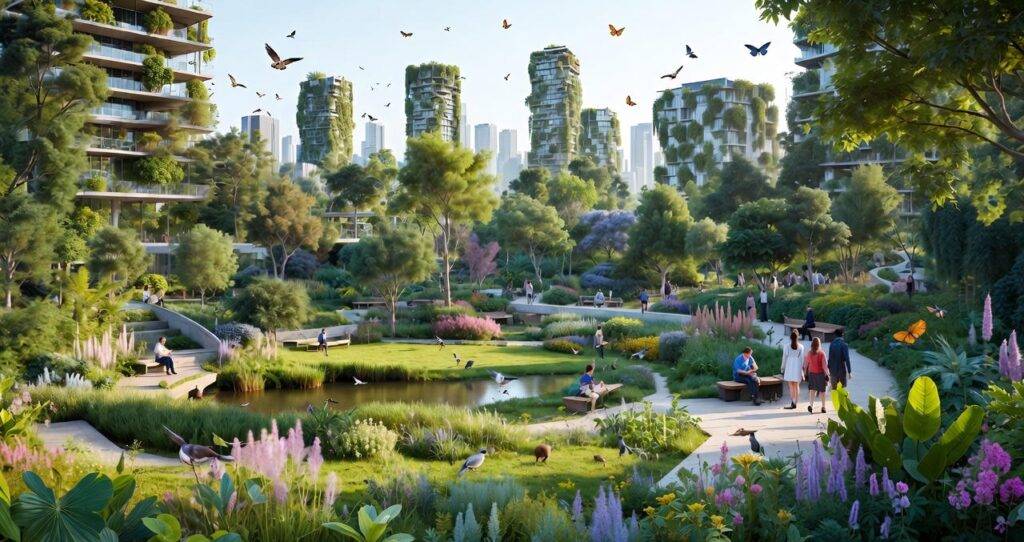
Water bodies restored: Rivers, lakes, and coastlines cleaned and protected, supporting aquatic ecosystems and providing recreation.
Smart Systems: The Invisible Intelligence
AI optimizes everything:
Energy grids balance supply and demand in real-time, storing excess and releasing during peak need.
Traffic systems coordinate vehicle flows eliminating congestion.
Building systems adjust heating, cooling, lighting, and ventilation based on occupancy and conditions.
Water management detects leaks instantly, optimizes usage, and manages stormwater through green infrastructure.
Predictive maintenance prevents system failures before they occur.
But crucially: Systems serve residents transparently, with privacy protections and community oversight.
Economics: The Sustainable Prosperity Model
Carbon-neutral cities aren’t expensive—they’re profitable:
Energy exports generate revenue from surplus production.
Health savings: Clean air and active transport reduce healthcare costs 30-40%.
Productivity gains: Shorter commutes and better environment increase worker output.
Tourism: Sustainable showcase cities attract millions of visitors.
Property values: Demand for carbon-neutral living drives premium pricing.
Green jobs: Renewable energy, urban farming, ecosystem management, smart system operations create diverse employment.
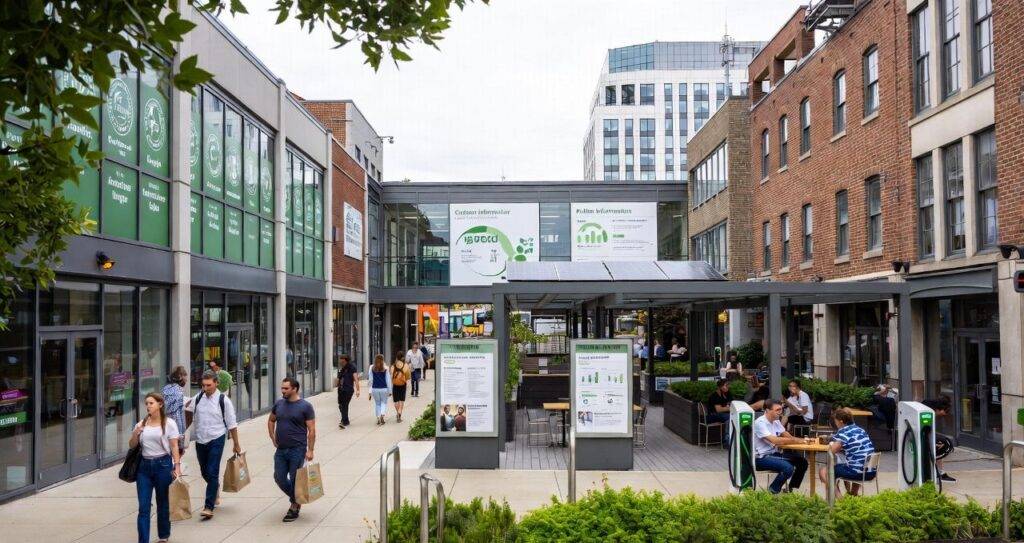
Community: The Human Experience
What’s daily life like?
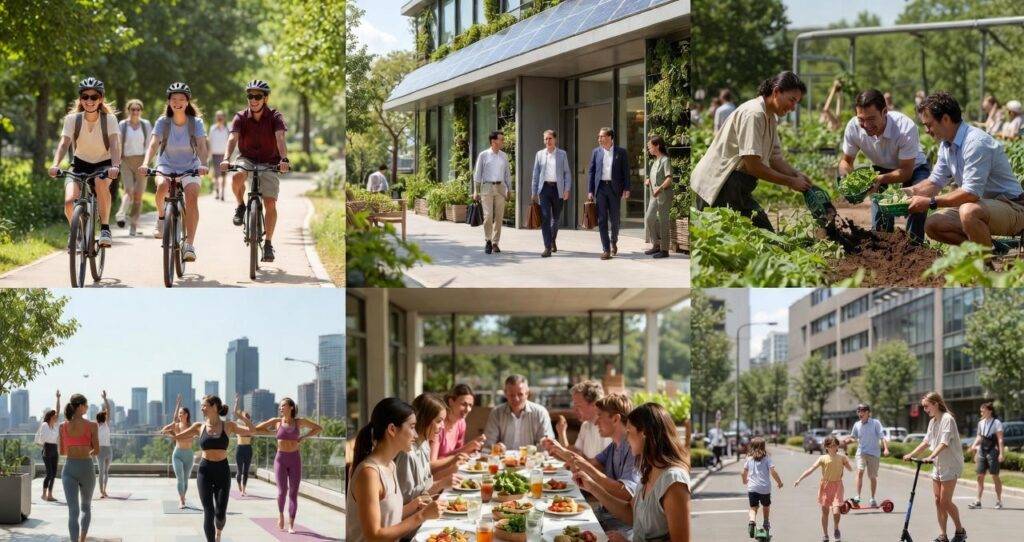
Morning: Wake naturally (optimized circadian lighting), breakfast from rooftop garden produce, walk or bike to work through tree-lined paths (10-minute commute).
Workday: Office building generates its own power, natural ventilation and lighting, ergonomic smart workspace.
Lunch: Options from vertical farm restaurants, autonomous delivery from local kitchens, outdoor dining in pedestrian zones.
Evening: Community garden volunteer work, rooftop yoga with city views, dinner with neighbors in communal dining space.
Air quality: Headaches and respiratory issues vanished within months of moving here.
Stress levels: Dropped significantly—greenery everywhere, quiet streets, strong community connections.
The Challenge: Making It Real
Barriers to overcome:
Initial cost: Building from scratch is expensive (though lifecycle costs are lower).
Political will: Requires long-term commitment beyond election cycles.
Behavior change: Residents must adapt to new ways of living.
Technology deployment: Scaling renewable energy, storage, and smart systems.
Equity: Ensuring carbon-neutral cities don’t become exclusive enclaves for wealthy.
The Cities Being Built
Masdar City, UAE: Zero-carbon, zero-waste goal, 50% complete, learning from challenges.
Neom, Saudi Arabia: $500 billion carbon-neutral megacity under construction.
Woven City, Japan: Toyota’s experimental community near Mount Fuji.
Oceanix City: Floating carbon-neutral community design.
Dozens more in planning stages worldwide—China, Europe, North America.
The Verdict: Possible and Necessary
Carbon-neutral metropolises aren’t utopian dreams—they’re engineering projects combining existing technologies in comprehensive systems.
We know how to build them. The question is whether we will.
With cities generating 70% of global CO2 emissions, carbon-neutral urban development isn’t optional—it’s survival strategy.
The future cityscape is green, smart, and emission-free. And it’s spectacular.