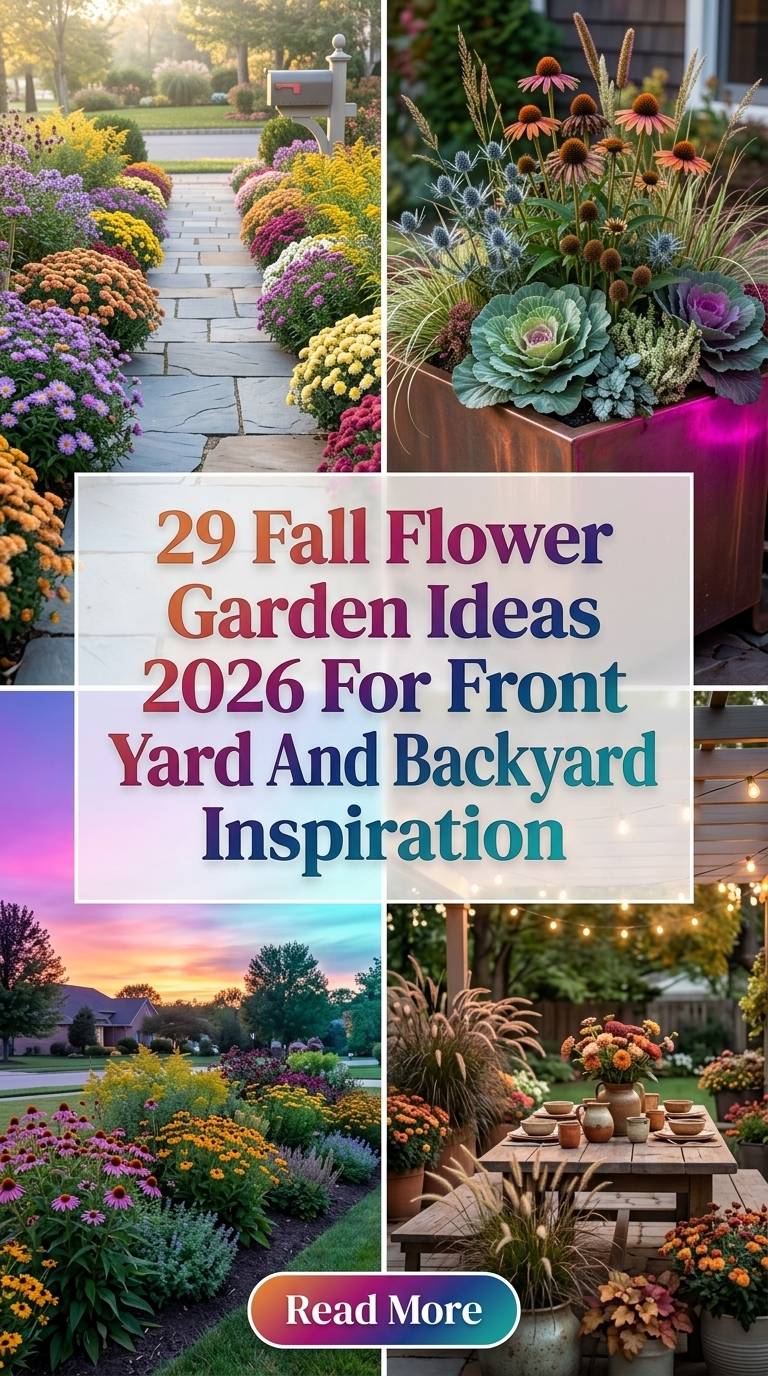
Discover stunning fall flower garden ideas that will transform your outdoor spaces into breathtaking autumn sanctuaries for 2026. This comprehensive guide showcases vibrant blooms, seasonal textures, and creative landscaping techniques perfect for both front and back yards. Each concept balances visual appeal with practical gardening tips, ensuring your garden thrives through the crisp autumn months. Learn how to layer colors, incorporate late-blooming perennials, and create stunning displays that celebrate the beauty of the fall season. These versatile inspirations suit various garden sizes, skill levels, and climate zones across the USA. Embrace the magic of autumn with flower gardens that bring warmth, color, and life to your home’s exterior throughout the season.
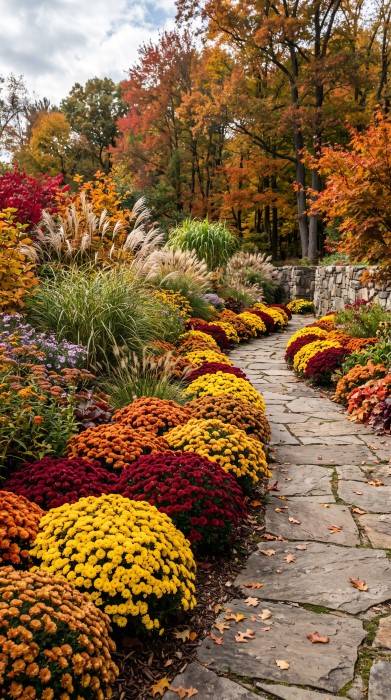
1. Vibrant Chrysanthemum Borders
Plant masses of chrysanthemums in rich autumn hues like burnt orange, deep burgundy, and golden yellow along garden borders and pathways. These hardy fall bloomers provide instant color and can be arranged in sweeping drifts for maximum visual impact. Choose hardy varieties that will return year after year, establishing a reliable foundation for your fall garden. Mix early, mid, and late-blooming varieties to extend the flowering season from September through November. The dense, mounded habit of mums fills gaps left by summer annuals, keeping your garden looking full and vibrant. Pair them with ornamental grasses for textural contrast that enhances the autumn aesthetic.
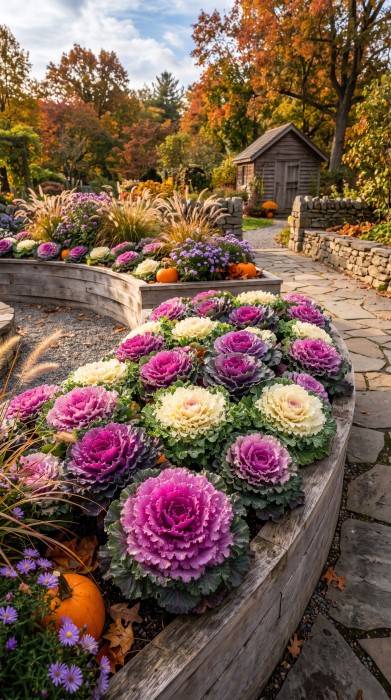
2. Ornamental Kale and Cabbage Displays
Incorporate ornamental kale and cabbage with their ruffled, colorful foliage in shades of pink, purple, white, and cream for dramatic fall interest. These cool-season plants actually improve in appearance after the first frost, becoming more vibrant as temperatures drop. Plant them in containers, raised beds, or directly in garden borders where their bold textures can be appreciated up close. Combine different varieties to create a tapestry of colors and leaf patterns that rival any flower display. Their architectural form provides structure to fall gardens when many other plants are fading. They remain attractive well into winter, offering extended seasonal interest.
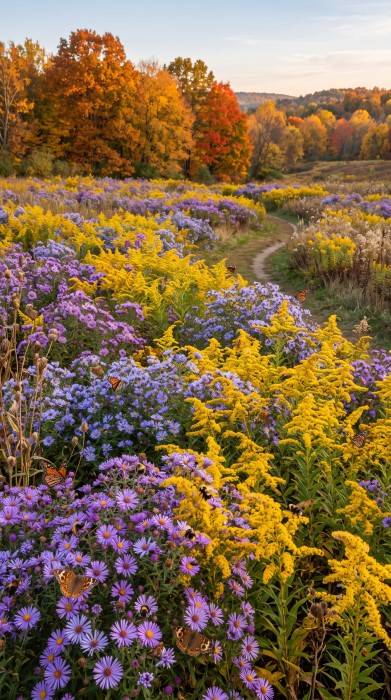
3. Asters and Goldenrod Combinations
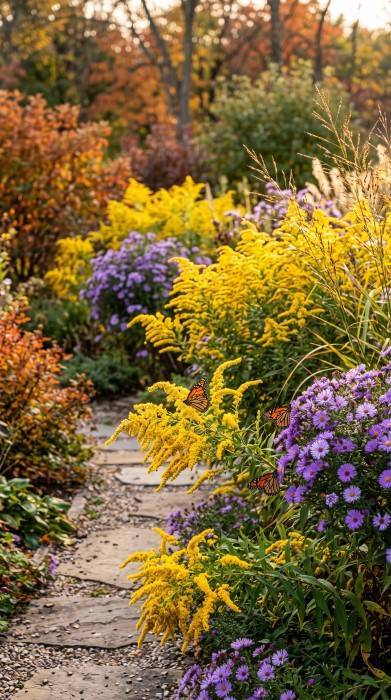
Create naturalistic plantings combining purple and blue asters with bright goldenrod for a classic autumn color combination that attracts pollinators. These native wildflowers bloom simultaneously in fall, creating a stunning contrast of cool and warm tones. Plant them in drifts or meadow-style groupings for a relaxed, natural look that requires minimal maintenance. The nectar-rich blooms provide crucial food for migrating butterflies and bees preparing for winter. Their wild, informal habit adds movement and spontaneity to structured garden designs. Both plants are extremely hardy and drought-tolerant once established, making them ideal for sustainable landscaping.
4. Sedum Autumn Joy Mass Plantings
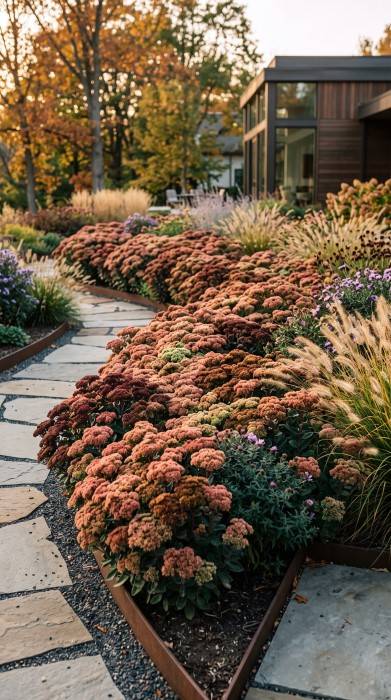
Mass plant Sedum ‘Autumn Joy’ or similar stonecrop varieties that transition from green to bronze to deep burgundy as fall progresses. These succulent perennials produce broccoli-like flower heads that open pink and mature to rich copper and rust tones. Their thick, fleshy foliage provides textural interest and requires minimal water, making them perfect for low-maintenance fall gardens. The sturdy stems hold up well in wind and rain, maintaining their structure throughout the season. Birds are attracted to the seed heads in late fall, adding wildlife interest to your garden. They’re virtually indestructible and multiply easily, filling in bare spots with minimal effort.
5. Japanese Maple Accent Gardens
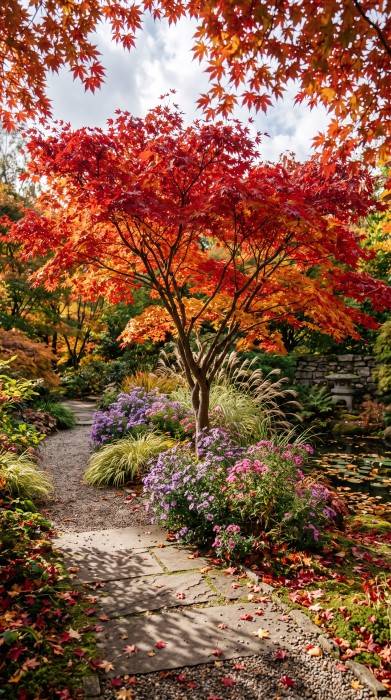
Position Japanese maples with their spectacular fall foliage in shades of crimson, orange, and gold as focal points in your fall garden design. These small trees provide stunning vertical interest and their delicate, lacy leaves create beautiful shadow patterns on the ground. Underplant with shade-tolerant fall bloomers like asters, chrysanthemums, and ornamental grasses for layered interest. The changing leaf colors provide a dramatic backdrop that enhances the entire garden’s autumn display. Choose varieties known for reliable fall color in your climate zone for consistent performance. Their compact size makes them perfect for smaller gardens where every plant must earn its place.
6. Dahlia Cutting Garden Beds
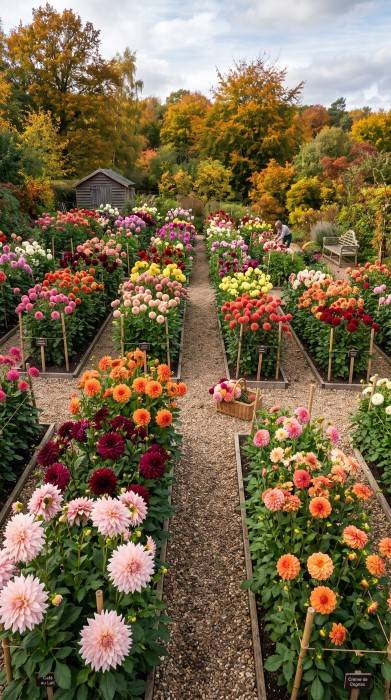
Dedicate a section of your garden to dahlias, planting tubers in spring for spectacular fall blooms in every imaginable color and form. These tuberous perennials produce flowers ranging from small pompoms to dinner-plate sized blooms in endless color combinations. Cut flowers regularly to encourage continuous blooming from mid-summer through the first hard frost. The diverse flower forms and vibrant colors provide endless cutting garden possibilities for indoor arrangements. Lift and store tubers after frost for replanting next spring, ensuring years of spectacular fall displays. Mix tall varieties in the back with shorter types in front for a layered, professional cutting garden appearance.
7. Ornamental Grass Movement Gardens
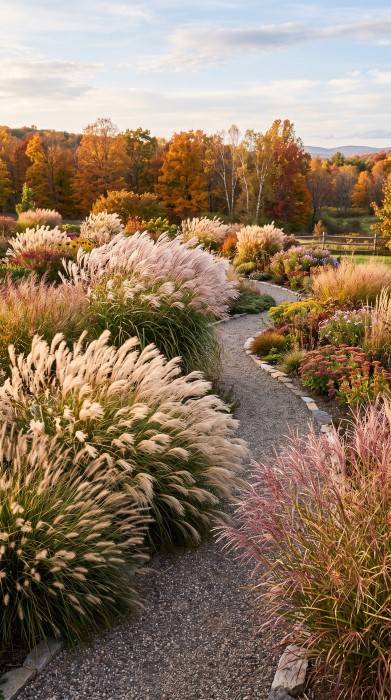
Plant masses of ornamental grasses like fountain grass, maiden grass, and switchgrass that sway beautifully in autumn breezes and catch the low fall light. Their feathery plumes and seed heads provide movement, texture, and sound that enliven the garden when flowers are fading. Many grasses turn golden, copper, or burgundy in fall, adding their own color show to the autumn palette. Leave them standing through winter for continued interest and wildlife habitat, cutting back in early spring. Their vertical forms contrast beautifully with mounded perennials and provide structure to informal plantings. Grasses require minimal care once established and are extremely drought-tolerant.
8. Pansy and Viola Cool Season Beds
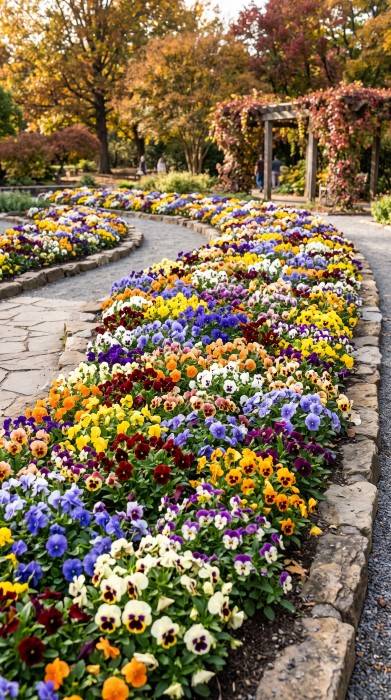
Plant pansies and violas in fall for immediate color that will survive mild winters and bloom again in early spring. These cool-season favorites come in countless colors and patterns, from solid hues to whimsical faces and blotches. They tolerate light frosts and actually prefer cool weather, blooming prolifically when other flowers are fading. Plant densely for maximum impact, creating carpets of color in beds, containers, and hanging baskets. Deadhead regularly to encourage continuous blooming through fall and into winter in mild climates. Their cheerful faces and bright colors provide much-needed cheer as the garden season winds down.
9. Sunflower Late Season Varieties
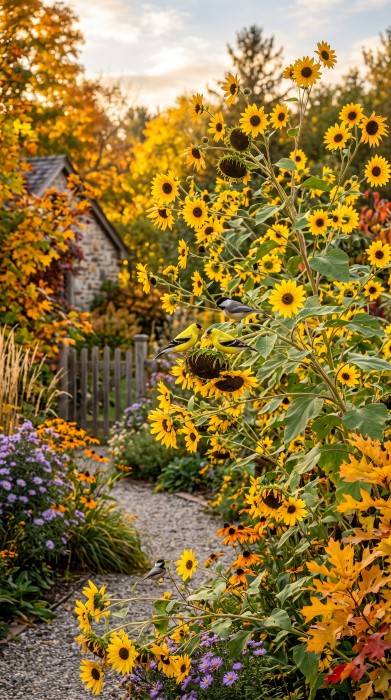
Grow late-blooming sunflower varieties that flower in fall, providing golden blooms when most summer flowers are finished. Choose multi-branching types that produce numerous smaller blooms over an extended period rather than single giant heads. The cheerful yellow and gold flowers brighten the garden as days shorten and temperatures cool. Birds flock to the seed-laden heads in late fall, providing excellent wildlife viewing opportunities. Plant in succession every two weeks from late spring through early summer for continuous fall blooms. Their tall, architectural forms add vertical interest and a casual, country charm to any garden.
10. Heather and Heathers Winter Interest
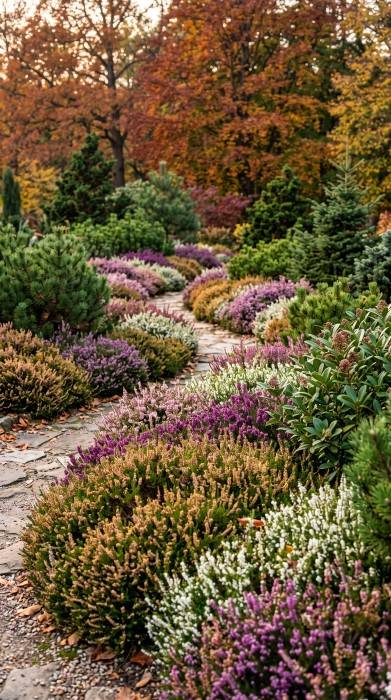
Incorporate heather and heaths with their tiny, needle-like foliage and late-blooming flowers in pink, purple, and white. These evergreen shrubs provide year-round structure and interest, blooming from late summer through winter in mild climates. Their fine texture contrasts beautifully with broader-leaved perennials and adds subtle color to the winter garden. Plant in acidic soil and full sun for best performance, grouping several together for maximum impact. They’re extremely hardy and drought-tolerant once established, requiring minimal maintenance. The tiny flowers attract late-season pollinators and provide winter food for beneficial insects.
11. Rose Hip Ornamental Displays
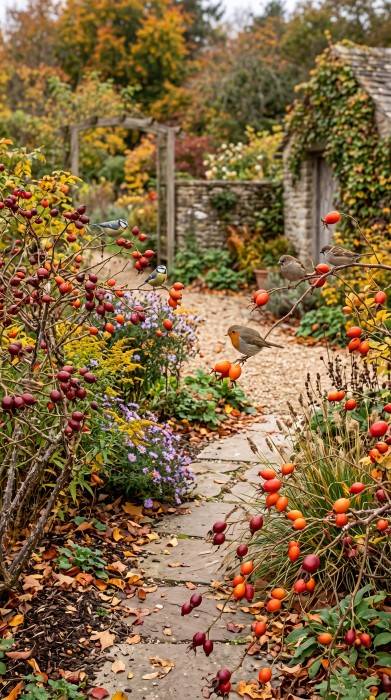
Plant rose varieties known for their spectacular fall hip displays in shades of red, orange, and burgundy. After the flowers fade, these shrubs produce abundant, colorful hips that persist through winter, providing food for birds. The combination of fall foliage color and bright hips creates a stunning two-season display. Choose species roses or old garden varieties known for prolific hip production rather than modern hybrid teas. The hips can also be harvested for making vitamin C-rich teas and jellies. Their thorny stems provide excellent protection for nesting birds, making them valuable wildlife plants.
12. Celosia Plume and Cockscomb
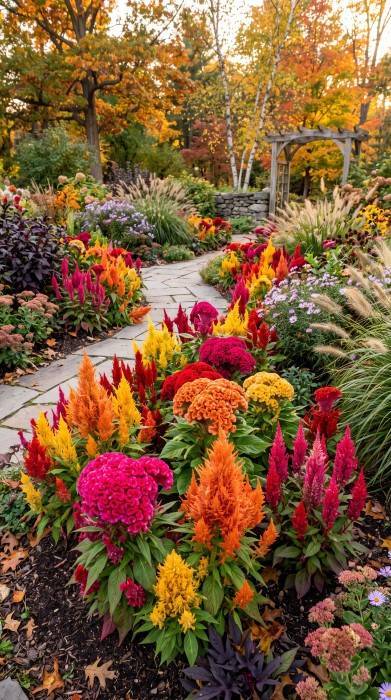
Grow celosia in its various forms – plumed, crested, and spiky – for dramatic fall color in hot pink, orange, red, and yellow. These heat-loving annuals bloom continuously from summer through fall, thriving in hot weather when other flowers struggle. The unusual flower forms add architectural interest and texture that’s unlike any other garden plant. They’re excellent for cutting and drying, maintaining their color for months in arrangements. Plant in full sun and well-drained soil for best performance, deadheading to encourage continuous blooming. Their bold colors and unique forms make them perfect for adding drama to fall borders.
13. Amaranth Tassel and Grain Varieties
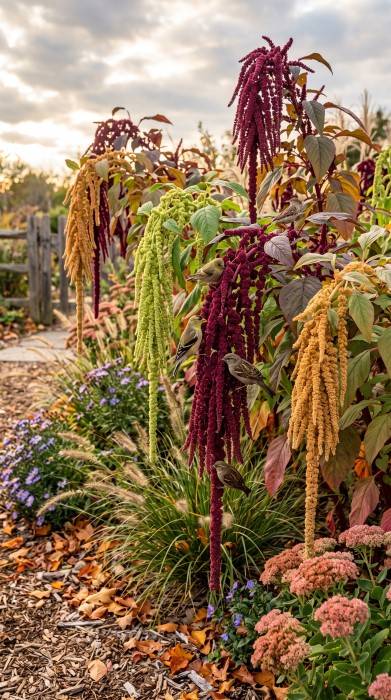
Plant amaranth varieties with their dramatic, cascading flower tassels in deep burgundy, green, and gold for stunning fall interest. These tall annuals can reach 6 feet or more, adding vertical drama and movement to the garden. The long, rope-like flower clusters sway gracefully in the breeze, creating dynamic visual interest. Seeds are edible and highly nutritious, providing both ornamental beauty and food production. Birds love the seeds, flocking to the plants in late fall and winter. Their bold, tropical appearance adds exotic flair to temperate fall gardens.
14. Nicotiana Flowering Tobacco
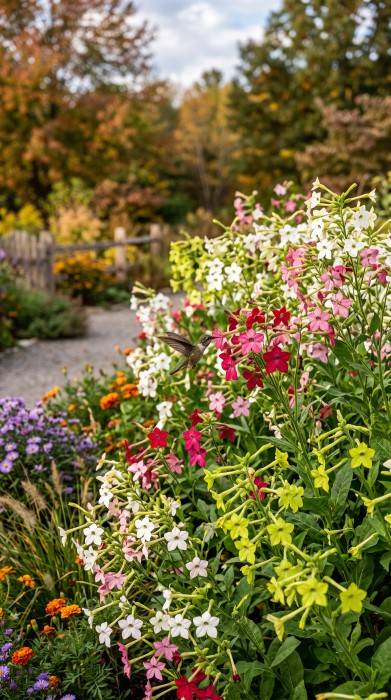
Grow flowering tobacco (Nicotiana) with its fragrant, tubular blooms in white, pink, red, and lime green that open in evening. These tender perennials grown as annuals bloom continuously from summer through fall, attracting hummingbirds and moths. The sweet evening fragrance adds another sensory dimension to the fall garden experience. Plant in partial shade for best performance in hot climates, as they prefer cooler conditions. Self-seed readily, often returning the following year without replanting. Their relaxed, informal habit adds a cottage garden charm to borders and containers.
15. Zinnia Cutting Garden Blocks
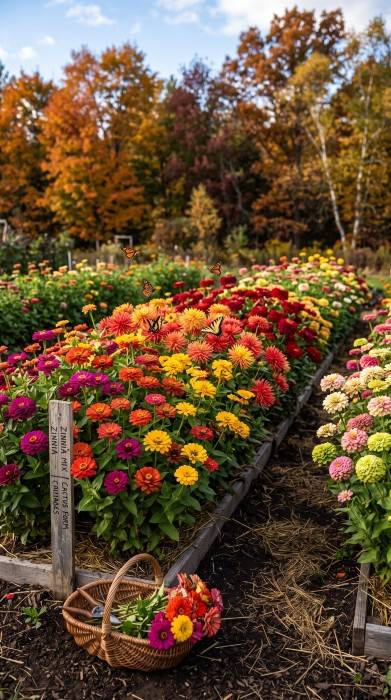
Plant blocks of zinnias in complementary colors for a spectacular fall cutting garden that blooms until frost. These easy-to-grow annuals come in every color except blue, with flower forms ranging from daisy-like to cactus-flowered. Cut flowers regularly to encourage continuous blooming and prevent powdery mildew. Choose disease-resistant varieties for best performance in humid fall weather. The long, sturdy stems make them perfect for cutting and arranging indoors. Butterflies are magnetically attracted to zinnias, creating a dynamic wildlife show in your garden.
16. Cosmos Breeze and Movement
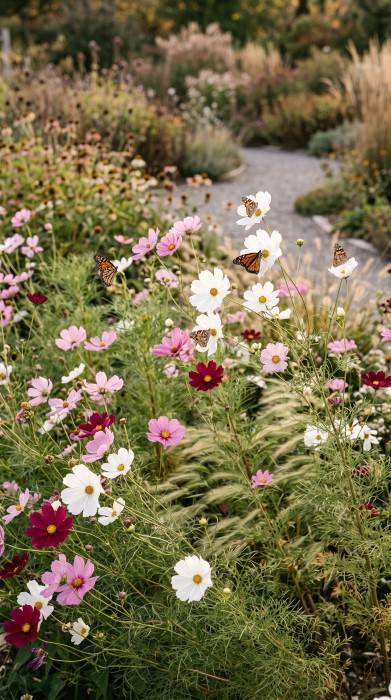
Sow cosmos for their delicate, daisy-like flowers on feathery foliage that sways gracefully in autumn breezes. These easy annuals self-seed readily, often returning year after year without replanting. The airy, informal habit adds movement and lightness to fall borders, contrasting with heavier perennials. Choose tall varieties for the back of borders and dwarf types for containers and edging. Flowers come in white, pink, and burgundy, attracting butterflies and beneficial insects. They thrive in poor soil and actually bloom better with minimal fertilization.
17. Snapdragons Cool Season Color
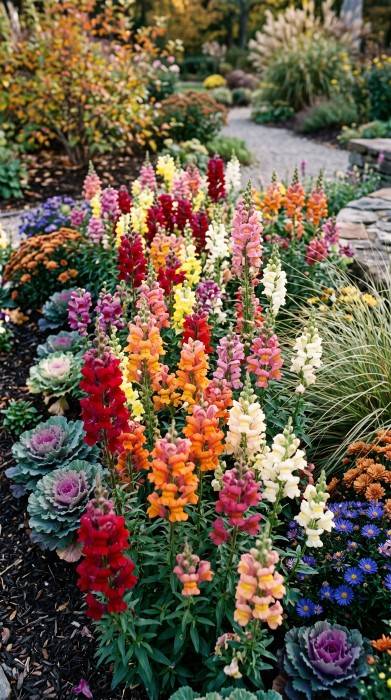
Plant snapdragons for their unique, dragon-shaped flowers in every color that bloom profusely in cool fall weather. These cool-season annuals actually prefer fall planting in many zones, blooming through winter and into spring. The vertical flower spikes add height and structure to fall borders and cutting gardens. Cut flowers regularly for long-lasting indoor arrangements that can last up to two weeks. They’re deer and rabbit resistant, making them ideal for gardens with wildlife pressure. Deadhead spent flowers to encourage continuous blooming through the season.
18. Marigold Border Edging
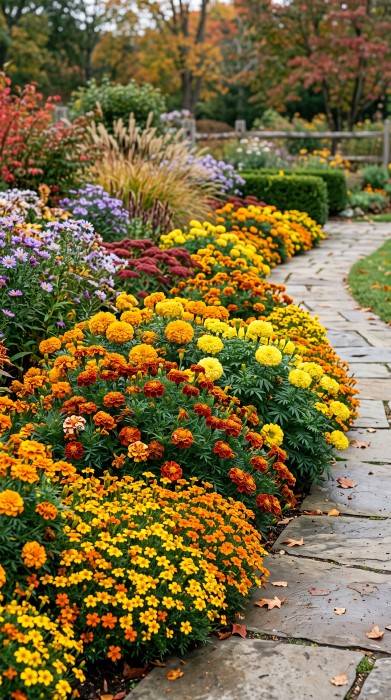
Use marigolds in their various forms – African, French, and signet – to create vibrant borders and edging in fall gardens. These reliable annuals bloom continuously from planting until hard frost in shades of yellow, orange, and red. Their strong scent helps repel many garden pests, making them valuable companion plants. French marigolds are particularly effective at repelling nematodes in vegetable gardens. The compact varieties work well for edging, while tall types add height to borders. Deadhead regularly to maintain continuous, prolific blooming.
19. Salvia Perennial Spikes
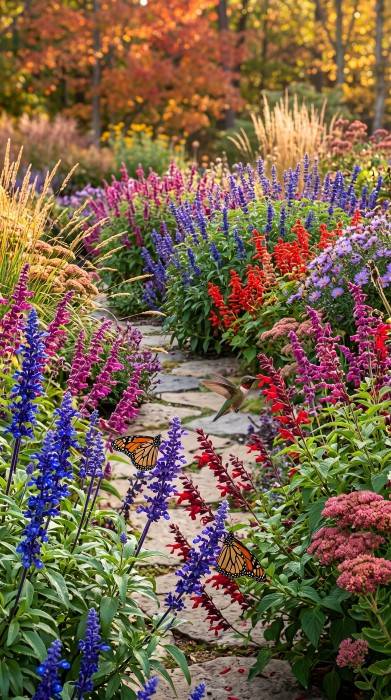
Plant perennial salvias for their long-lasting flower spikes in blue, purple, red, and pink that bloom from summer through fall. These drought-tolerant perennials are butterfly and hummingbird magnets, providing crucial late-season nectar. The vertical flower spikes add architectural interest and contrast to mounded perennials. Many varieties are deer resistant and thrive in hot, dry conditions. Deadhead spent flowers to encourage reblooming and maintain a tidy appearance. They’re extremely hardy and require minimal care once established.
20. Rudbeckia Black-Eyed Susan
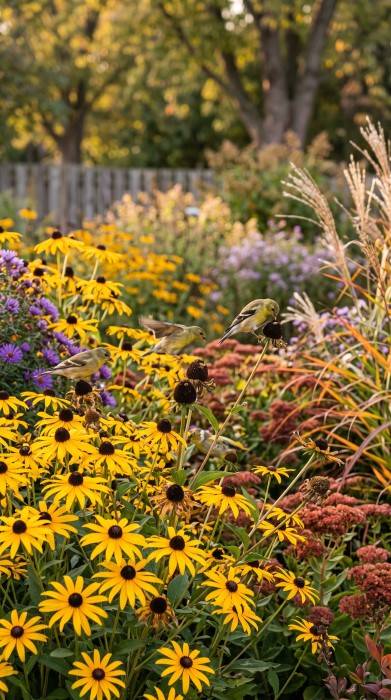
Grow rudbeckia (Black-eyed Susan) for their cheerful daisy-like flowers with dark centers that bloom from mid-summer through fall. These native perennials are extremely easy to grow and tolerate poor soil, drought, and neglect. The golden-yellow flowers with dark brown centers provide classic fall color that never goes out of style. They’re excellent for cutting and naturalizing, spreading to form large colonies over time. Birds love the seed heads in late fall and winter, providing extended wildlife interest. Deadhead to prolong blooming or leave seed heads for winter interest and wildlife.
21. Echinacea Purple Coneflower
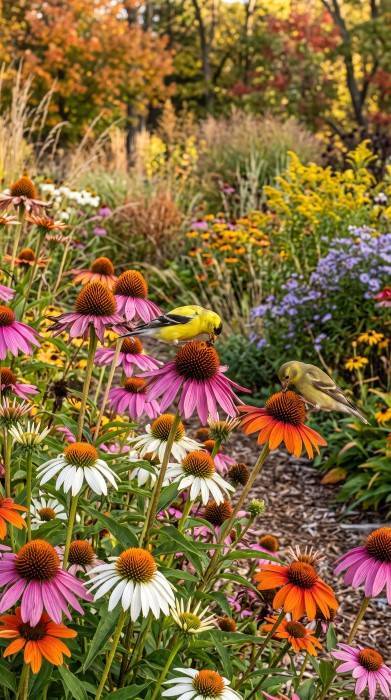
Plant echinacea (Purple Coneflower) for their distinctive daisy-like flowers with prominent central cones in pink, purple, white, and orange. These native perennials are extremely drought-tolerant and attract butterflies, bees, and goldfinches to the garden. The prominent seed cones provide winter interest and food for birds after flowers fade. They’re medicinal plants as well as ornamentals, with roots and flowers used in herbal remedies. Deadhead for continuous blooming or leave seed heads for winter wildlife. They’re extremely long-lived and multiply slowly to form attractive clumps.
22. Helenium Sneezeweed
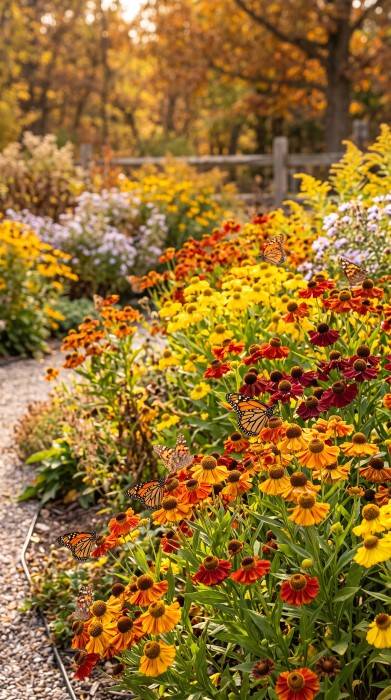
Grow helenium (Sneezeweed) for their warm-toned daisy-like flowers in shades of yellow, orange, red, and burgundy that bloom in late summer and fall. These native perennials thrive in moist soil and full sun, providing crucial late-season color. The downward-facing petals and prominent central discs create unique, informal charm. They’re excellent for cutting and attract butterflies and bees to the late-season garden. Deadhead regularly to extend the blooming period well into fall. They’re extremely hardy and multiply to form attractive clumps over time.
23. Aconitum Monkshood
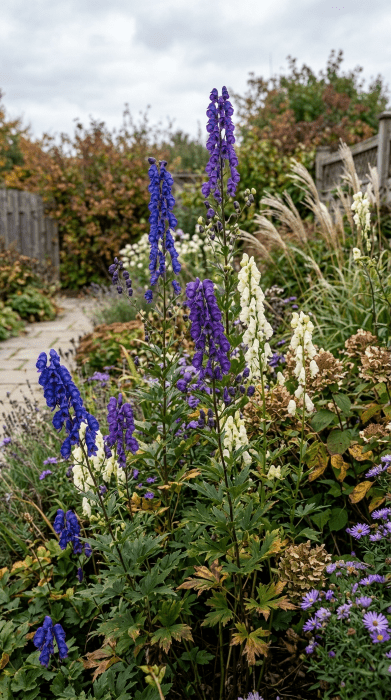
Plant aconitum (Monkshood) for their unusual hooded flowers in deep blue, purple, and white that bloom in late summer and fall. These tall perennials add vertical interest and cool colors to the fall garden when warm tones dominate. The unusual flower shape adds architectural interest and draws the eye through the border. They prefer cool, moist conditions and partial shade, making them ideal for challenging garden spots. All parts are highly toxic, so handle with care and keep away from children and pets. They’re deer and rabbit resistant due to their toxicity.
24. Persicaria Fleece Flower
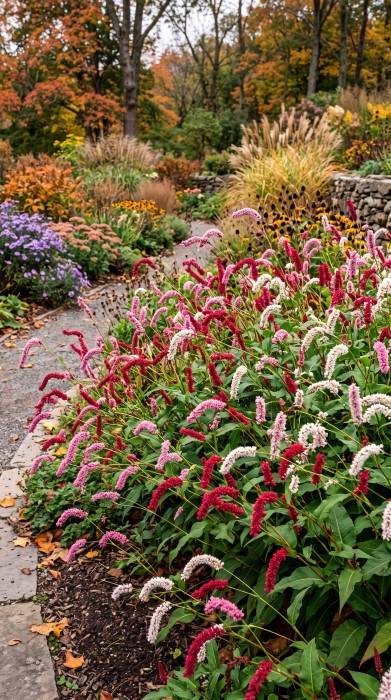
Grow persicaria (Fleece Flower) for their long-lasting, bottlebrush-like flower spikes in pink, red, and white that bloom from summer through fall. These vigorous perennials provide months of continuous color with minimal care. The arching flower spikes add movement and softness to borders, contrasting with stiff, upright perennials. They’re extremely easy to grow and tolerate a wide range of soil conditions. Some varieties can be aggressive spreaders, so choose clump-forming types for controlled growth. They’re excellent for cutting and attract butterflies and bees.
25. Boltonia Aster-Like Beauty
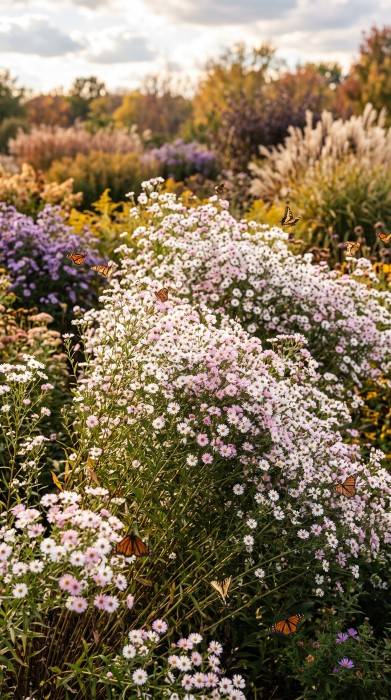
Plant boltonia for their masses of small, aster-like flowers in white and pink that create clouds of bloom in fall. These native perennials can reach 4-6 feet tall, creating a dramatic backdrop for shorter perennials. The fine-textured foliage and delicate flowers add lightness and airiness to fall borders. They’re extremely easy to grow and tolerate wet soil, making them ideal for rain gardens. The profusion of small flowers attracts huge numbers of butterflies and beneficial insects. Cut back hard in late fall or early spring as they can become leggy.
26. Turtlehead Chelone
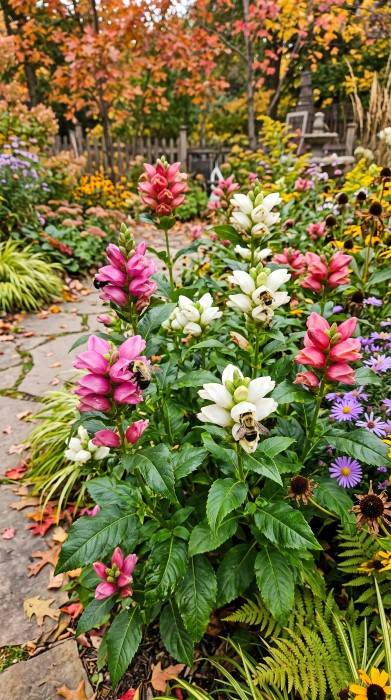
Grow turtlehead (Chelone) for their unique, turtle-shaped flowers in pink, white, and red that bloom in late summer and fall. These native perennials prefer moist to wet soil and partial shade, perfect for challenging wet spots. The unusual flower shape adds whimsical interest and attracts bumblebees who are strong enough to open the “turtle’s mouth.” They’re extremely long-lived and form attractive clumps over time. The glossy green foliage provides interest even when not in bloom. They’re deer resistant and require minimal care once established.
27. Joe Pye Weed Eutrochium
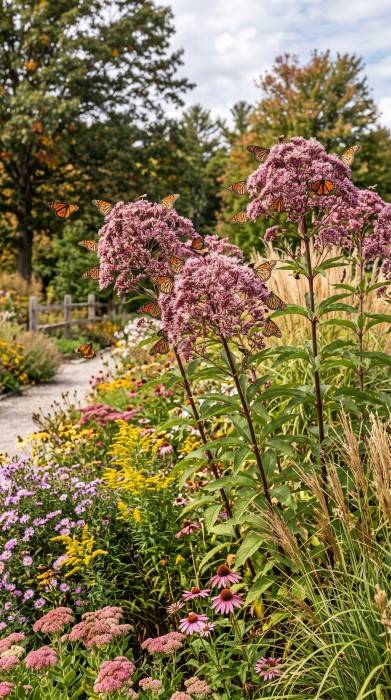
Plant Joe Pye Weed for their tall, architectural flower clusters in dusty pink and purple that bloom in late summer and fall. These native perennials can reach 4-7 feet tall, creating dramatic vertical accents in the garden. The vanilla-scented flowers attract huge numbers of butterflies, especially monarchs preparing for migration. They prefer moist soil but tolerate average conditions once established. The coarse, whorled foliage adds textural interest even when not in bloom. Leave seed heads standing through winter for continued interest and wildlife value.
28. Ironweed Vernonia
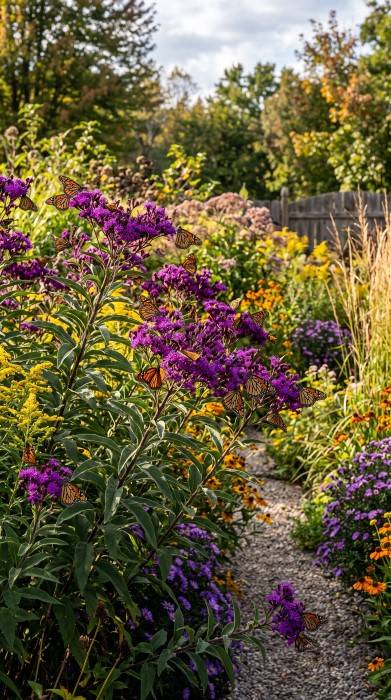
Grow ironweed (Vernonia) for their intense purple flower clusters that bloom in late summer and fall, attracting butterflies in droves. These native perennials are extremely tough and tolerant of poor soil, drought, and neglect. The deep purple color is rare in fall gardens, providing unique contrast to golden and orange tones. They can be tall (4-6 feet) or compact depending on variety, suitable for different garden situations. The fuzzy foliage and stems add textural interest to the garden. They’re extremely long-lived and multiply to form attractive colonies.
29. Goldenrod Solidago Celebration
Plant goldenrod (Solidago) for their brilliant golden-yellow flower plumes that bloom in late summer and fall, lighting up the garden. These native perennials are unfairly blamed for hay fever (ragweed is the culprit) and are actually beneficial garden plants. The plumes of tiny golden flowers create a stunning display and attract countless beneficial insects. They’re extremely easy to grow, drought-tolerant, and multiply readily. Choose clump-forming varieties to control spreading in smaller gardens. Pair with purple asters for the classic fall color combination. They provide crucial late-season nectar for migrating monarchs.
These 29 fall flower garden ideas for 2026 provide comprehensive inspiration for creating stunning, vibrant outdoor spaces that celebrate the beauty of autumn. Each concept balances aesthetic appeal with practical gardening knowledge, ensuring your fall garden thrives with minimal fuss. Whether you prefer native wildflowers, cutting garden favorites, or structural perennials, these adaptable ideas suit various garden sizes, skill levels, and climate zones. The professional image prompts help visualize each concept clearly, making it easier to plan and execute your perfect fall garden transformation. Start creating your dream autumn garden today with these inspiring ideas that bring warmth, color, and life to your home’s exterior. Your spectacular fall flower garden awaits with these expert-curated concepts for vibrant, sustainable, and beautiful seasonal displays.