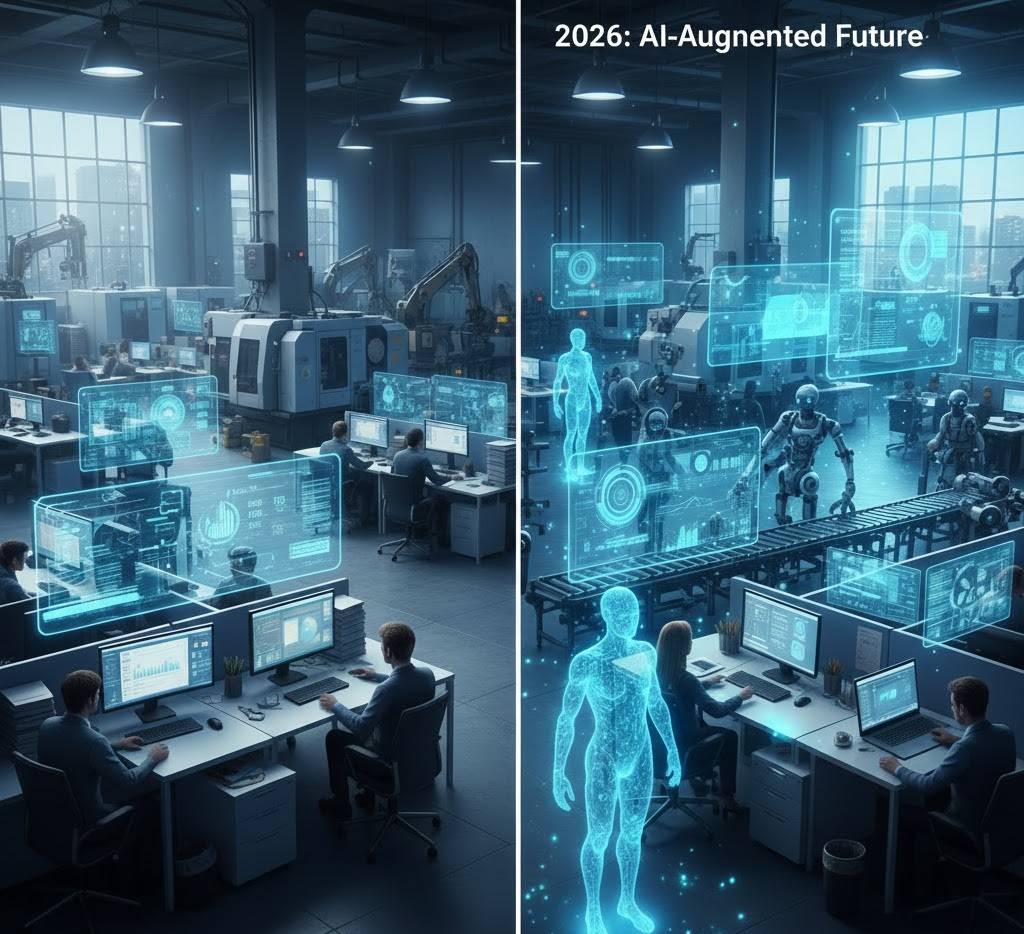
Your job exists today. Will it exist in 2026?
That’s not fear-mongering—it’s the question millions are quietly asking as artificial intelligence and automation advance faster than anyone predicted. The disruption isn’t coming. It’s here, accelerating, and touching every industry simultaneously.
By late 2026, AI systems are writing legal briefs, diagnosing diseases, creating marketing campaigns, analyzing financial portfolios, designing products, and even generating art that sells for thousands—all with minimal human intervention.
This isn’t about robots taking jobs. It’s about intelligence becoming abundant and cheap, fundamentally changing what humans do all day and how society functions.
The AI Explosion: What Changed
2023-2024 brought ChatGPT and similar tools—impressive but limited. They could write essays and answer questions, but struggled with complex reasoning and real-world application.
2025 saw the breakthrough: Agentic AI systems that don’t just respond to prompts but autonomously complete multi-step tasks, make decisions, and learn from experience.
By 2026, AI assistants can:
- Manage your entire business’s customer service (from inquiry to resolution)
- Conduct market research and generate strategic recommendations
- Write, test, and debug software without human programmers
- Create complete marketing campaigns including strategy, copy, and visuals
- Analyze medical imaging with accuracy exceeding human radiologists
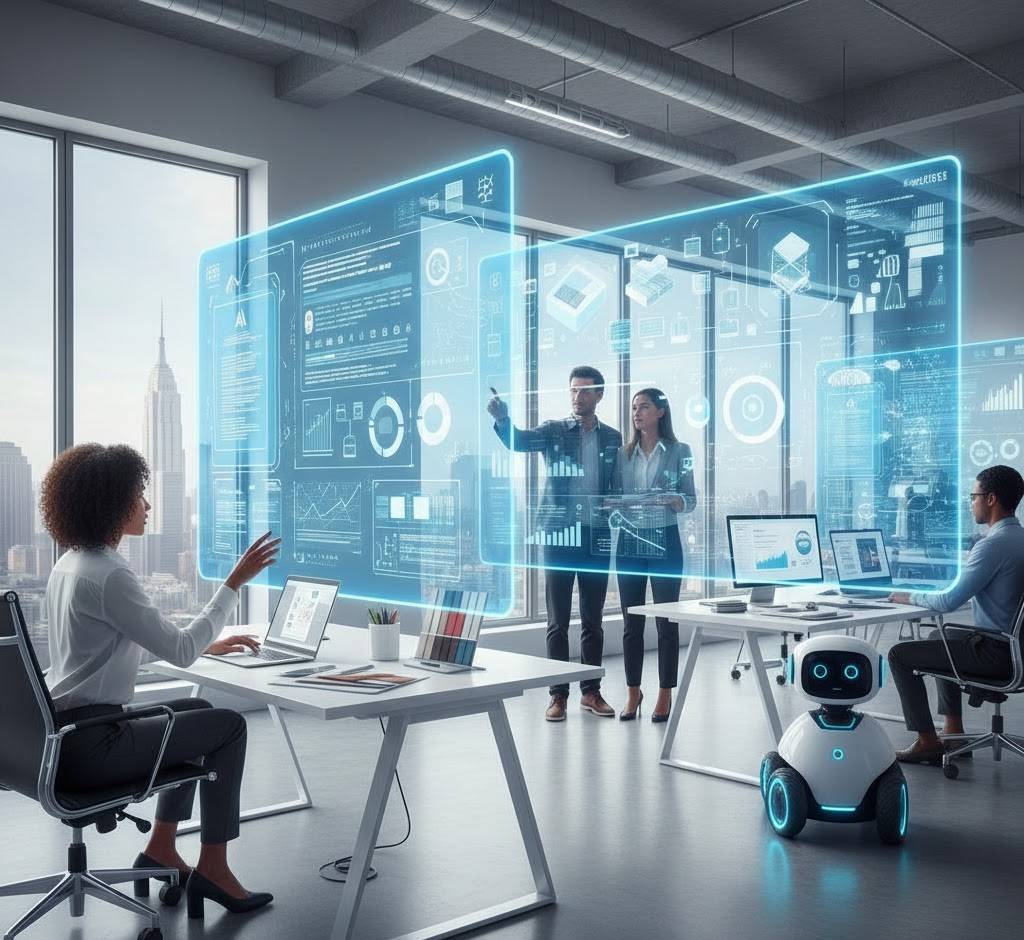
The cost? Dropping exponentially. What required $100,000 in AI consulting in 2024 costs $500 in 2026. Intelligence is becoming a commodity like electricity.
Industries Being Transformed Right Now
Healthcare: Doctor + AI = Better Outcomes
AI doesn’t replace doctors—it makes them superhuman:
Diagnostic AI analyzes symptoms, medical history, genetic data, and millions of previous cases in seconds, suggesting diagnoses doctors might miss. Physicians become decision-makers reviewing AI recommendations rather than spending hours on differential diagnosis.
Radiologists use AI reading every scan, flagging abnormalities instantly. Early cancer detection rates have jumped 40% since AI integration became standard.
Drug discovery accelerated from 10+ years to 2-3 years as AI predicts molecular interactions and designs compounds.
Result: Healthcare becoming more accurate and accessible, though radiologists and pathologists are rapidly being displaced.
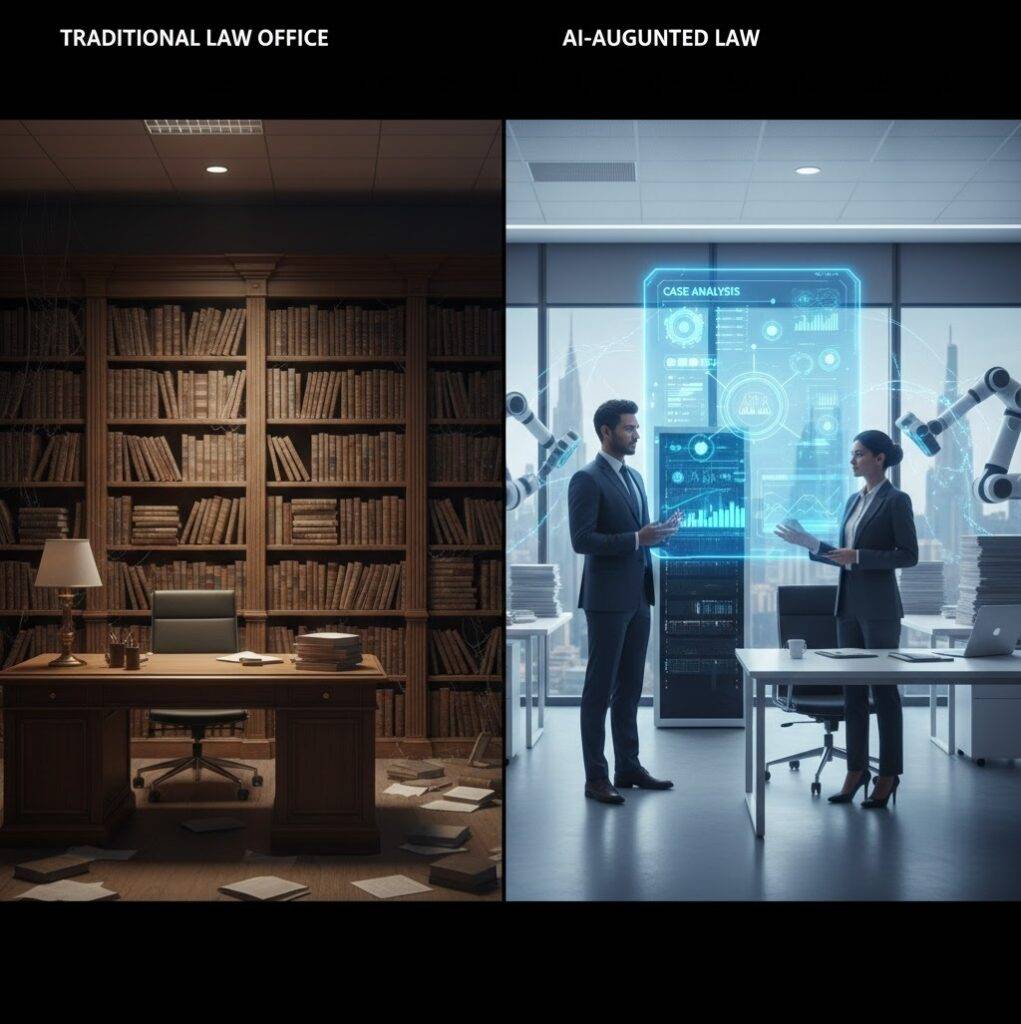
Legal: Attorneys Becoming AI Supervisors
AI legal assistants now handle:
- Document review (contracts, discovery materials)
- Legal research across thousands of cases
- Brief writing for routine matters
- Due diligence for transactions
Impact: Major law firms cut associate positions by 30% in 2025-2026. Paralegals face 60% job loss. Remaining lawyers focus on strategy, client relationships, and court appearances—tasks requiring human judgment and persuasion.
Manufacturing: Lights-Out Factories
Factories that run without humans (called “lights-out” because no lighting needed) are becoming common:
Robots handling assembly. AI managing inventory, supply chains, quality control, maintenance scheduling. Humans monitor remotely, intervening only for exceptions.
Impact: Manufacturing employment declining 25% year-over-year. Remaining jobs require technical training—robot technicians, AI supervisors, systems engineers.
Creative Industries: The Controversial Frontier
AI generating:
- Images (Midjourney, DALL-E successors creating commercial-quality artwork)
- Music (complete songs in any style)
- Video (from text descriptions to finished productions)
- Writing (novels, screenplays, articles)
The debate: Is AI-generated art really “art”? Should AI trained on human-created works be allowed to compete with human creators?
The reality: Clients don’t care who created content—human or AI—if it’s good and cheap. Graphic designers, illustrators, stock photographers, and copywriters facing existential crisis.
The Job Market Reality
Jobs being eliminated:
- Data entry (95% automated)
- Telemarketing (90% AI-powered)
- Routine accounting/bookkeeping (80% automated)
- Junior-level white-collar positions (declining rapidly)
- Traditional manufacturing roles (continuing steady decline)
Jobs being created:
- AI trainers and supervisors
- Automation system managers
- Human-AI collaboration specialists
- Robot maintenance technicians
- Data ethicists and AI compliance officers
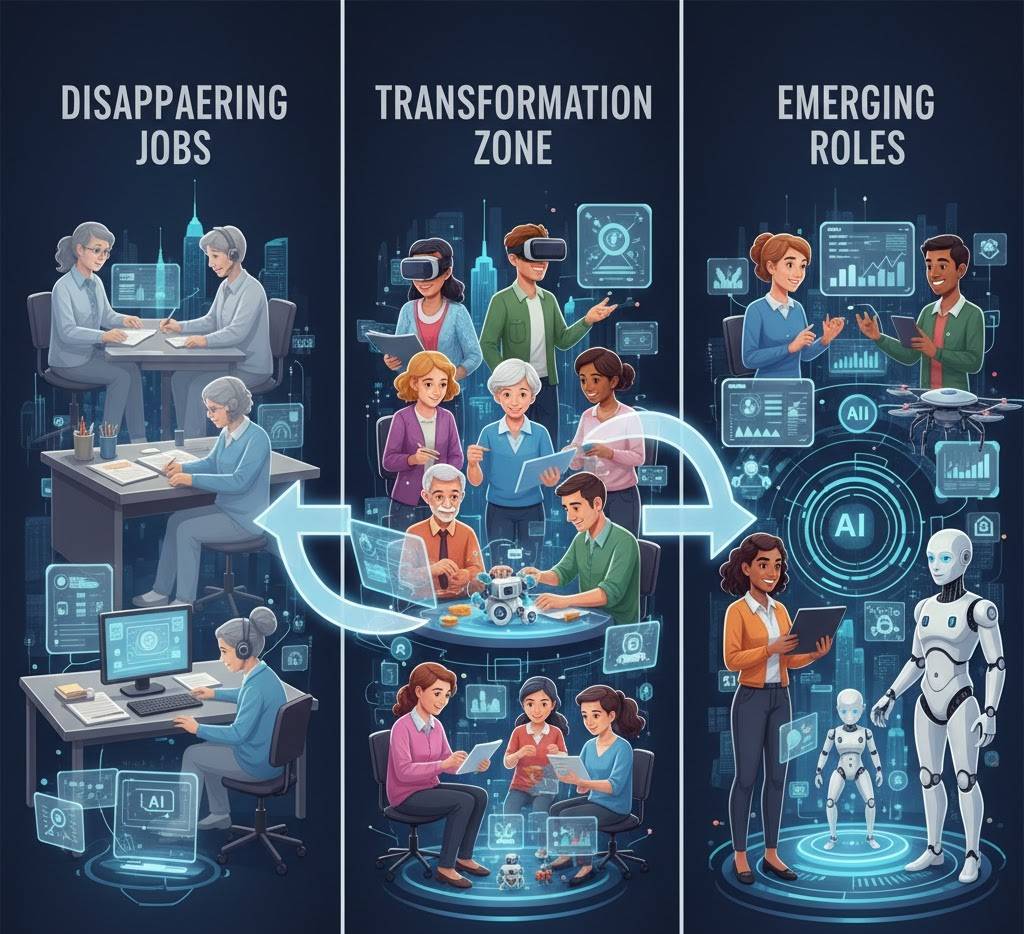
The uncomfortable truth: Far more jobs being eliminated than created. The new jobs require higher skills. The transition is painful.
The Productivity Paradox
Companies are experiencing explosive productivity gains:
A marketing team that needed 10 people in 2024 needs 3 in 2026—AI handles content creation, data analysis, campaign optimization.
A software company that employed 50 developers needs 15—AI writes most code, humans do architecture and review.
But this creates problems:
Income inequality widening: Owners of AI-enhanced businesses profit enormously. Workers displaced struggle to find comparable employment.
Consumer demand question: If people lose jobs, who buys the products AI-powered companies produce?
Social stability concerns: Rapid displacement creates political instability and social unrest.
The Human Skills That Still Matter
What AI can’t replace (yet):
Emotional intelligence: Reading social cues, managing relationships, providing empathy.
Creative judgment: Not generating content, but deciding what’s worth creating and why.
Strategic thinking: Understanding complex business contexts and making difficult tradeoffs.
Ethical reasoning: Navigating moral dilemmas AI can’t evaluate.
Physical dexterity in unstructured environments: Plumbers, electricians, construction workers remain difficult to automate.
Human connection: Teachers, therapists, coaches, clergy—roles where human relationship is the product.

Adapting to the New Reality
Strategies for survival:
Embrace AI as tool, not threat: Learn to work with AI, becoming 10x more productive. The person using AI will replace the person who doesn’t.
Focus on human-centric skills: Communication, creativity, emotional intelligence, strategic thinking—capabilities AI struggles with.
Continuous learning: The education you received is already obsolete. Lifelong skill updating becomes mandatory.
Entrepreneurship: AI lowers barriers to starting businesses. One-person companies achieving what required teams before.
Advocate for policy: Universal basic income, shorter workweeks, stronger social safety nets—these aren’t luxuries but necessities in AI-automated economy.
The Societal Reckoning
2026 is forcing conversations we’ve avoided:
Should productivity gains benefit everyone or just owners? AI makes scarcity optional for many goods and services. Distribution becomes the question.
What gives life meaning when work isn’t central? For centuries, occupation defined identity. What happens when that changes?
How do we ensure AI benefits humanity? Left unmanaged, AI could create unprecedented inequality and suffering despite solving scarcity.
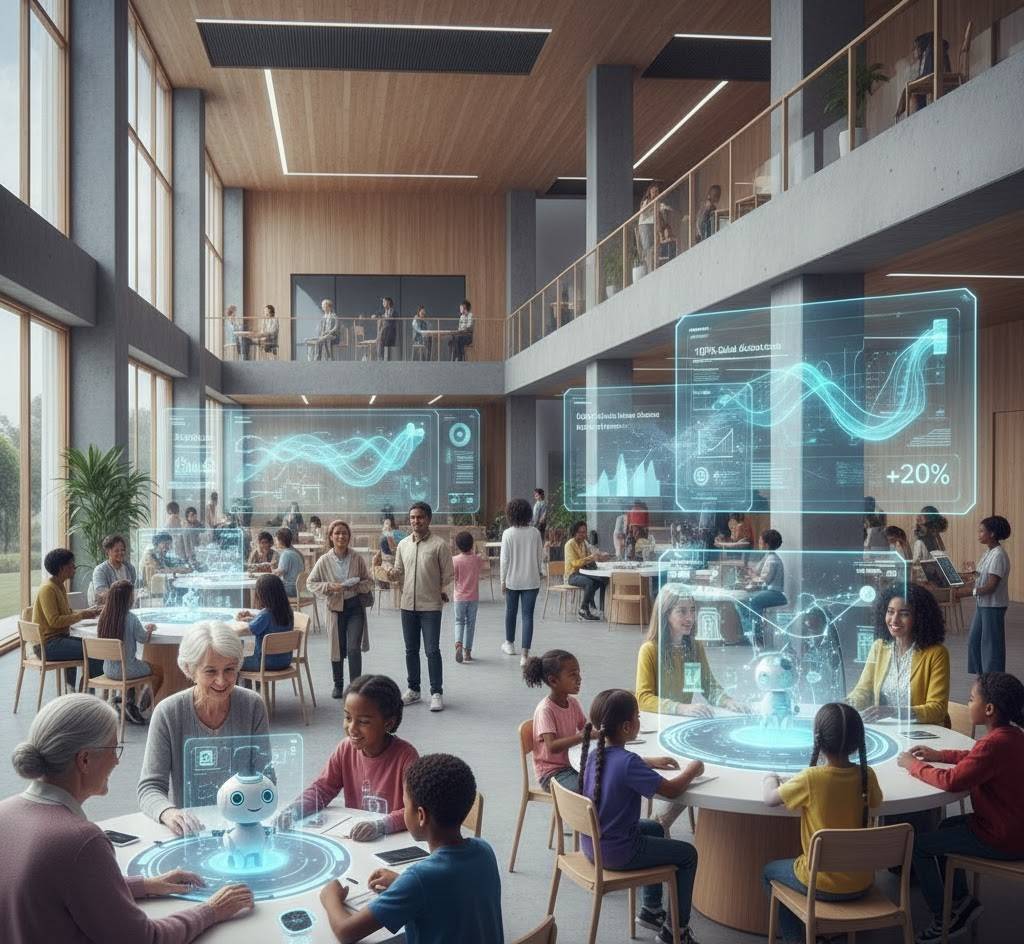
The Choice Ahead
2026’s disruption is neither inherently good nor bad—it’s profound change requiring choices:
We can build future where:
- AI eliminates drudgery, freeing humans for meaningful work
- Productivity gains are shared, raising living standards universally
- Education and retraining are accessible to all
- Social safety nets catch those displaced by transition
- Technology serves humanity’s flourishing
Or we can default to future where:
- Benefits concentrate among wealthy owners
- Displaced workers struggle without support
- Inequality reaches feudal extremes
- Social instability threatens civilization
The disruption is inevitable. The outcome isn’t.
Technology is tool—amplifying human values, good and bad. The question isn’t whether AI will transform everything (it will), but whether we’ll guide that transformation toward collective benefit.
2026 is the year we can’t ignore this anymore. The future is being coded right now. What future are we building?