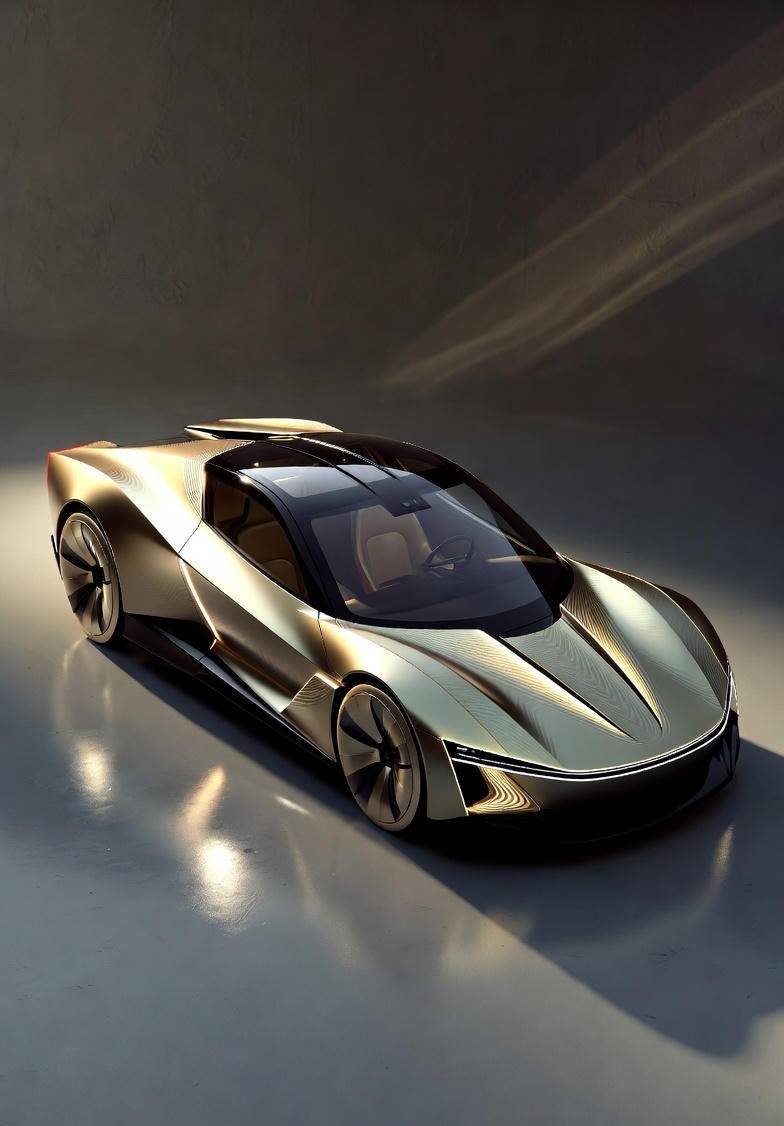
Forget everything you think you know about luxury cars. The 2026 concept vehicles rolling out of design studios aren’t just faster, quieter, or more comfortable than their predecessors—they’re fundamentally reimagining what an automobile can be.
These aren’t minor updates to existing models. They’re bold statements about a future where cars become personalized sanctuaries, autonomous lounges, and technological marvels that blur the line between transportation and living space.
Welcome to automotive luxury redefined: where artificial intelligence anticipates your needs, materials heal themselves, interiors transform based on your mood, and the journey becomes more valuable than the destination.
The Disappearing Driver: Autonomy as Ultimate Luxury
The most profound shift in 2026’s luxury concepts: Level 4-5 autonomous driving as standard.
For decades, luxury meant driver-focused performance—responsive handling, powerful engines, engaging dynamics. But the ultra-wealthy are discovering that not driving is the ultimate luxury.
Why autonomy changes everything:
Time reclaimed: Your morning commute transforms from stressful navigation to productive work session, meditation space, or simply extra sleep while your car handles everything.
The mobile office: Conference tables, multiple screens, full connectivity. Close deals, review presentations, or conduct video meetings while traveling.
Entertainment lounge: Plush seating faces inward for conversation, screens emerge for movies, or seats recline for naps. Your car becomes extension of your living room.
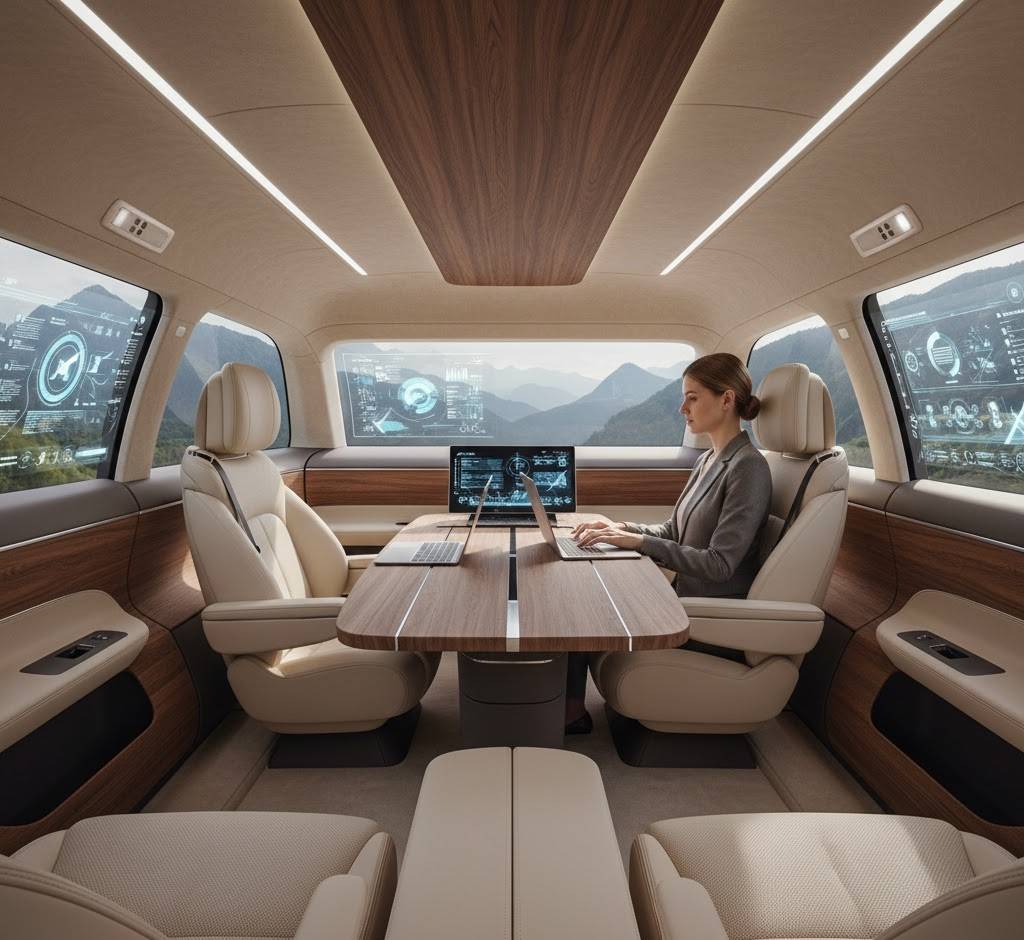
Mercedes-Maybach’s Vision: Their 2026 concept features a rear cabin with zero-gravity seats, ambient aromatherapy, and biometric sensors adjusting everything from temperature to massage intensity based on your stress levels.
Rolls-Royce Coachbuild Concept: Completely reimagined interior where front seats swivel backward, creating intimate four-person salon with cocktail service and entertainment center.
The democratization of driving is complete—everyone can experience exotic locations. The luxury is not having to pay attention to the road.
Materials That Respond and Adapt
2026 concepts showcase materials that would seem like science fiction just years ago:
Self-Healing Surfaces
Nano-engineered paint and interior materials that repair minor scratches and dings automatically:
- Polymer coatings that “remember” their original form
- Heat-activated healing (from sunlight or internal systems)
- Scratches disappearing within 24-48 hours
- Eliminating the need for minor repairs
Bentley’s Living Materials Concept: Interior leather that’s actually bio-engineered material growing and healing like living tissue, becoming more beautiful with age rather than wearing out.
Transparent Aluminum and Smart Glass
Structural glass providing strength while maximizing visibility:
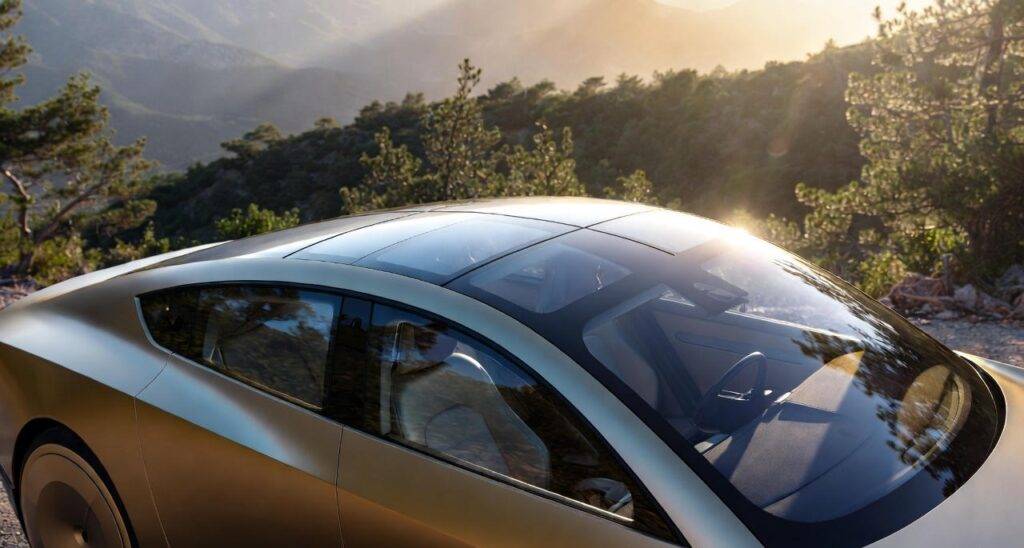
- Panoramic roofs extending entire vehicle length
- Side panels that are simultaneously structural and transparent
- Electrochromic glass adjusting opacity automatically
- Privacy mode making all glass opaque instantly
Sustainable Luxury Materials
Luxury without guilt:
- Mushroom leather (Mylo) indistinguishable from animal leather
- Lab-grown diamonds for interior accents
- Recycled ocean plastic transformed into carbon fiber
- Sustainably harvested woods with full chain-of-custody certification
- Vegan silk and advanced textiles
Polestar’s Philosophy: Their concept uses 100% traceable, sustainable materials while maintaining ultra-premium aesthetics—proving environmental responsibility and luxury aren’t contradictory.
The Personalized Sanctuary
2026’s luxury concepts treat vehicles as extension of your personal space:
Biometric Customization
Car recognizes you before you enter:
- Automatic seat, mirror, and climate adjustment
- Personal audio profile loads (music, news, podcasts preferences)
- Lighting adjusts to your circadian rhythm
- Air quality optimizes based on your respiratory health
- Massage programs activate based on detected stress
BMW’s Neural Interface Concept: Optional brain-computer interface that adjusts the entire cabin environment based on your emotional state—literally reading your mind to optimize comfort.
Modular Interiors
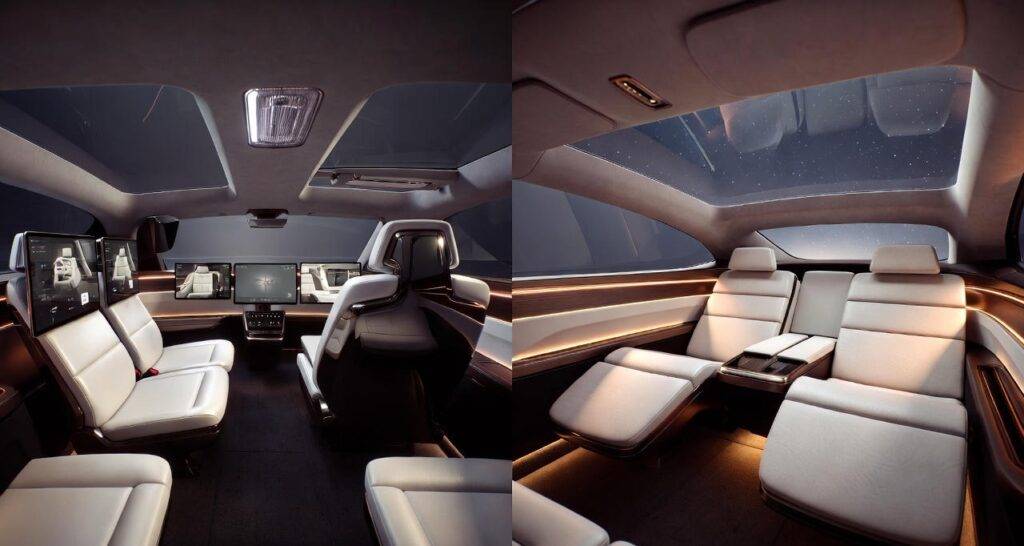
Transforming spaces for different needs:
- Dining mode: Table emerges, ambient lighting shifts to warm tones
- Work mode: Screens deploy, task lighting activates, seating becomes more upright
- Relaxation mode: Seats fully recline, soothing visuals and sounds, aromatherapy releases
- Entertainment mode: Theater configuration with premium audio and screens
- Exercise mode: Stationary bike or other equipment deploys for workout during long autonomous journeys
Wellness Integration
Health-focused features:
- Air purification exceeding medical-grade standards
- Circadian lighting adjusting color temperature throughout day
- Posture monitoring and correction through seat adjustments
- Stress detection triggering calming interventions
- Temperature zones for each passenger optimized individually
The Silent Revolution: Acoustic Engineering
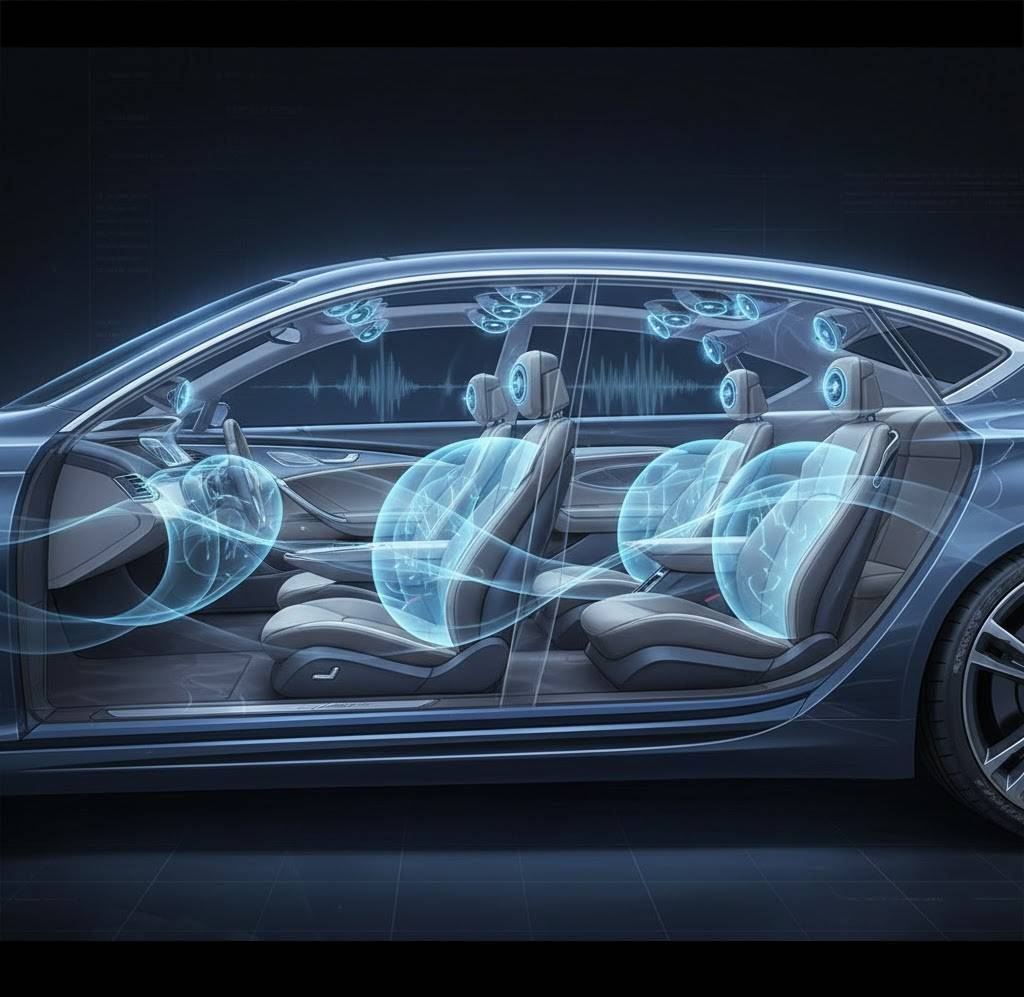
With electric powertrains eliminating engine noise, 2026 concepts focus on perfecting silence:
Active noise cancellation creating acoustic bubbles around each passenger—front occupants hear business call clearly while rear passengers enjoy music without interference.
Acoustic glass blocking 99% of external sound—highway travel feels like floating through vacuum of space.
Designed sound: Since silence can feel unnatural, subtle white noise, nature sounds, or gentle music fills background at imperceptible levels—calm without being creepy.
Bowers & Wilkins Integration: Luxury audio systems with 30+ speakers creating three-dimensional soundscapes—immersive audio experiences previously requiring concert halls.
Exterior Design: Sculptural Beauty
2026 concepts embrace automotive design as art form:
Flowing surfaces with minimal panel gaps and seams—bodies appearing carved from single piece of material.
Active aerodynamics: Body panels that shift position for optimal airflow—spoilers that extend, diffusers that deploy, even side panels that adjust angle—all invisible until activated.
Light as design element: LED and OLED lighting integrated throughout vehicle surface, creating animated light shows, customizable exterior appearance, and communication with pedestrians through light patterns.
Dramatic proportions: Long hoods (despite no engine), short overhangs, massive wheels (often 23-24 inches), aggressive stances suggesting power even while stationary.
Color-shifting paint: Thermochromic or electrochromic coatings allowing exterior color change on demand—morning commute in subtle grey, evening event in vibrant red, all same car.
Power and Performance: Silent Thunder
While luxury shifts toward comfort, performance hasn’t disappeared:
Instant torque: Electric powertrains delivering 800+ horsepower, 0-60mph in under 2.5 seconds—supercar performance in luxury sedan package.
Adaptive suspension: Air springs with electromagnetic dampers creating magic carpet ride—smooth over broken pavement while maintaining composure through corners.
Torque vectoring: Individual wheel motors enabling impossible handling characteristics—physics-defying cornering with luxury car comfort.
1,000+ mile range: Solid-state batteries or advanced hydrogen fuel cells making range anxiety obsolete.
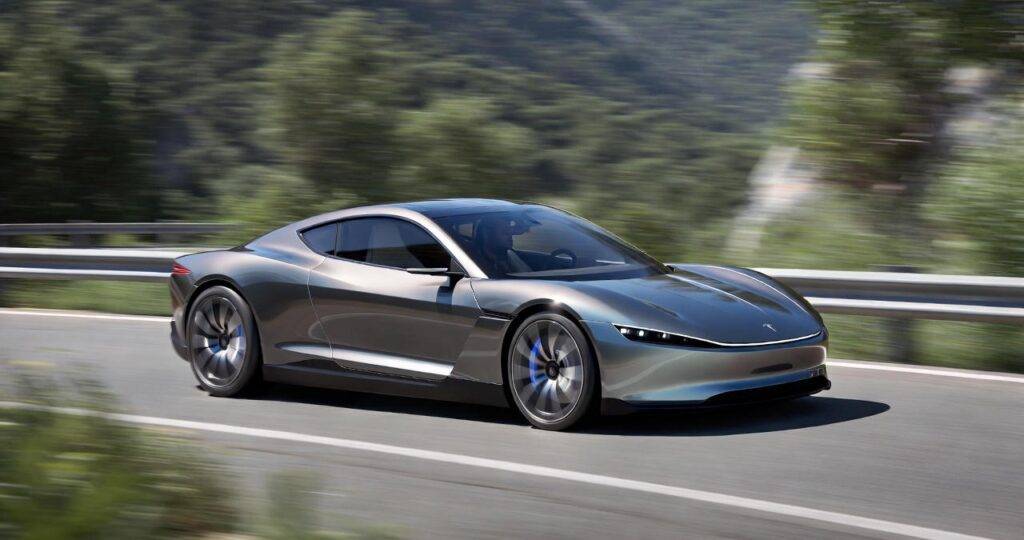
But here’s the luxury twist: You’ll rarely use this performance. It exists as reassurance—knowing your car can when needed, even though autonomous mode handles 95% of driving.
The Connected Ecosystem
2026’s luxury concepts exist within comprehensive digital ecosystems:
Smart home integration: Car starts automatically when you leave house, climate pre-conditioned, preferred music playing.
Calendar synchronization: Car knows your schedule, suggests departure times, books charging stations, coordinates with autonomous parking systems.
Predictive maintenance: Car schedules its own service appointments during times you won’t need it, arranges loaner vehicle delivery.
Concierge services: AI assistant handles everything—restaurant reservations at destination, hotel check-in, package delivery coordination.
Vehicle-to-everything (V2X) communication: Your car talks to infrastructure, other vehicles, smart cities—optimizing routes, coordinating traffic flow, preventing accidents.
The Price of Progress
Let’s address reality: these 2026 concepts start around $200,000-$500,000, with fully customized versions exceeding $1 million.
But technology trickles down. Features debuting in 2026 luxury concepts become mainstream by 2035:
- Autonomous driving (already spreading rapidly)
- Advanced materials (costs dropping with scale)
- Biometric personalization (smartphone tech applied to cars)
- Wellness features (from expensive option to standard)
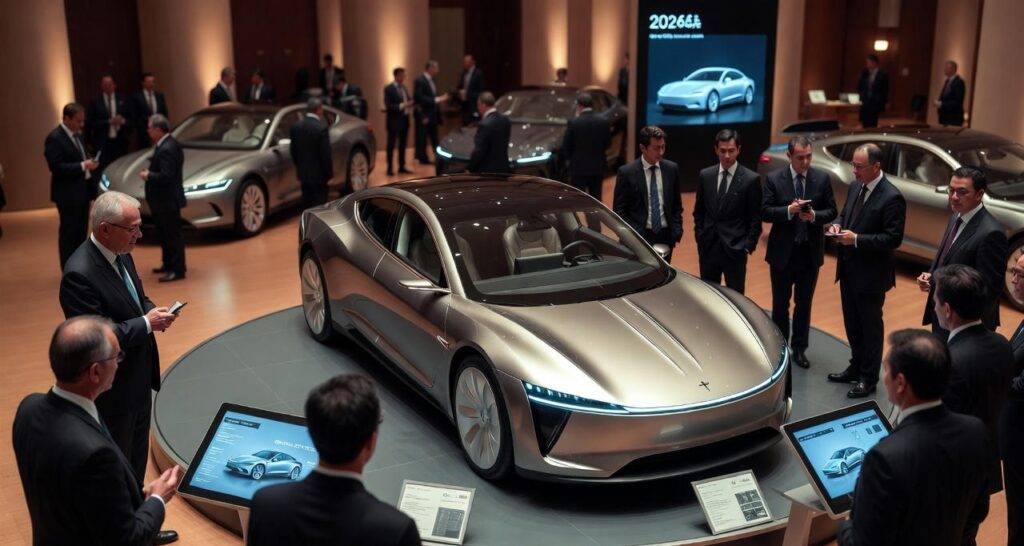
Luxury buyers are essentially funding R&D for future mass-market vehicles—a role they’ve played throughout automotive history.
The Philosophy Shift
Perhaps most significantly, 2026’s luxury concepts represent philosophical transformation:
Old luxury: About exclusivity, performance, driver engagement, status signaling, mechanical excellence.
New luxury: About personalization, autonomy, wellness, sustainability, seamless technology integration, time reclamation.
It’s not better or worse—it’s different. Enthusiasts will mourn loss of driver-focused dynamics. Most luxury buyers will embrace liberation from driving, valuing comfort and productivity over engagement.
The Question of Soul
Critics argue these concepts lack automotive “soul”—that intangible quality making cars objects of passion rather than mere appliances.
The counterargument: Soul isn’t exclusive to mechanical complexity. The craftsmanship in sustainable materials, the elegance of silent electric power, the thoughtfulness of adaptive interiors, the artistry in exterior design—these represent a different kind of soul.
Perhaps we’re not losing soul—we’re discovering new forms of it.
The Road Ahead
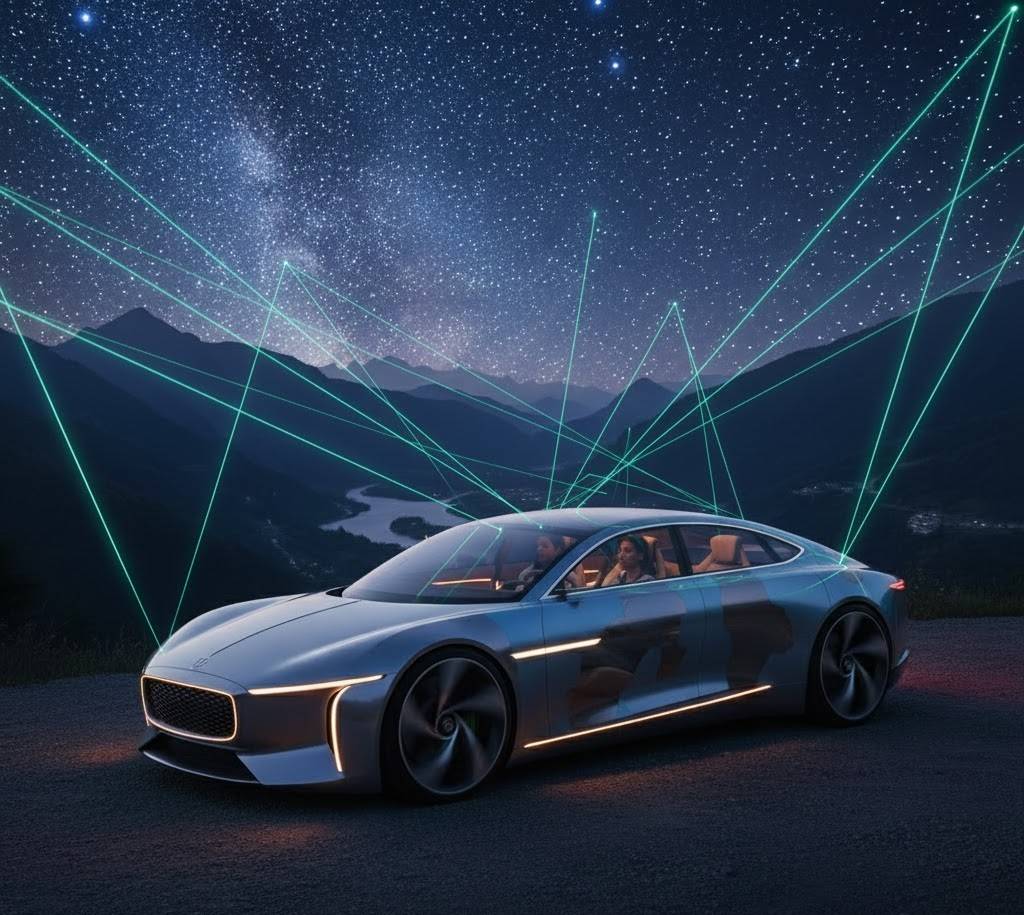
These 2026 concepts preview automotive future arriving faster than most expect:
- 2027-2028: Early production versions with toned-down features
- 2030: Many innovations become available across luxury segment
- 2035: Former concept features appear in premium mainstream vehicles
- 2040: Today’s cutting-edge becomes expected standard
Luxury Redefined
The 2026 luxury concept cars teach us that luxury evolves with society.
When roads were empty, luxury meant speed. When time was abundant, luxury meant driving engagement. Now, when roads are crowded and time is scarce, luxury means reclaiming time, personalizing space, and traveling in wellness-focused sanctuary.
These concepts aren’t just cars—they’re mobile architecture, personal assistants, wellness centers, and status symbols rolled into vehicles that happen to transport you.
Luxury hasn’t disappeared. It’s just wearing a different form—one focused less on what the car does, and more on what it enables you to do.