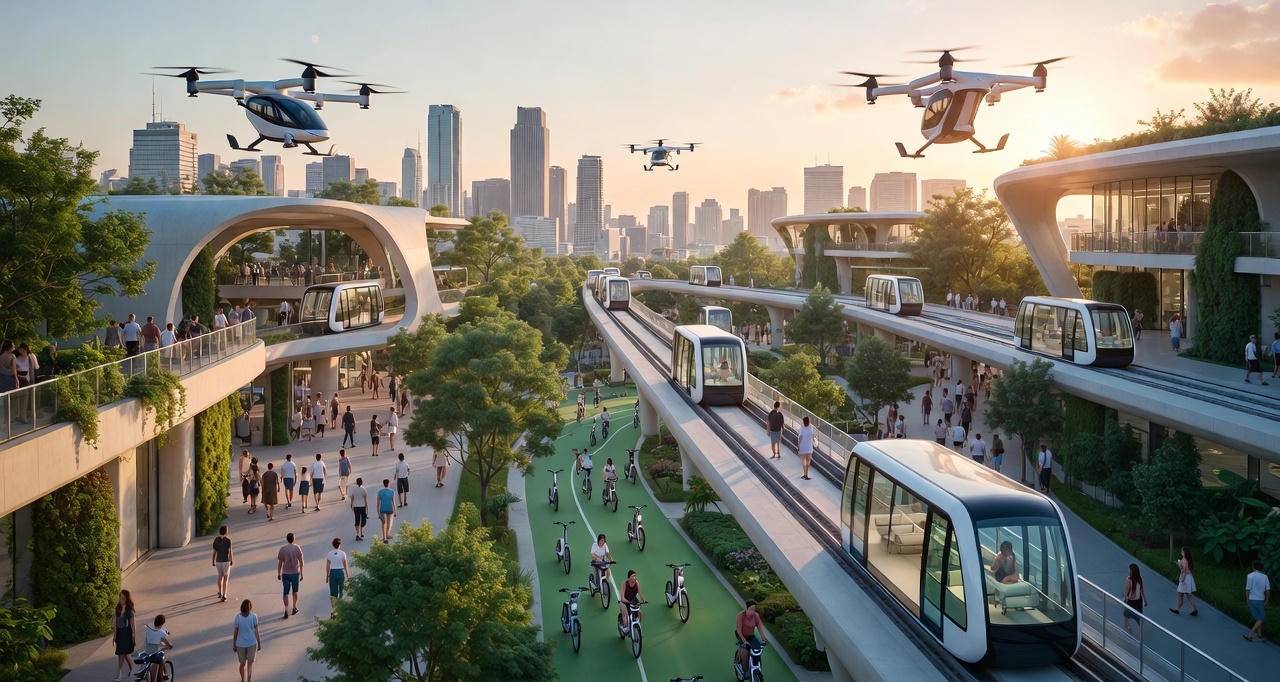
Imagine a city where traffic jams are rare, the air is noticeably cleaner, your commute takes half the time it does today, and you rarely need to own a car. This isn’t science fiction — it’s the realistic vision of urban mobility in the 2030s and 2040s, already being built in cities like Singapore, Helsinki, Shenzhen, and Dubai today.
Here’s how the future of getting around cities is shaping up — in a very human, practical, and hopeful way.
1. The End of “Peak Hour” as We Know It
Autonomous electric pods, on-demand aerial taxis, hyper-efficient micro-transit shuttles, and AI-coordinated traffic systems will smooth out demand. Instead of everyone leaving the office at 5:30 pm, vehicles will be shared, routed intelligently, and available exactly when and where you need them.
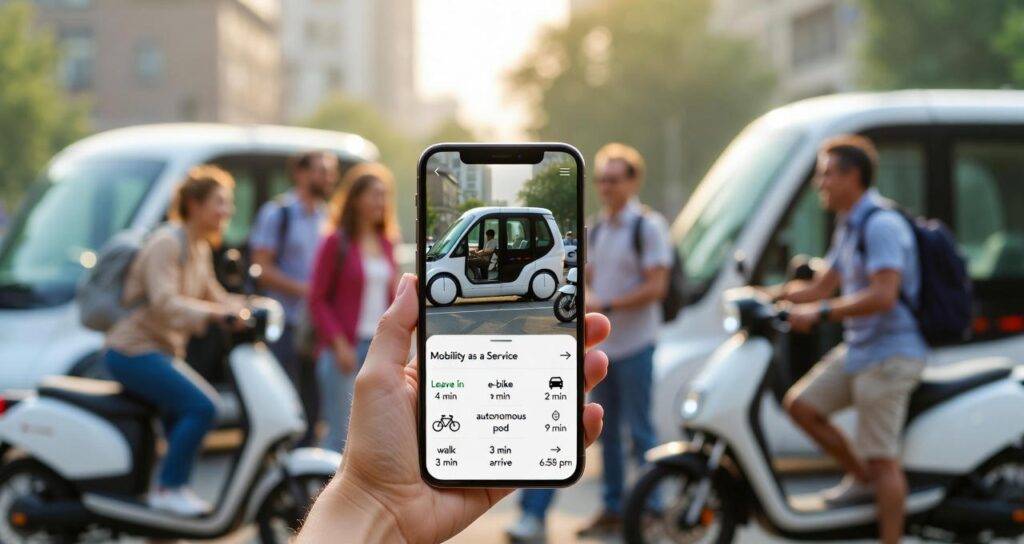
2. Mobility-as-a-Service (MaaS) Becomes Your Default
One app, one monthly subscription, zero headaches. Your phone knows your calendar, habits, and preferences. It seamlessly books the optimal mix: subway + shared e-bike + autonomous pod + flying taxi if you’re late. No parking lots become parks and housing.
3. The Rise of the 15-Minute City
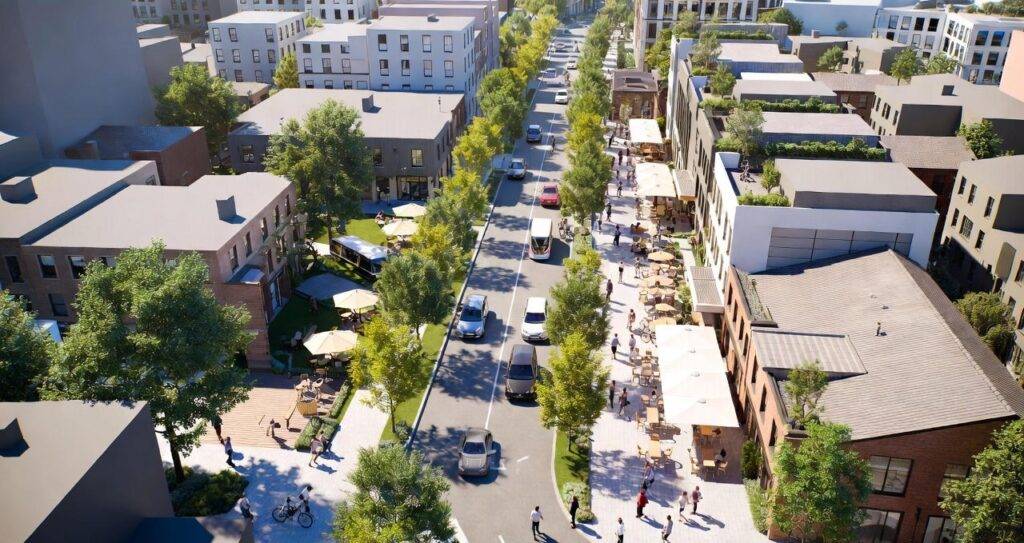
Work, groceries, school, gym, doctor, friends — everything you need within a pleasant 15-minute walk, bike ride, or micro-transit trip. Streets are reclaimed for people, not parked cars. Neighborhoods feel like villages again, even inside megacities.
4. Electric + Autonomous + Shared = Cleaner & Quieter Cities
By 2040, most urban vehicles will be electric, autonomous, and shared. That means almost zero tailpipe emissions, dramatically less noise, and far fewer accidents. Cities will actually sound like cities again — birds, conversations, and laughter instead of horns and engines.
5. Flying Taxis & Urban Air Mobility (Yes, Really)
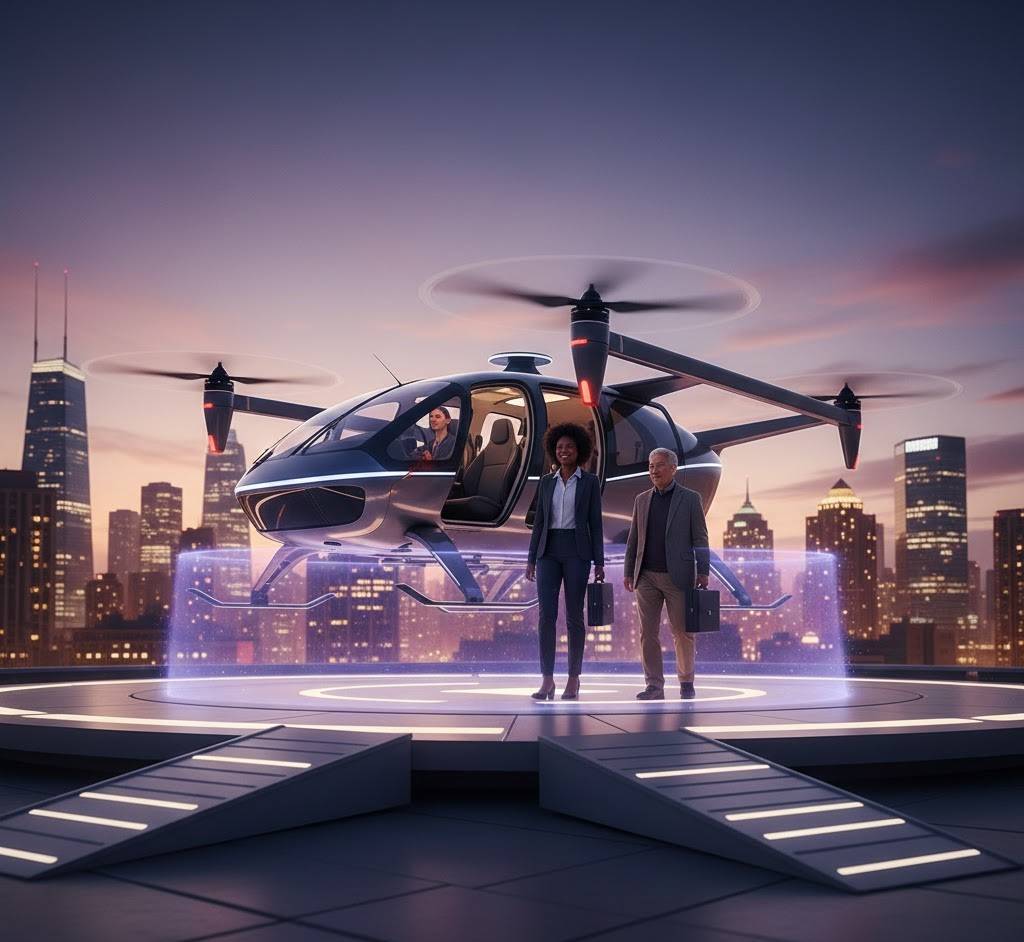
Already flying in trial cities, eVTOL (electric vertical take-off and landing) aircraft will connect downtowns to suburbs or cross rivers in minutes. They’ll be surprisingly affordable when shared and will take pressure off crowded ground transport.
6. Cargo & Logistics Get Smart Too
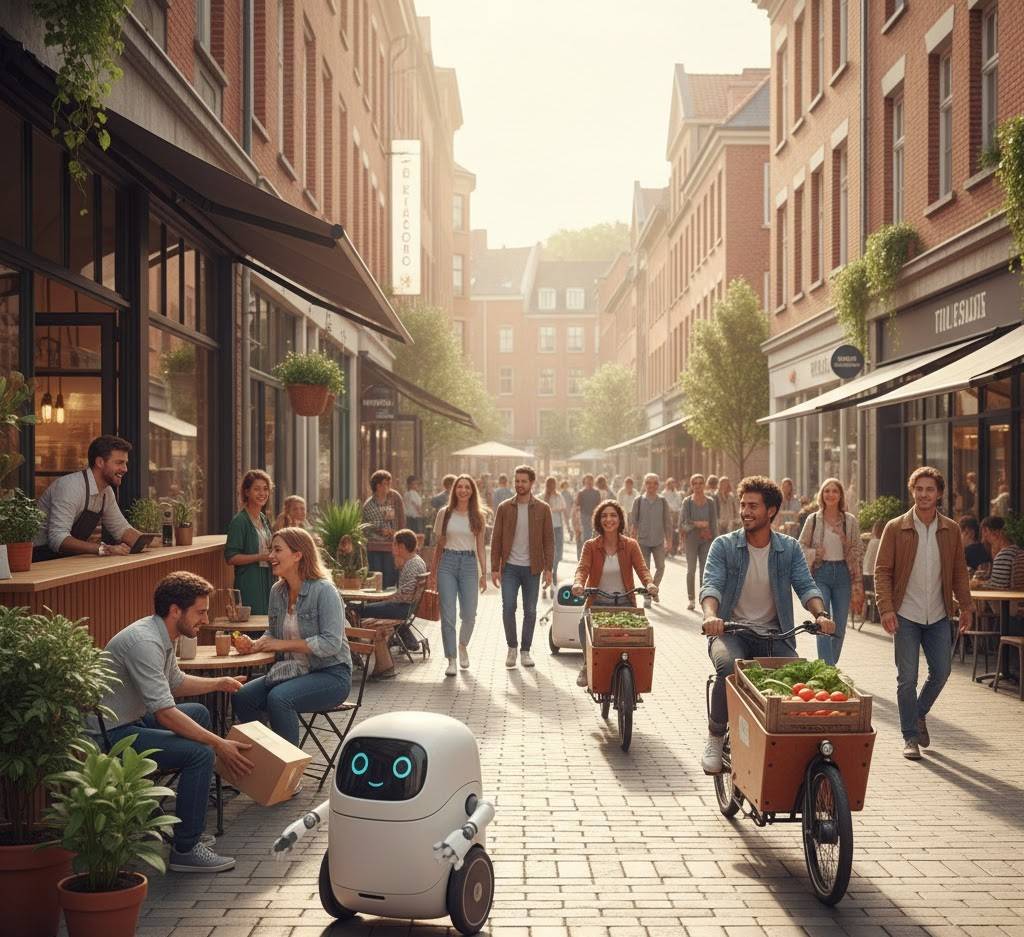
Delivery drones, sidewalk robots, and underground cargo tunnels mean fewer giant trucks clogging streets. Your online order arrives in an hour without adding to congestion or pollution.
7. Inclusive by Design
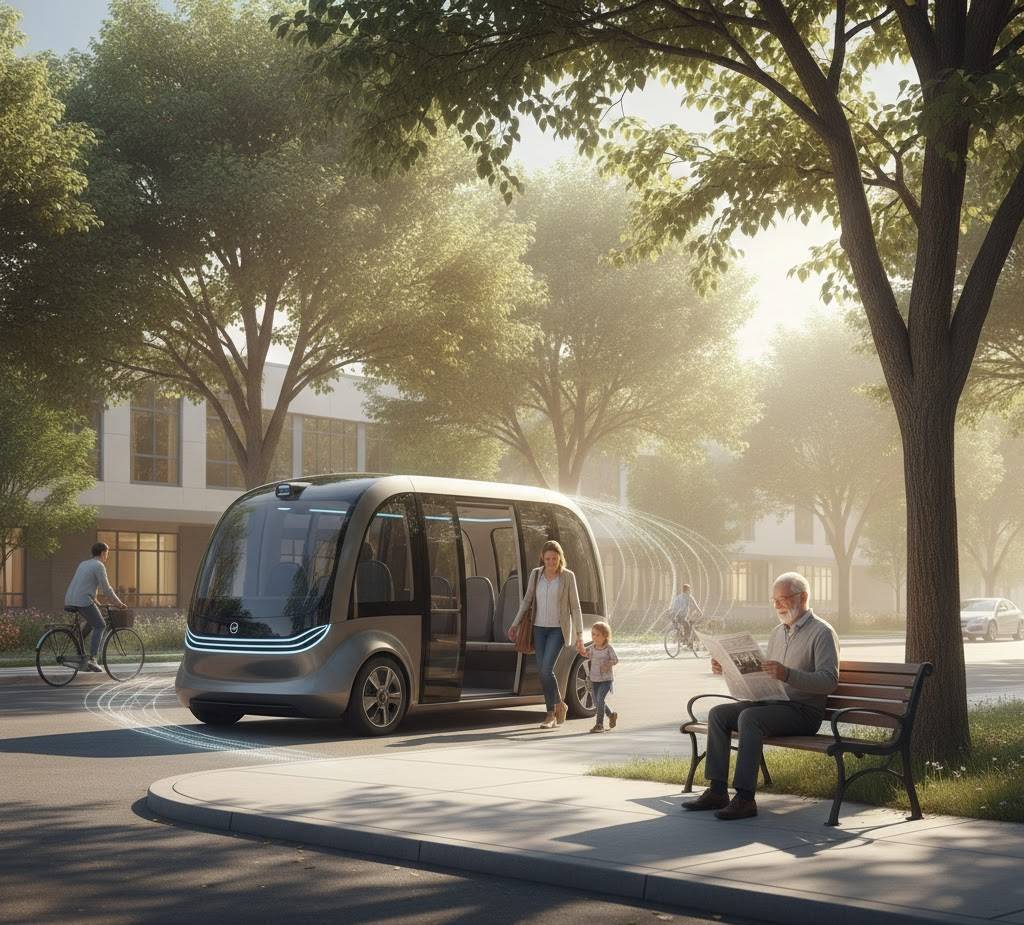
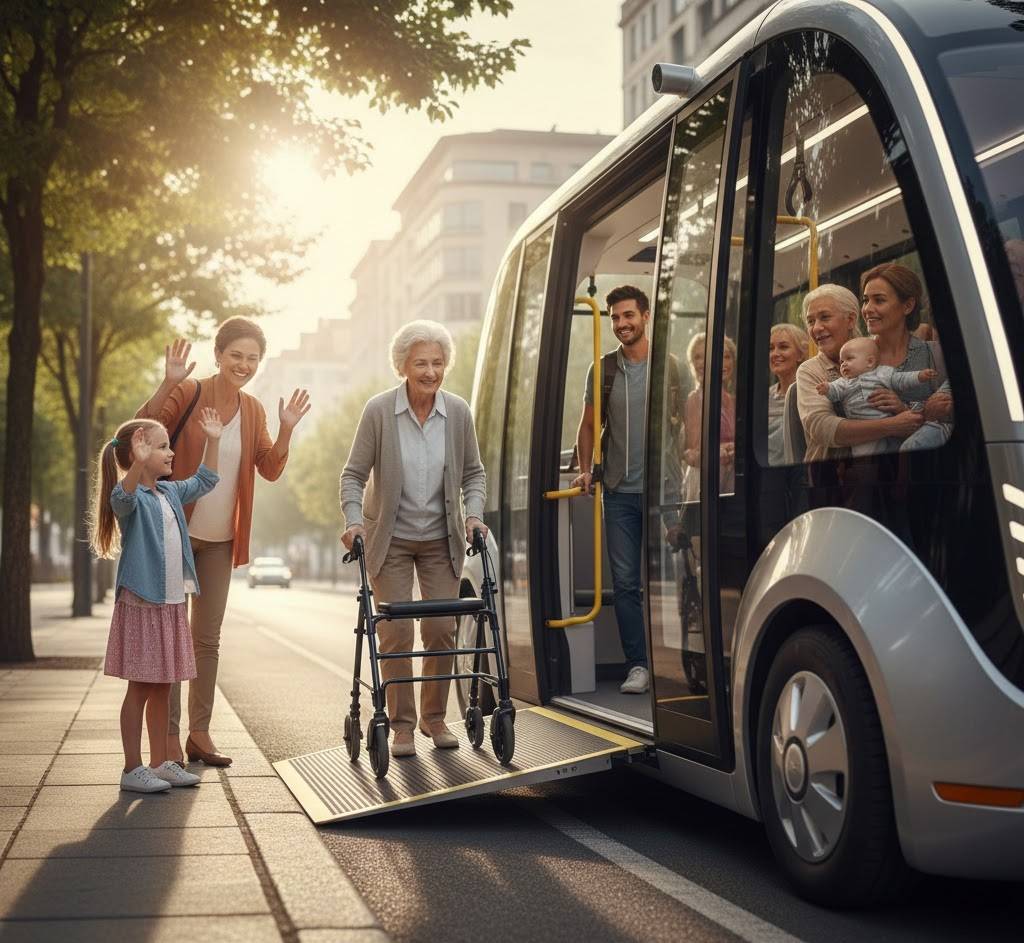
The best future systems are built so that seniors, children, people with disabilities, and low-income residents benefit first. Think autonomous shuttles with wheelchair ramps, voice-guided navigation, and subsidized fares included in social programs.
8. The Biggest Change Is Cultural
We’re moving from “I own a car” to “I have freedom to move.” When transport is safe, cheap, clean, and always available, people choose to own less and live more. Cities become healthier, happier, and more human.
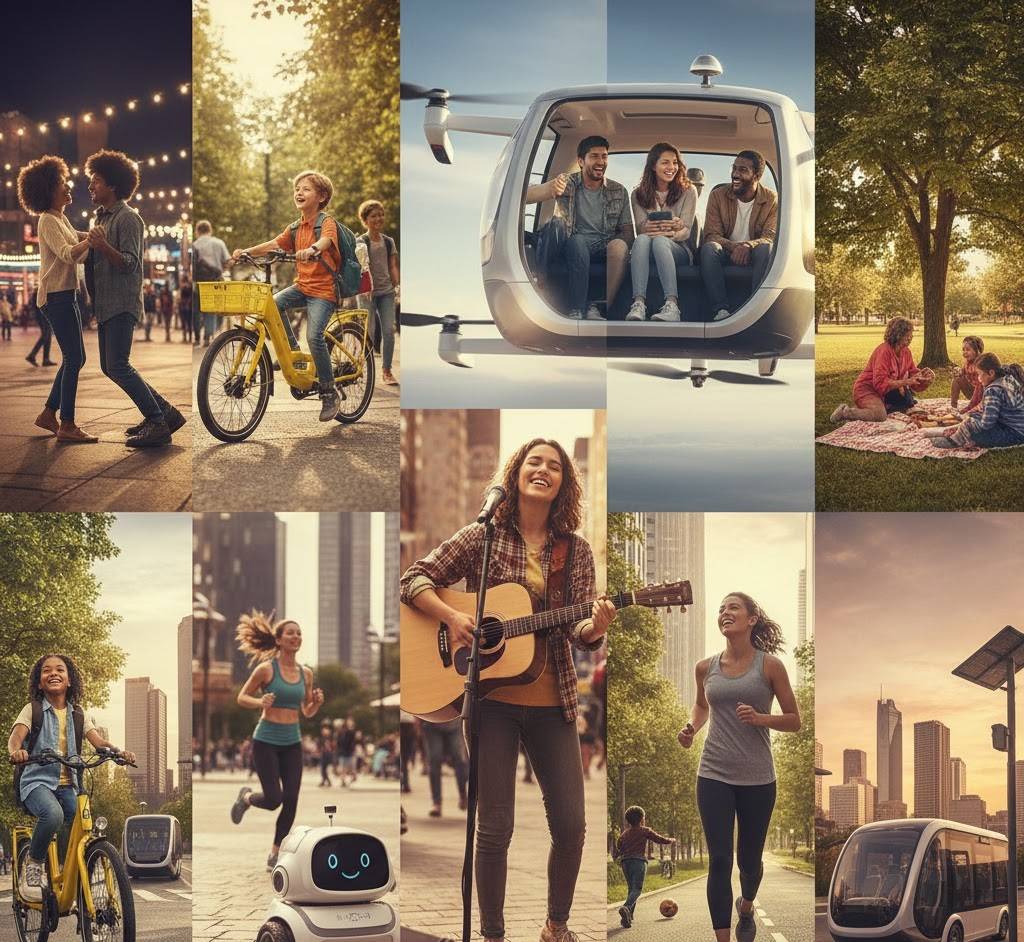
The future of urban mobility isn’t just about shiny new vehicles — it’s about giving time back to people, cleaning our air, reducing stress, and making cities feel like home again. The technology is almost ready. The only question left is how fast we choose to make it happen.
Which part of this future excites you the most? Let me know in the comments — I’d love to hear your vision! 🚀