Introduction
The kitchen ceiling is often overlooked when planning a renovation, but the right design can completely change the atmosphere of the room. A beautiful ceiling can make a small kitchen feel more open, give a spacious kitchen a luxurious finish, and create a welcoming glow with carefully positioned lighting. Modern designs range from simple white ceilings and elegant recessed trays to warm wooden panels, decorative beams, geometric details and contemporary false ceilings. The best choice depends on your kitchen’s size, ceiling height, natural light, cabinetry and cooking habits. In this collection, you will discover 40 modern kitchen ceiling ideas with different materials, shapes, colors and lighting arrangements. Whether you prefer a minimalist interior or a more dramatic designer look, these ideas can help you plan a ceiling that is both attractive and practical.
40 Modern Kitchen Ceiling Designs
1. Minimalist White Ceiling with Recessed Spotlights
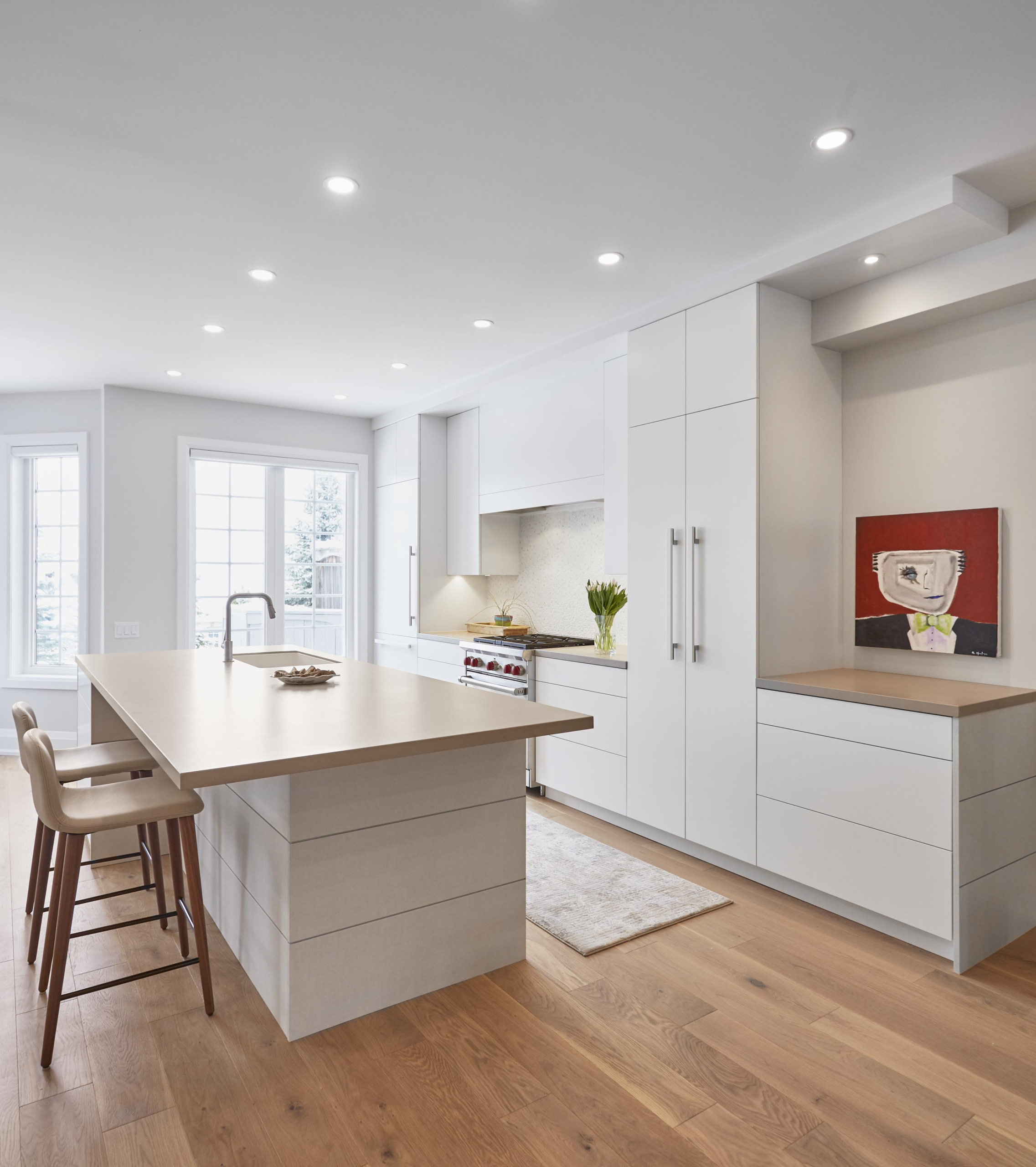
A simple white ceiling with recessed spotlights is an excellent choice for a clean and timeless kitchen. Its smooth surface keeps the room looking open while the lights provide practical illumination for everyday cooking. The design works especially well with handleless cabinets, pale countertops and understated hardware. Arrange the spotlights to illuminate the main work areas rather than placing them randomly across the ceiling. A dimmer can make the lighting more flexible for daytime preparation and relaxed evening meals. This is a particularly good option for smaller kitchens where elaborate ceiling details might make the room feel crowded.
Instagram inspiration: ArchDaily
2. Modern Tray Ceiling with Hidden LED Lighting
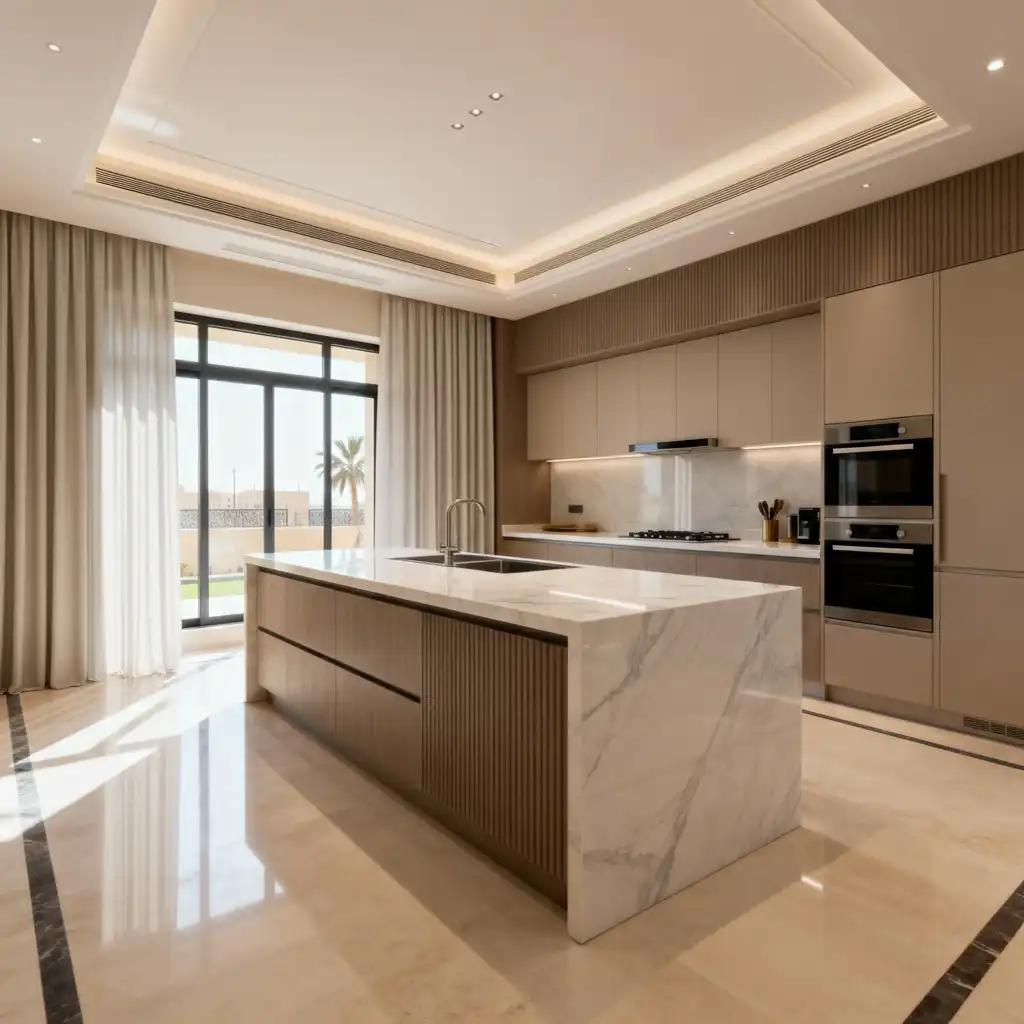
A tray ceiling adds architectural depth through a recessed central section surrounded by a raised border. Hidden LED strips along the inner edge create a soft glow that makes the ceiling appear gently elevated. This design looks beautiful above a kitchen island or in a spacious open-plan kitchen. Choose warm white lighting to complement timber cabinets and creamy finishes, or neutral white for a crisp contemporary interior. Keep the recessed section relatively shallow if the room does not have generous ceiling height. The result is an elegant ceiling that adds dimension without relying on heavy decoration.
Instagram inspiration: Dezeen
3. Natural Wood Slat Kitchen Ceiling
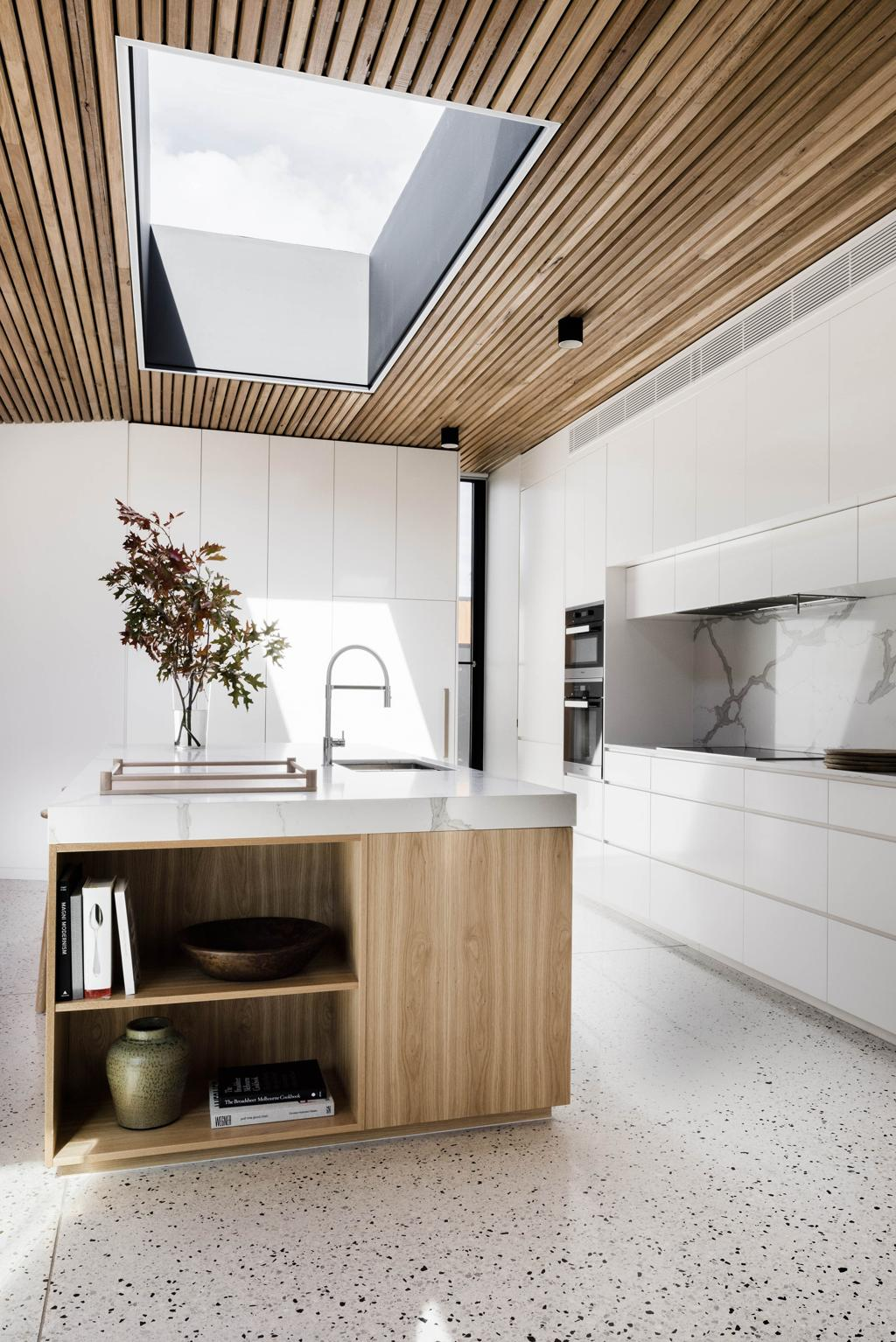
Natural wood slats introduce warmth and texture into a modern kitchen. Their repeated lines can make the room feel more architectural while connecting the ceiling with wooden cabinets, flooring or open shelving. Light oak is ideal for a Scandinavian-inspired interior, while darker walnut creates a richer and more dramatic atmosphere. Consider using wood-look panels or suitable sealed finishes in areas exposed to humidity and cooking residue. It is often best to position decorative timber away from direct heat and heavy grease. A carefully planned slatted ceiling creates a welcoming balance between natural materials and modern simplicity.
Instagram inspiration: Design Milk
4. Elegant Coffered Kitchen Ceiling
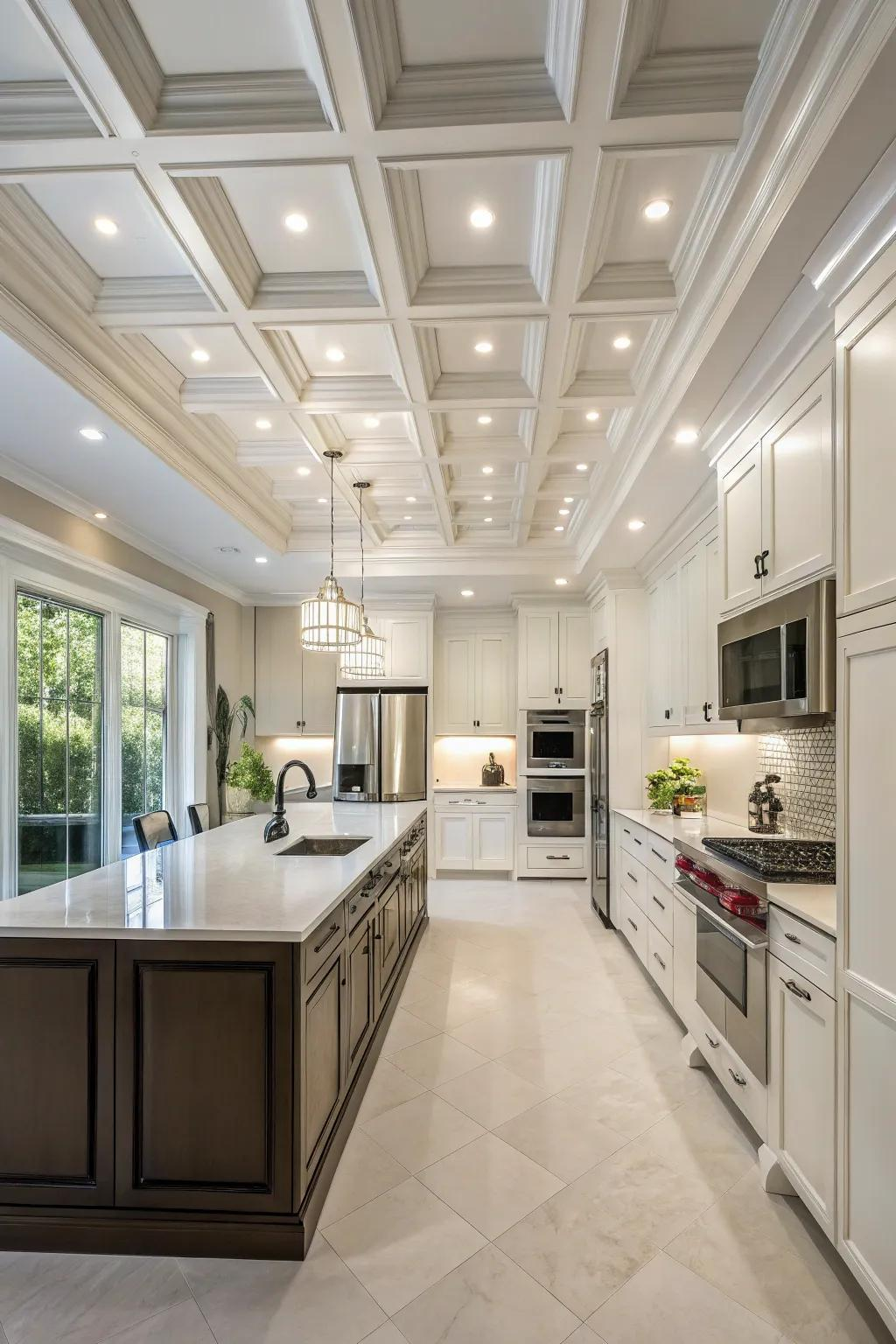
A coffered ceiling features a series of recessed panels that create a structured and sophisticated appearance. In a modern kitchen, slim borders and simple geometric sections keep the design from looking overly traditional. White or soft ivory paint helps the ceiling blend naturally with the walls while allowing the panel shapes to add subtle depth. Recessed lights can be positioned within selected sections for balanced illumination. This style works particularly well in larger kitchens with enough ceiling height to accommodate the added detailing. It gives the room a tailored architectural finish that feels polished and timeless.
Instagram inspiration: House Beautiful
5. Black Ceiling for a Dramatic Modern Kitchen
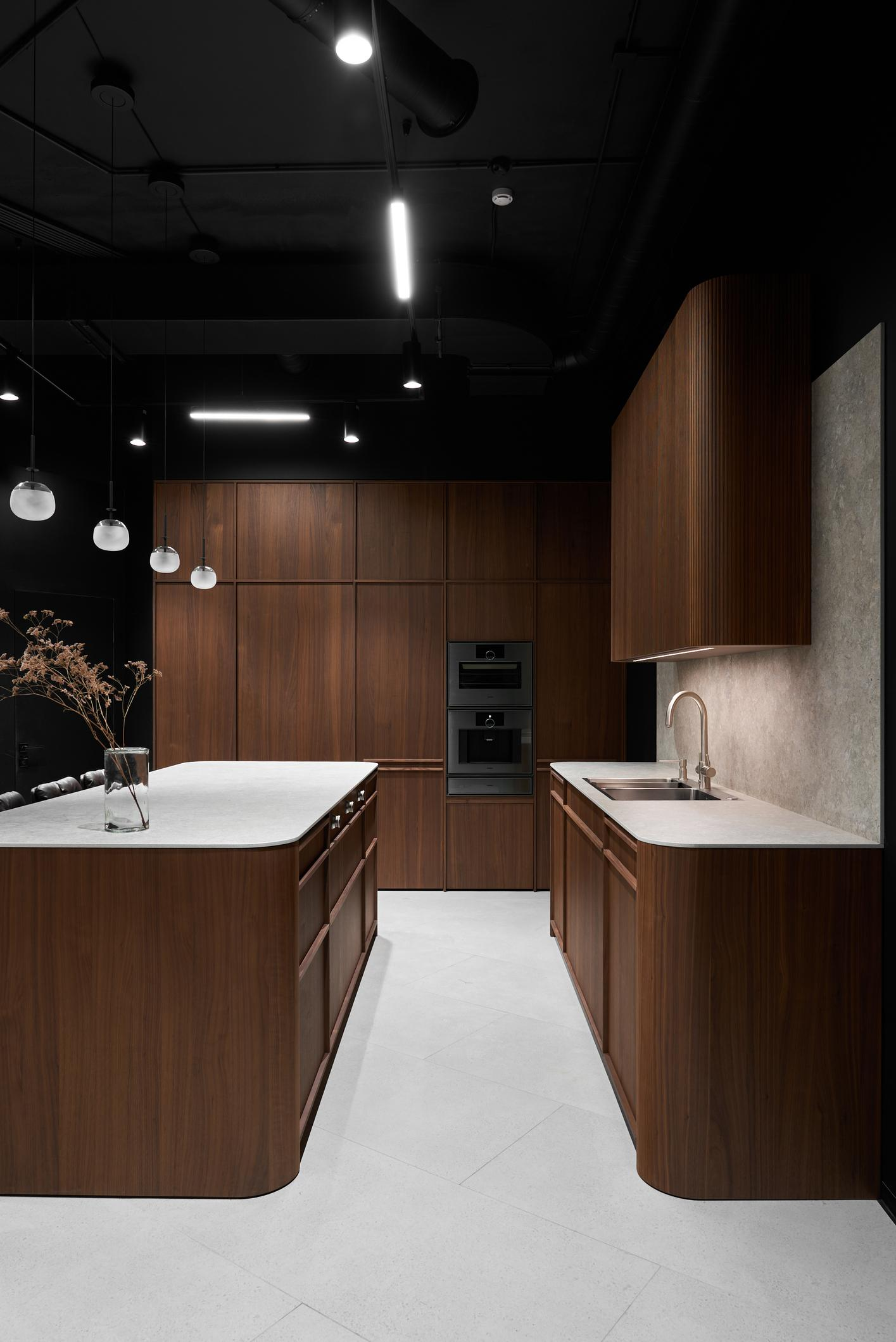
A matte black ceiling can give a modern kitchen a bold, sophisticated personality. It looks especially striking when combined with warm timber cabinetry, pale stone counters and carefully selected metallic details. Black can visually reduce the sense of ceiling height, so it is usually more successful in rooms with generous proportions or plenty of natural light. Use layered lighting to prevent the darker surface from making the kitchen feel gloomy. A few well-positioned spotlights or linear fixtures can create a beautiful contrast against the dark finish. This idea is perfect for homeowners who enjoy confident, contemporary interiors.
Instagram inspiration: Dwell
6. Curved Gypsum False Ceiling
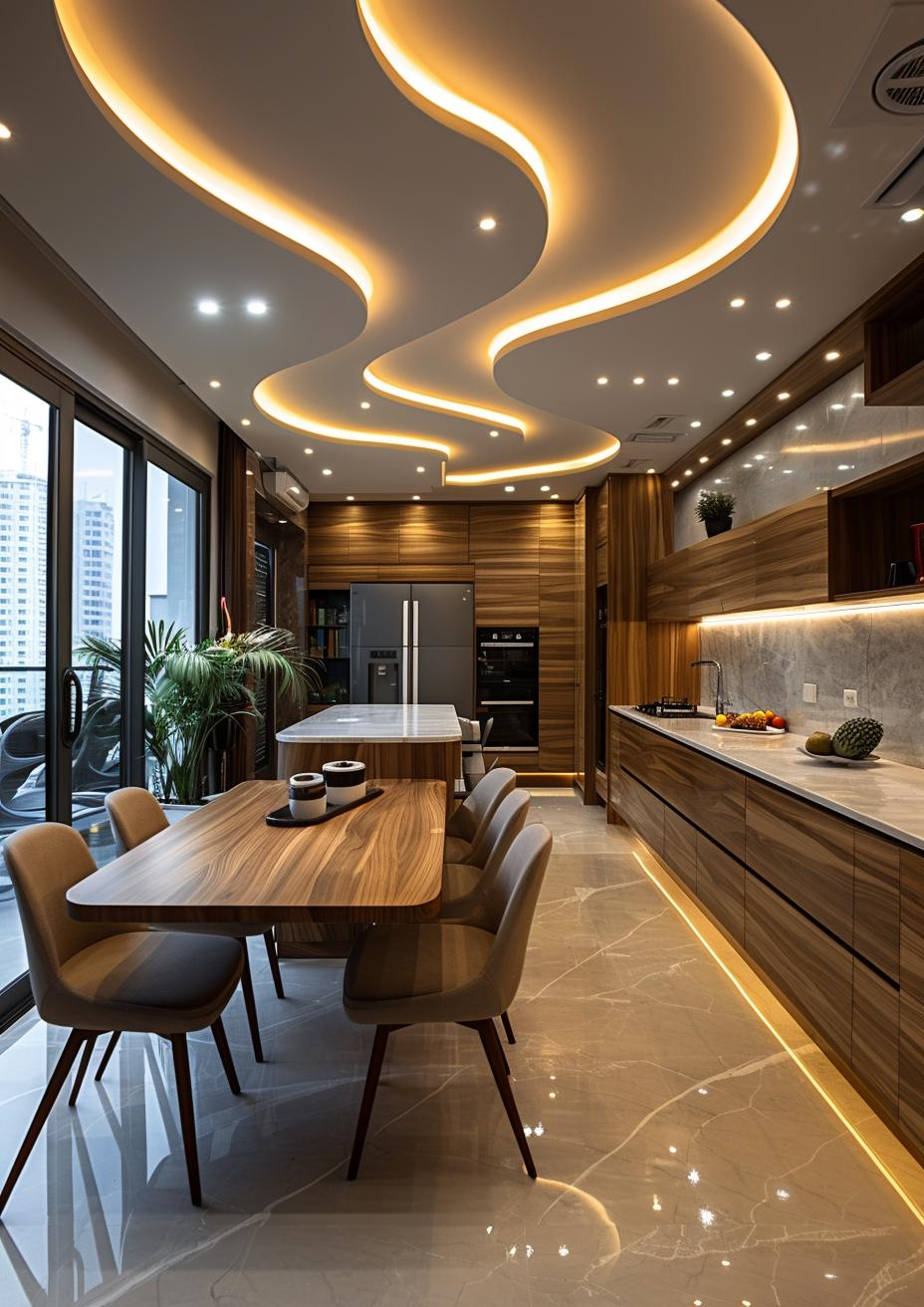
A curved gypsum ceiling introduces softness into a kitchen filled with straight cabinets and rectangular counters. Gentle flowing shapes can guide the eye across the room and create a distinctive architectural feature. Concealed LED strips placed along the curves make the design feel lighter and more dimensional. Keep the curves restrained so they do not compete with the cabinetry or decorative lighting. Moisture-resistant materials and appropriate ventilation should be considered when selecting a false-ceiling system. This design suits spacious modern kitchens where a subtle sculptural detail can make the interior feel more distinctive.
Instagram inspiration: ArchDaily
7. Exposed Concrete Kitchen Ceiling

An exposed concrete ceiling gives the kitchen an industrial character with a raw, architectural appearance. Its natural grey tones pair beautifully with black metal lighting, stainless steel appliances and warm wooden cabinets. Rather than hiding every structural detail, this approach makes the ceiling part of the interior’s visual identity. A suitable sealant can help protect the surface, depending on its condition and the finish selected. Use warm lighting to balance the coolness of the concrete and make the space feel inviting. This style works especially well in loft-inspired homes and contemporary open-plan kitchens.
Instagram inspiration: Yatzer
8. Floating Ceiling Panel Above the Kitchen Island
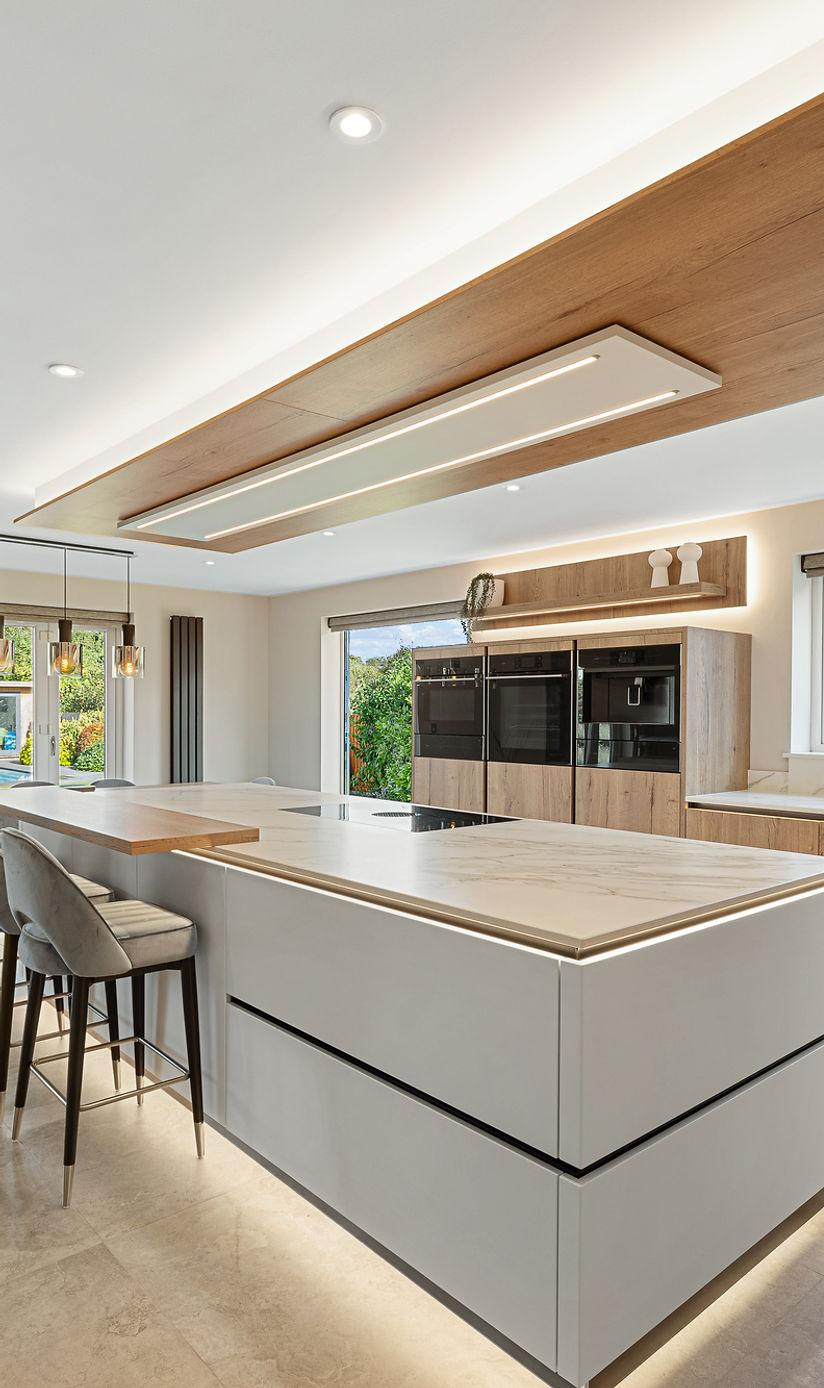
A floating ceiling panel creates a defined feature above the kitchen island without covering the entire ceiling. Its clean rectangular form can visually connect the island, pendant lights and surrounding cabinetry. Integrated LED strips add a soft outline, while recessed spots provide focused illumination over the work surface. A timber or painted panel can be selected to match the kitchen’s existing color scheme. This approach is particularly effective in open-plan layouts where the kitchen needs its own visual identity. It adds structure and interest while leaving the rest of the ceiling simple.
Instagram inspiration: Elle Decor
9. Warm Beige Ceiling with Subtle Cove Lighting
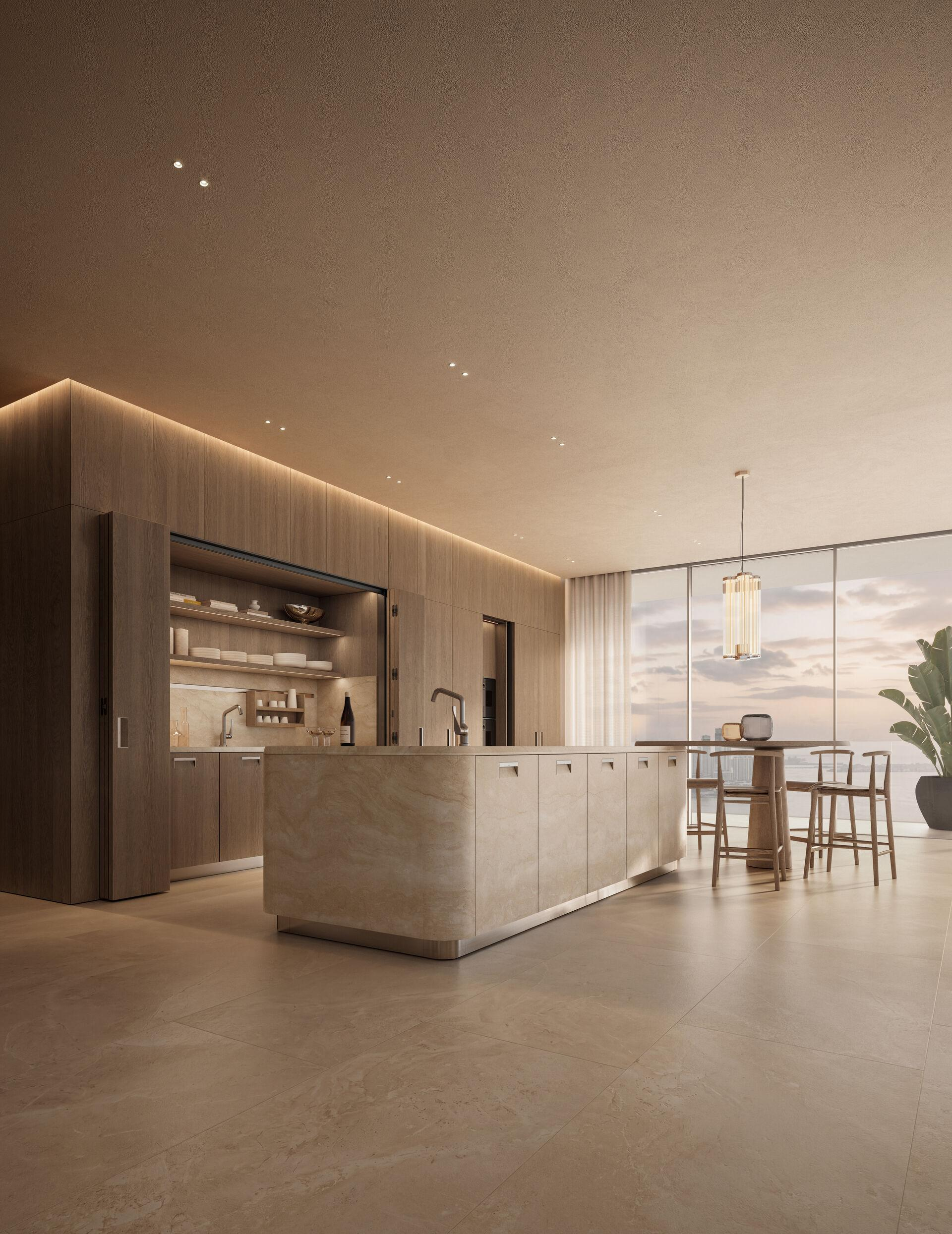
A warm beige ceiling creates a softer alternative to bright white while maintaining a light and airy feeling. The gentle color works beautifully with cream cabinetry, sandy stone and natural wood finishes. Concealed cove lighting around the perimeter adds a comfortable glow without drawing too much attention to the fixtures. Use a washable, suitable ceiling paint so routine kitchen cleaning is easier. The design is especially attractive in kitchens that use a warm neutral palette throughout. It creates a calm, coordinated interior that feels welcoming at every time of day.
Instagram inspiration: House & Garden
10. Geometric Panel Kitchen Ceiling

Geometric ceiling panels add a distinctive pattern while keeping the overall kitchen design modern. Rectangles, squares or carefully arranged linear sections can create rhythm across a broad ceiling surface. A restrained white finish makes the geometry noticeable through shadows rather than strong color contrasts. Small recessed lights can be integrated into selected panels for a clean and balanced appearance. Avoid excessive layers in a low-ceiling kitchen because too much detail may make the room feel smaller. This design is best suited to homeowners who want architectural interest without decorative clutter.
Instagram inspiration: Dezeen
11. Vaulted Ceiling with Exposed Timber Beams
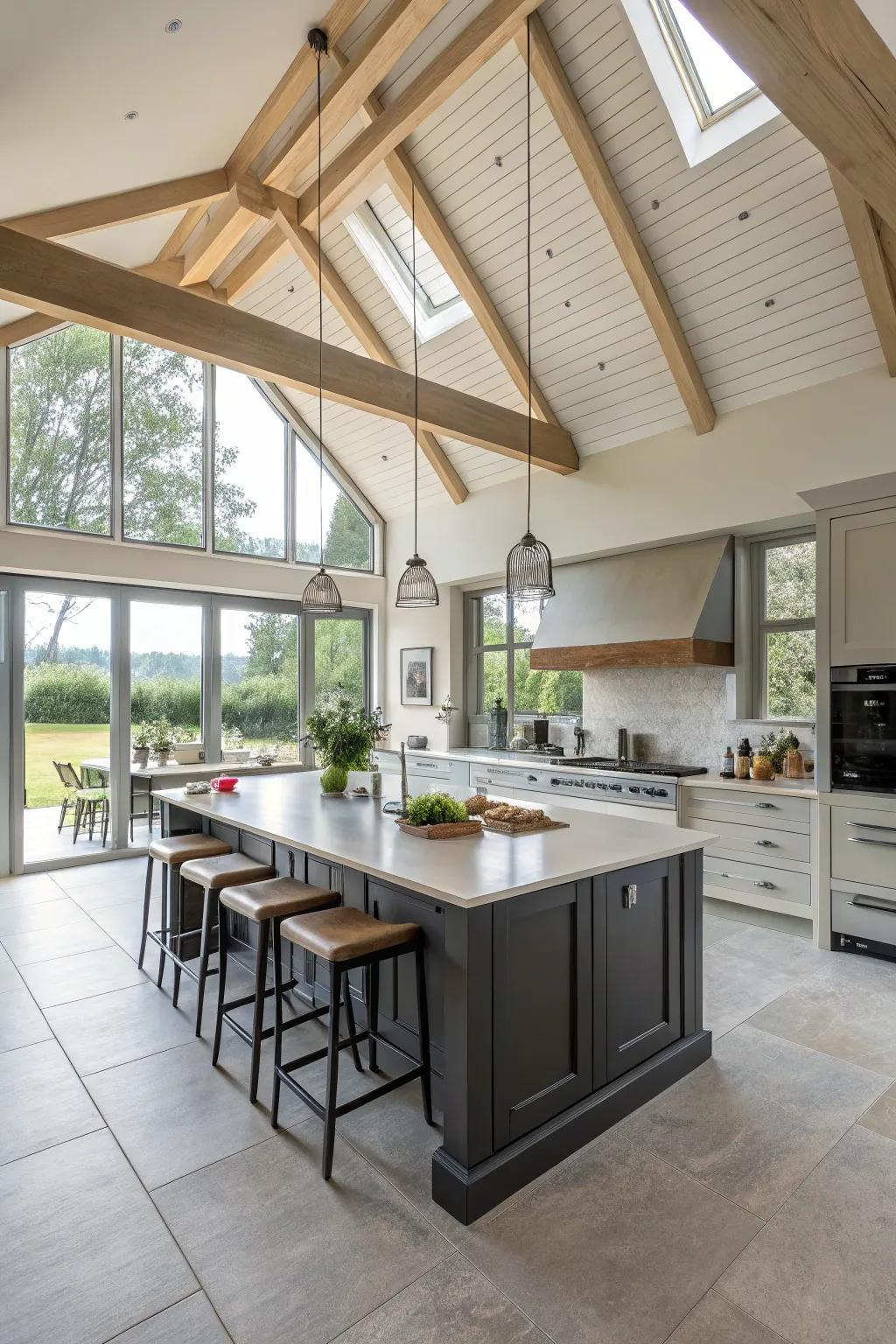
A vaulted ceiling makes a kitchen feel spacious by drawing the eye upward toward its highest point. Exposed timber beams introduce natural texture and create a warm contrast against pale walls and modern cabinetry. The extra vertical space can also make room for statement pendants or larger windows. Consider the position of the beams and lighting before finalizing the kitchen layout. Structural changes to create a vaulted ceiling require professional assessment rather than purely decorative installation. This design is beautiful in homes where the architecture allows the ceiling height to become a central feature.
Instagram inspiration: Dwell
12. Slim Linear LED Ceiling Channels

Slim linear LED channels create a clean, modern ceiling with long lines of integrated light. They can run parallel to the kitchen counters, follow the island or form a simple geometric arrangement. Their narrow appearance keeps the ceiling visually uncluttered while providing useful general illumination. Choose diffused lighting to avoid harsh bright spots and visible LED dots. Separate switches or dimmers allow the light to be adjusted for different activities. This is an excellent option for contemporary kitchens that favor precision, simplicity and functional design.
Instagram inspiration: Architectural Digest
13. White Ceiling with Wooden Border Detail

A wooden border adds a small but noticeable detail to an otherwise simple white kitchen ceiling. The timber frame can echo the cabinet finish and visually connect different parts of the interior. Light oak creates a relaxed Scandinavian look, while walnut gives the ceiling a more luxurious character. Recessed lights can be placed within the white central area to keep the wood detail uninterrupted. Select a suitable finish that can tolerate the kitchen environment and routine cleaning. This idea is a good choice when you want warmth without committing to a fully timber-clad ceiling.
Instagram inspiration: Design Milk
14. High-Gloss White Ceiling
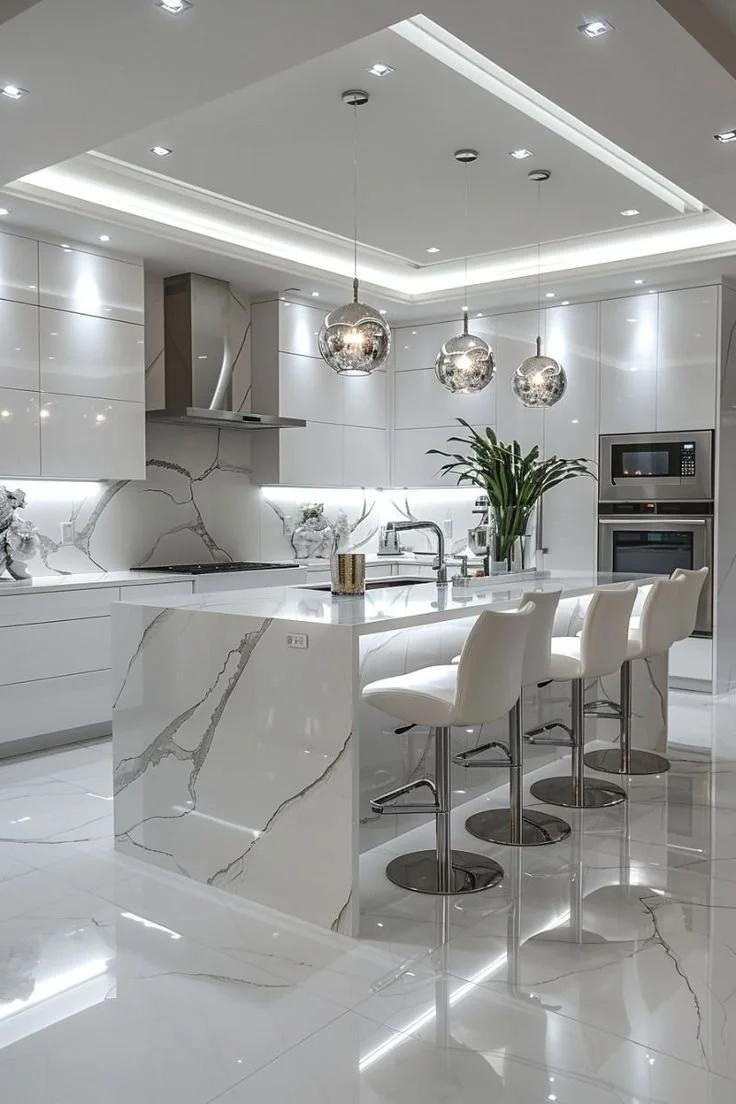
A high-gloss white ceiling can help reflect available light and create a bright, polished kitchen atmosphere. It looks particularly effective in interiors with pale cabinetry, reflective backsplashes and large windows. The smooth surface gives the ceiling a clean finish without requiring elaborate shapes or layers. Use a coating specifically suitable for ceilings and consider how reflections will look around light fixtures. In rooms with uneven surfaces, careful preparation is important because glossy finishes can highlight imperfections. This idea suits compact kitchens that benefit from a brighter and more open visual effect.
Instagram inspiration: Livingetc
15. Kitchen Ceiling with Recessed Cove and Spotlights
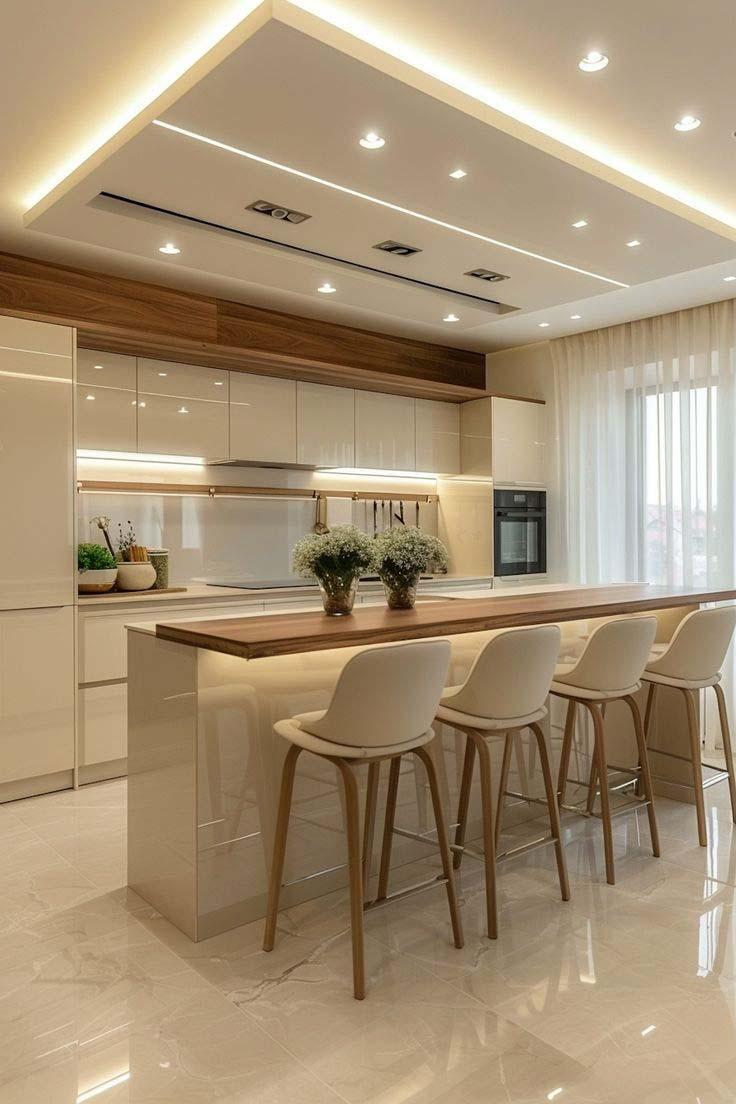
Combining cove lighting with recessed spotlights gives the kitchen two useful layers of illumination. The concealed strip creates a gentle ambient glow, while the spotlights provide more direct light for movement and everyday activities. A simple border around the ceiling keeps the design elegant rather than overly decorative. Warm or neutral white lighting can be selected to suit the kitchen’s materials and natural daylight. Put the lights on separate controls so you can use only the layers you need. This is one of the most versatile designs for a kitchen that serves as both a working and social space.
Instagram inspiration: ArchDaily
16. Natural Oak Ceiling Panels
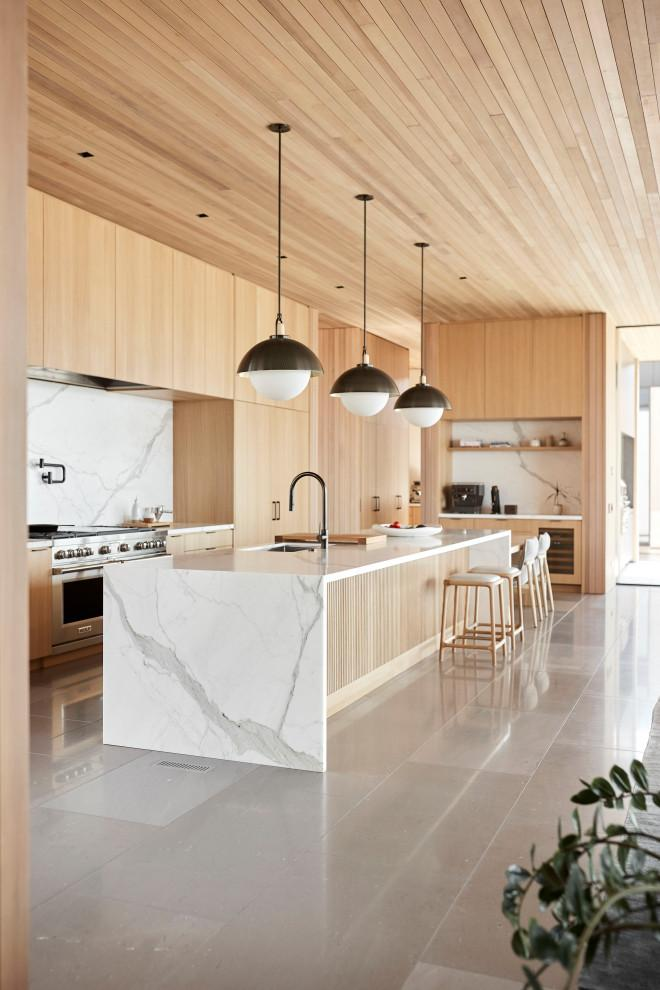
Natural oak ceiling panels add a warm, refined finish to a modern kitchen. Their gentle grain pattern creates visual interest and works beautifully with white stone, cream cabinets and brushed metal fixtures. Wide panels give the ceiling a calm appearance, while narrow boards introduce more texture. Consider engineered or sealed wood products that are appropriate for kitchen humidity and temperature changes. Keep the surface easy to maintain and avoid placing vulnerable materials too close to cooking heat. This design brings a natural, welcoming atmosphere to a contemporary interior.
Instagram inspiration: Dwell
17. Two-Tone Kitchen Ceiling
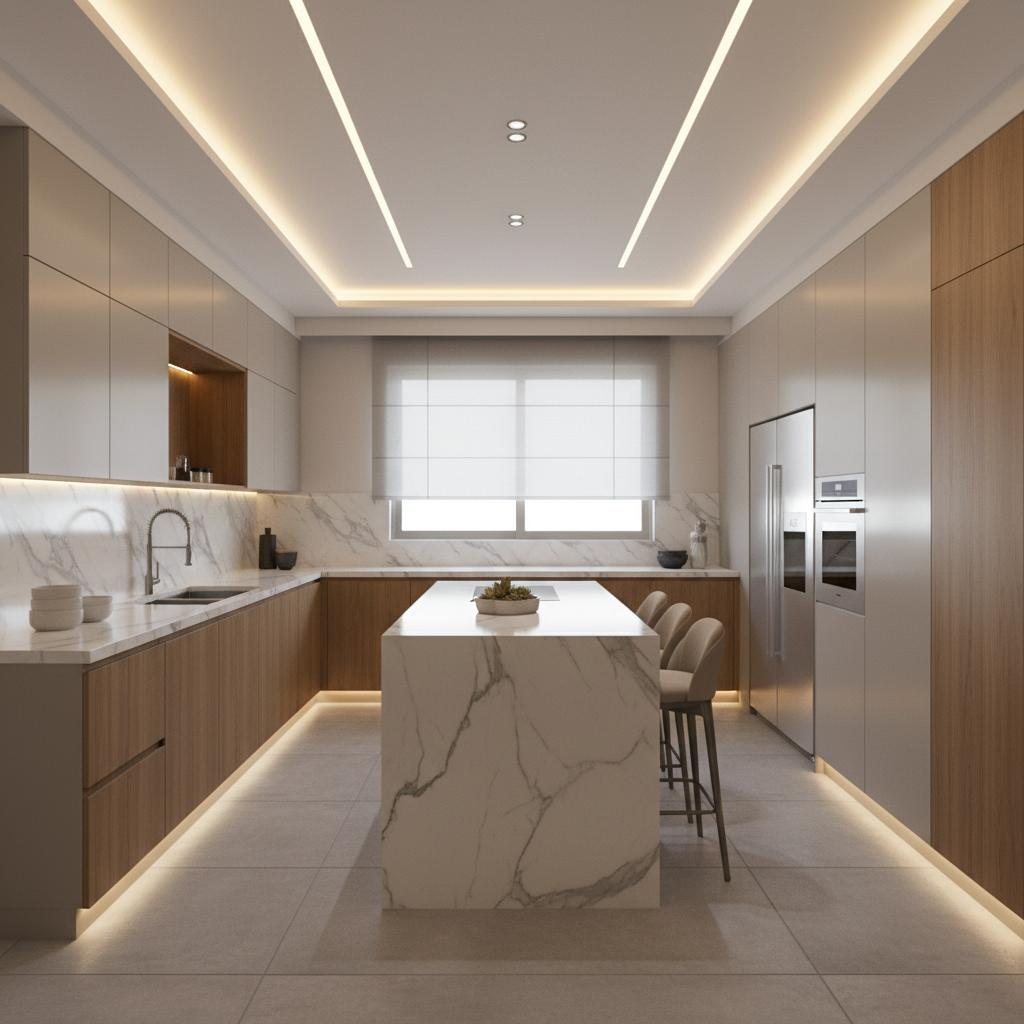
A two-tone ceiling uses two coordinated colors to give a kitchen more definition. A white central section with a soft beige or grey border can make the ceiling feel layered without requiring complex construction. The color division can also help distinguish the kitchen zone from an adjoining dining or living area. Choose shades that complement the cabinetry and wall finishes rather than introducing too many competing tones. A simple lighting layout will keep the color contrast as the main feature. This design works well for homeowners who want something more interesting than a plain white ceiling.
Instagram inspiration: Elle Decor
18. Modern Ceiling with Black Track Lighting
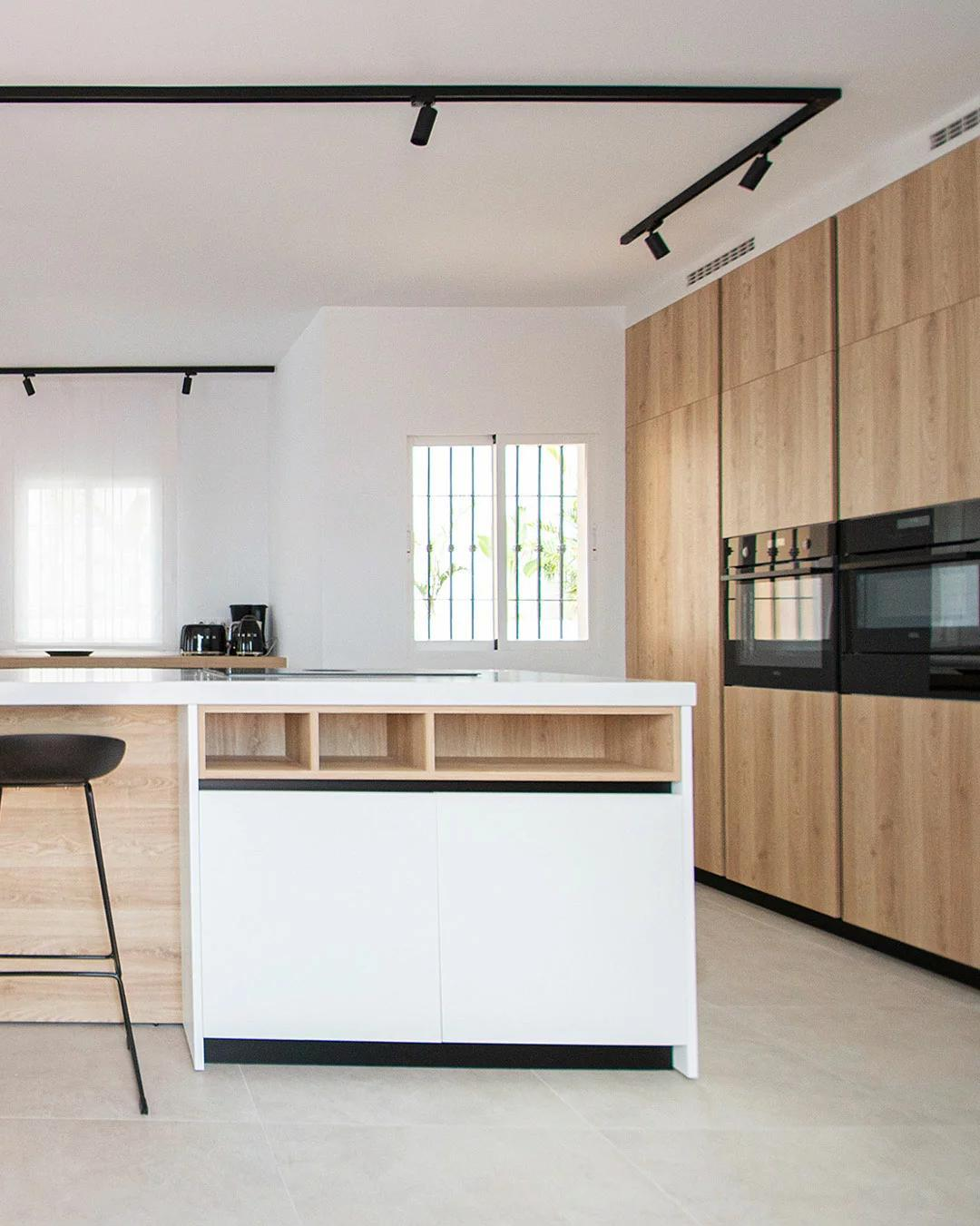
Black track lighting creates a graphic contrast against a light kitchen ceiling. Adjustable fixtures can be directed toward the island, sink or preparation counters as the room’s needs change. The dark track also complements black cabinet handles, window frames and modern appliances. Choose a track system with suitable brightness and beam angles for the size of the kitchen. Keep the surrounding ceiling simple so the lighting arrangement remains visually balanced. This idea is practical for kitchens that need flexible illumination and a contemporary industrial touch.
Instagram inspiration: Designboom
19. Textured Plaster Kitchen Ceiling

A textured plaster ceiling gives the kitchen a handcrafted look that feels softer than a perfectly smooth surface. Fine plaster movement can create gentle tonal variation without relying on bold patterns or decorative fixtures. It pairs beautifully with natural stone, timber cabinetry and warm neutral colors. Choose a durable finish appropriate for the kitchen environment and consider how easily it can be cleaned. Keep texture subtle in areas where grease and cooking residue may be more likely to accumulate. This design is ideal for interiors that celebrate natural materials and understated character.
Instagram inspiration: Yatzer
20. Circular Ceiling Feature Above the Island
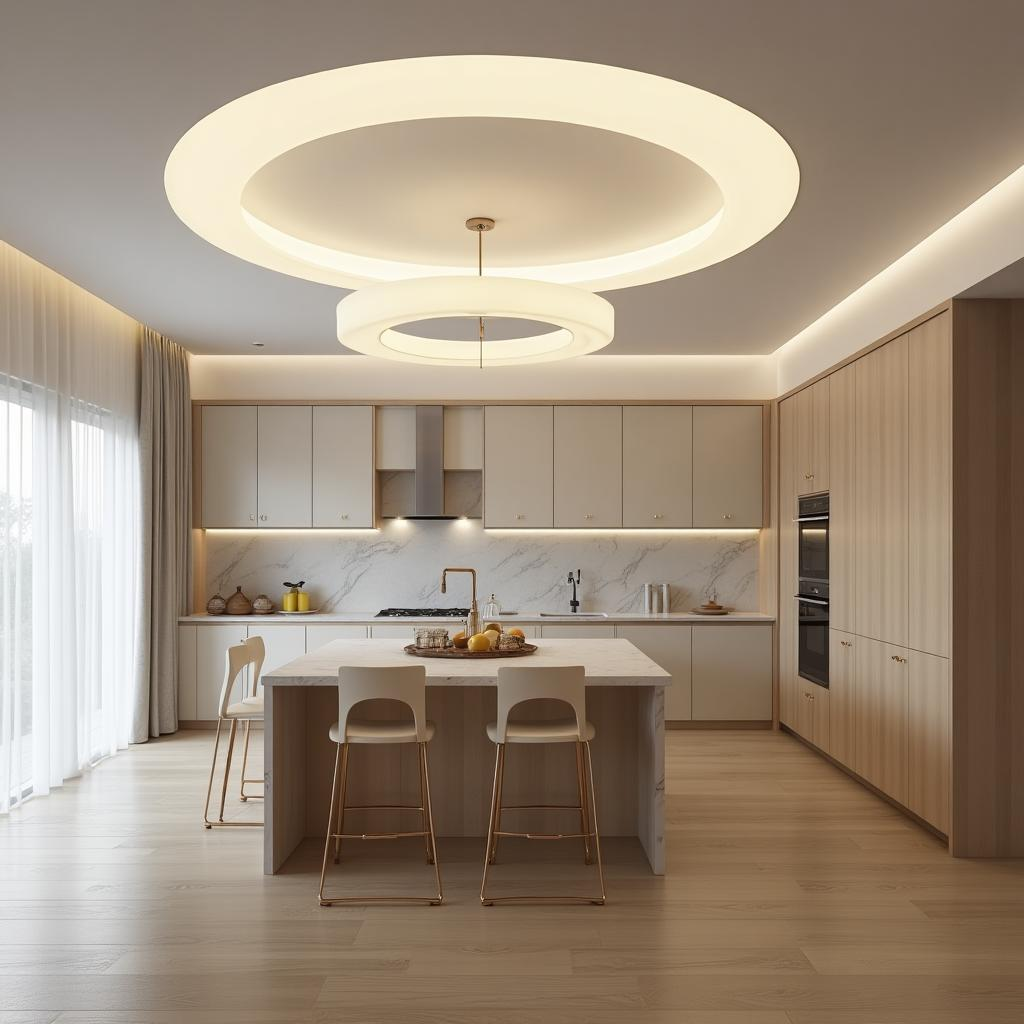
A circular ceiling feature can create a striking focal point above a rectangular kitchen island. Its curved outline introduces a softer shape and makes the island feel like a deliberately designed zone. Concealed LED lighting can emphasize the circular form, while a pendant or small group of lights can be positioned within it. Keep the diameter proportional to the island so the feature feels balanced from different viewpoints. A restrained white finish makes the shape elegant, while a contrasting tone gives it more visual impact. This idea is particularly attractive in open-plan kitchens with generous ceiling space.
Instagram inspiration: Dezeen
21. Modern Kitchen Ceiling with Decorative Beams

Decorative ceiling beams can add architectural character without making a kitchen look old-fashioned. Slim painted beams create a subtle pattern, while natural timber beams bring warmth and texture. They work especially well in kitchens with high ceilings, large islands and open-plan layouts. Use a restrained arrangement so the beams do not overwhelm the room or interfere with lighting. If the beams are decorative rather than structural, select lightweight materials designed for overhead installation. This idea gives a modern kitchen a comfortable, established character with a touch of traditional charm.
Instagram inspiration: House & Garden
22. Soft Grey Kitchen Ceiling

A soft grey ceiling adds gentle contrast while keeping the kitchen light and contemporary. It works beautifully with white cabinets, pale stone counters and brushed stainless steel appliances. Choose a warm grey if the kitchen has timber accents, or a cooler shade for a more minimal monochrome interior. Recessed spotlights help maintain an even appearance and prevent the ceiling from feeling visually heavy. Test paint samples in both daylight and evening lighting before selecting the final color. This is a simple way to introduce color without making the ceiling the dominant feature.
Instagram inspiration: Livingetc
23. Fluted Ceiling Accent Panels
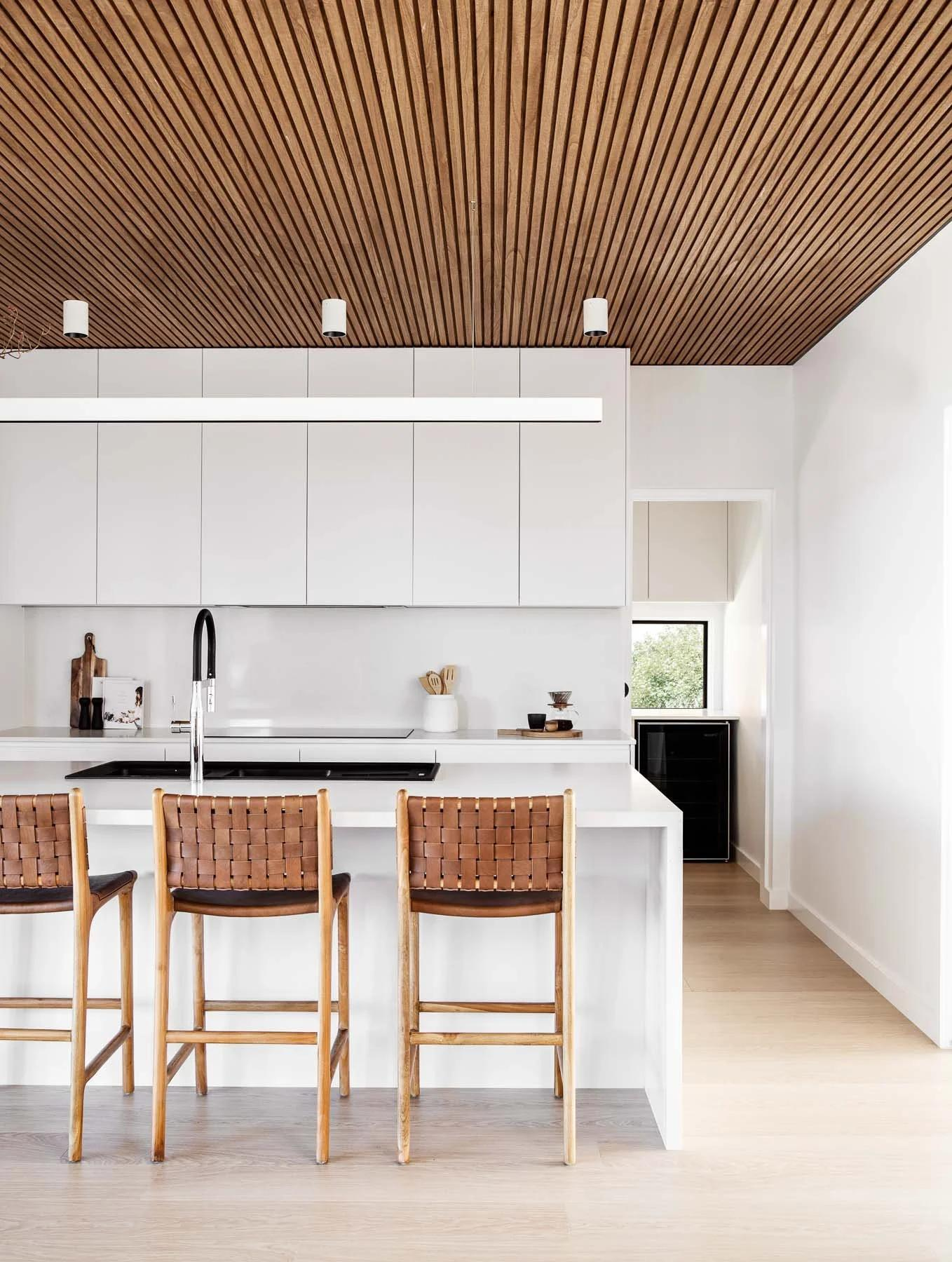
Fluted ceiling panels introduce repeating grooves that create texture and subtle shadow lines. A focused accent above the island or dining area can add detail without covering the entire ceiling. Timber-look finishes create warmth, while painted panels offer a more understated architectural effect. The grooves should be kept away from areas exposed to heavy cooking grease because detailed surfaces can be harder to clean. Pair the accent with simple cabinetry and restrained lighting to avoid visual competition. This idea works best when texture is used selectively as part of a balanced kitchen design.
Instagram inspiration: Designboom
24. Skylight Kitchen Ceiling

A skylight brings natural daylight directly into the kitchen and can make the space feel more connected to the outdoors. It is especially useful in rooms where conventional windows provide limited light. A clean white ceiling around the skylight helps distribute daylight throughout the interior. Consider heat gain, glare, weatherproofing and suitable glazing before installation. Blinds or solar-control glazing may be useful where sunlight is strong for long periods. This design creates an uplifting atmosphere and makes the ceiling an important part of the kitchen’s natural lighting plan.
Instagram inspiration: Architectural Digest
25. Modern Ceiling with Pendant Lighting Arrangement
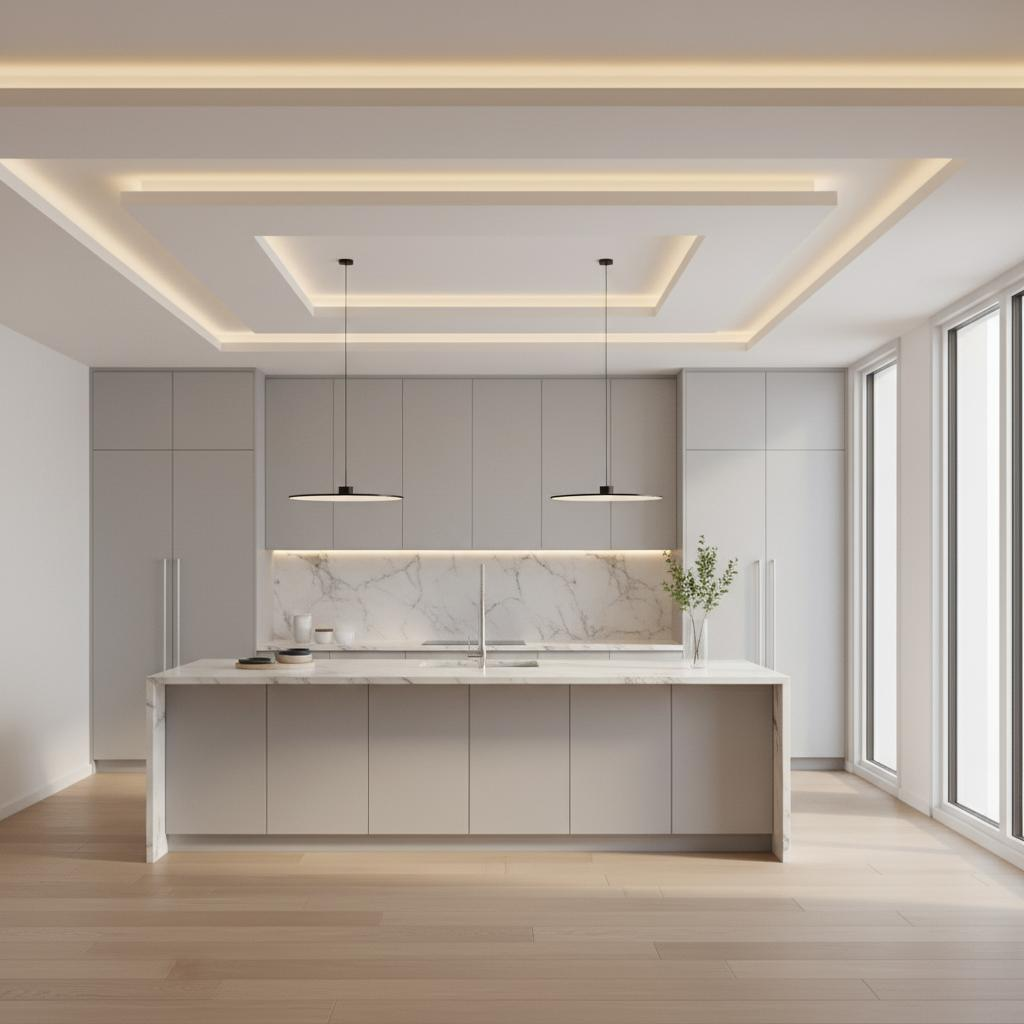
A carefully arranged row of pendant lights can turn a simple ceiling into an attractive kitchen feature. The fixtures create a visual connection between the ceiling and the island while providing focused light over the worktop. Choose matching pendants for a neat symmetrical look or related shapes for a more relaxed arrangement. Their height should allow clear views across the kitchen and comfortable movement around the island. Combine them with general ceiling lighting so the rest of the room does not remain dark. This idea is a practical way to add personality without installing a complicated false ceiling.
Instagram inspiration: Elle Decor
26. Slim Layered False Ceiling
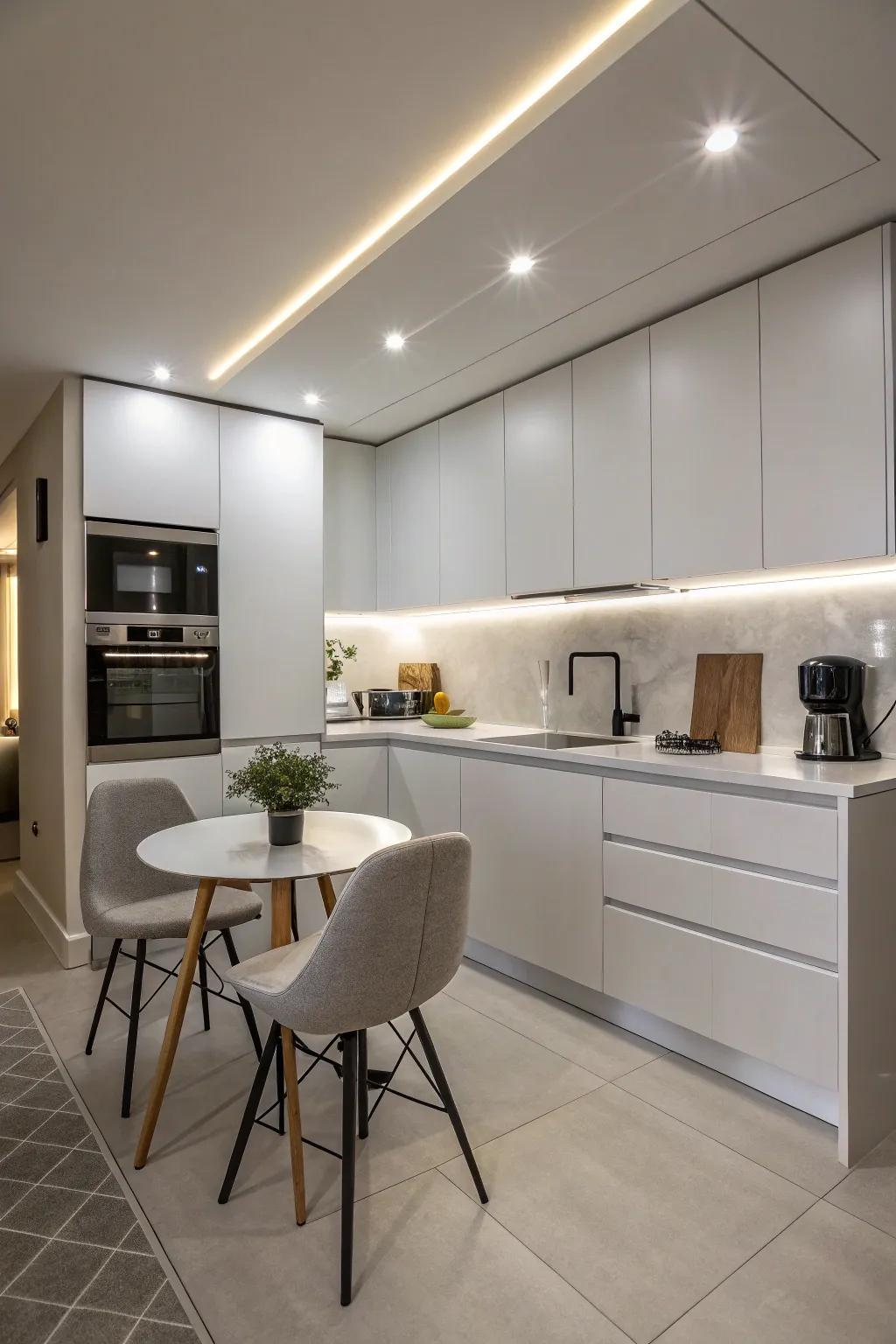
A slim layered false ceiling creates depth with one or two shallow levels rather than heavy decorative construction. Its narrow profile can frame the kitchen and provide space for concealed lighting or wiring. This design suits modern interiors because it adds architectural definition while keeping the overall ceiling relatively simple. Use moisture-resistant materials where appropriate and plan access to any concealed electrical components. Avoid unnecessary drops in kitchens that already have limited ceiling height. It is a versatile option for homeowners who want a polished ceiling without an elaborate design.
Instagram inspiration: ArchDaily
27. Natural Stone-Look Ceiling Detail
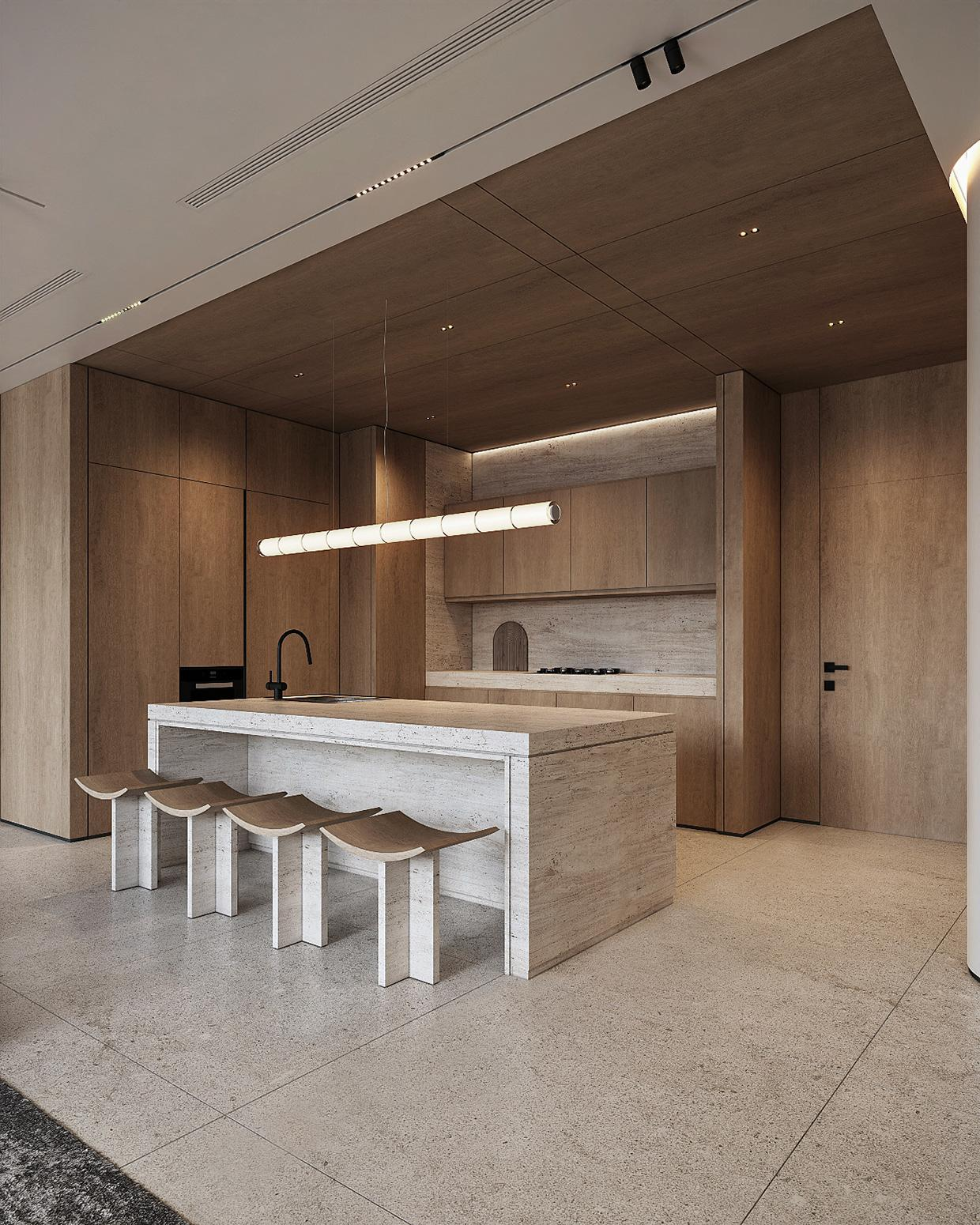
A stone-look ceiling detail can bring an unusual sense of luxury to a contemporary kitchen. A carefully selected panel above an island or dining zone can echo the veining and tones of the countertop. Lighter stone effects help the room feel open, while darker patterns create a more dramatic statement. Because overhead surfaces require secure installation, choose lightweight suitable products rather than assuming heavy stone slabs can be mounted directly. Keep the rest of the ceiling simple to let the material detail stand out. This idea works best as a small architectural accent rather than a full-room treatment.
Instagram inspiration: Yatzer
28. Warm Wood Beamed Ceiling with White Panels
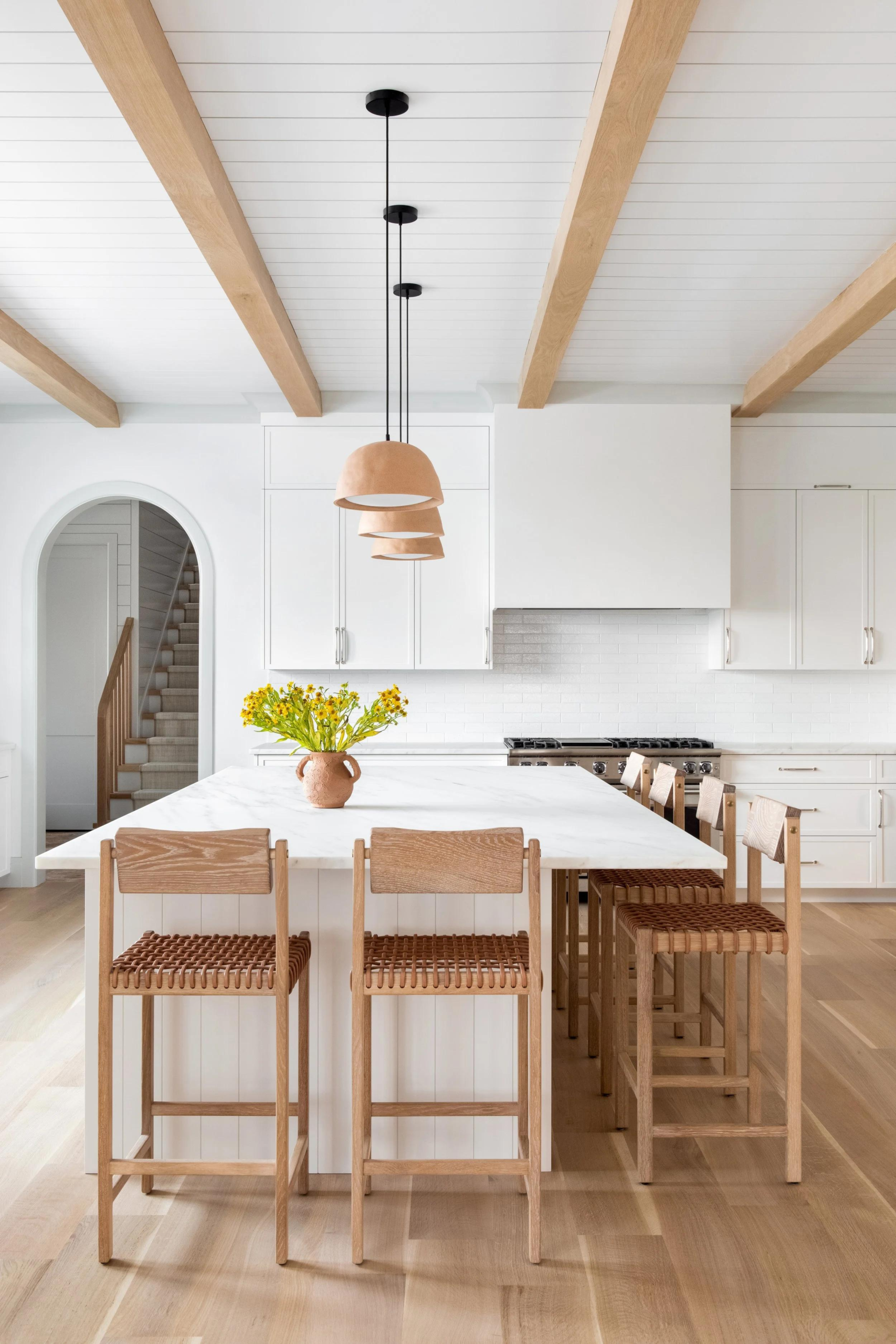
Combining white ceiling panels with warm wood beams creates a balanced mix of brightness and natural texture. The white background keeps the kitchen feeling fresh, while the beams introduce definition and warmth. This pairing looks especially attractive with oak cabinets, neutral stone and simple pendant fixtures. Keep the beam spacing consistent so the ceiling looks intentional rather than crowded. Suitable finishes and installation methods are important in a room exposed to humidity and cooking residue. The result is a welcoming ceiling that blends modern simplicity with a hint of farmhouse character.
Instagram inspiration: Dwell
29. Ceiling with Integrated Magnetic Track System

A magnetic track system offers a flexible approach to kitchen ceiling lighting. Compatible spotlights and linear modules can be arranged along the track to illuminate different areas. Some systems also allow fixtures to be repositioned as the kitchen layout or lighting needs change. A recessed installation creates a particularly clean appearance, although it needs careful planning with the ceiling contractor and electrician. Select a system designed for the required electrical load and kitchen environment. This option is well suited to contemporary kitchens that value adaptable lighting and a neat architectural finish.
Instagram inspiration: Designboom
30. Open-Plan Kitchen Ceiling with Zoned Lighting
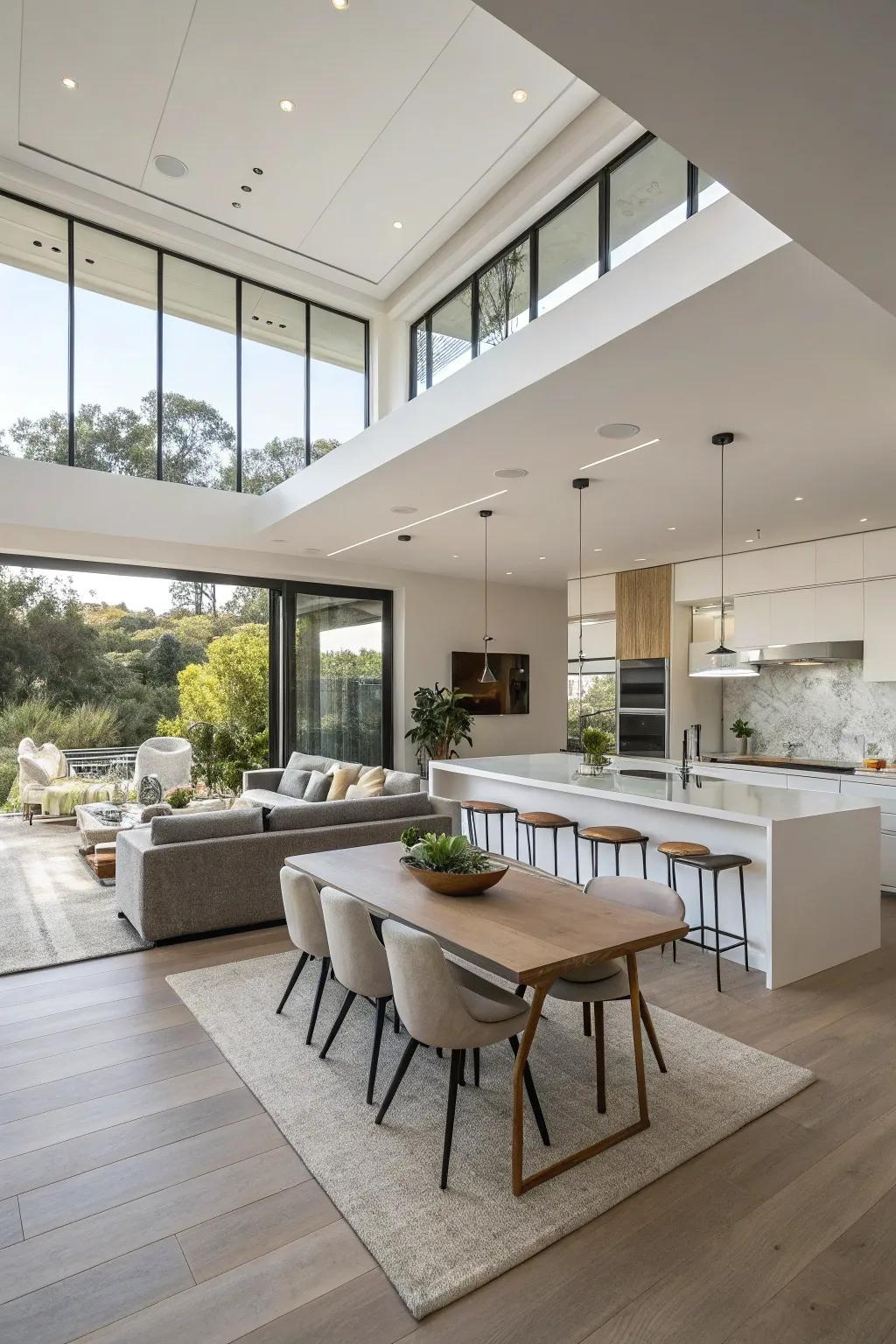
In an open-plan home, ceiling lighting can help distinguish the kitchen from the adjoining dining and living spaces. Recessed lights can illuminate the preparation area, while pendants define the island and a softer light layer marks the dining zone. Keeping the ceiling finish consistent helps the entire room feel connected. Different lighting circuits allow each area to be used independently throughout the day. Plan the lighting around furniture and work surfaces rather than simply spacing fixtures evenly. This design makes a large shared space feel organized, comfortable and thoughtfully planned. homesandgardens.com+1
Instagram inspiration: Architectural Digest
31. Contemporary Ceiling with Recessed Square Lights
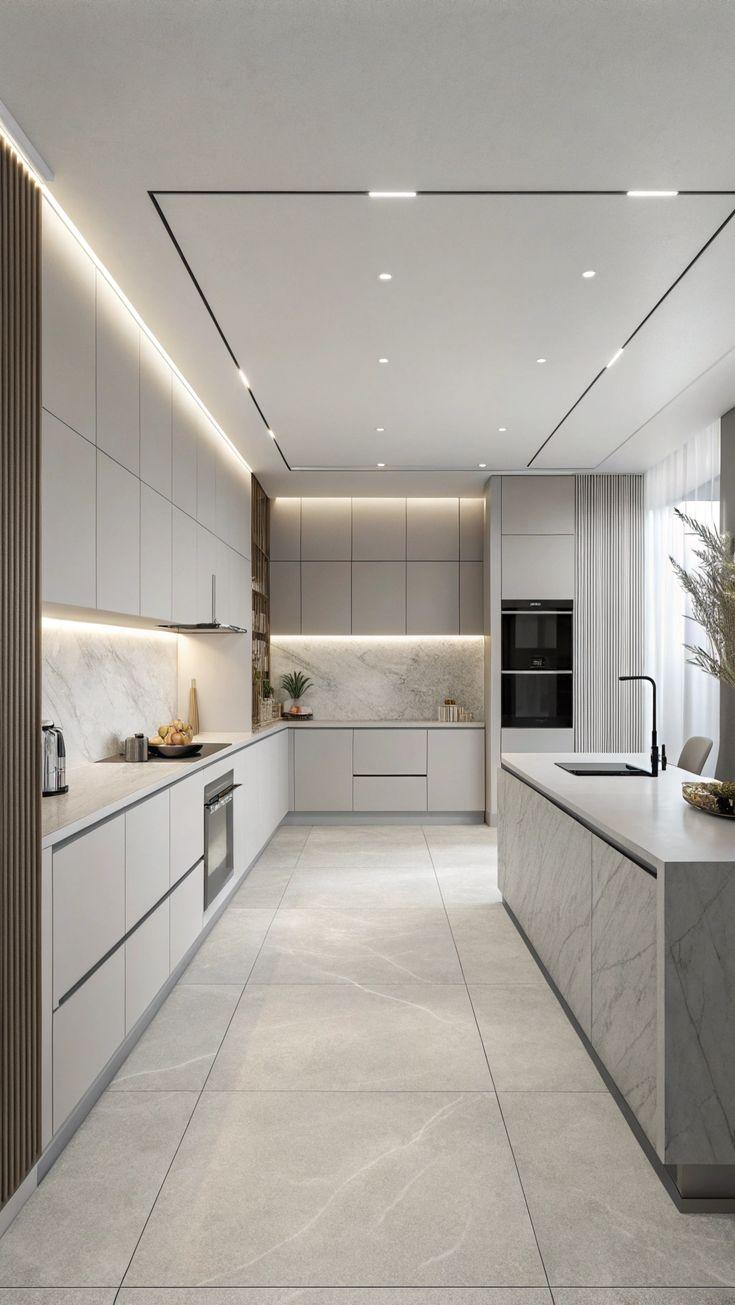
Recessed square lights give a kitchen ceiling a crisp geometric appearance. Their clean outlines complement square cabinet fronts, rectangular islands and modern tile patterns. A symmetrical layout can make the ceiling feel organized, especially in a long kitchen. Choose fixtures with suitable brightness and glare control for the size and finish of the room. Make sure the lighting positions illuminate counters rather than casting shadows from the people working at them. This design is ideal for kitchens that favor a structured, minimal and contemporary aesthetic.
Instagram inspiration: Livingetc
32. Soft Curved Perimeter Ceiling
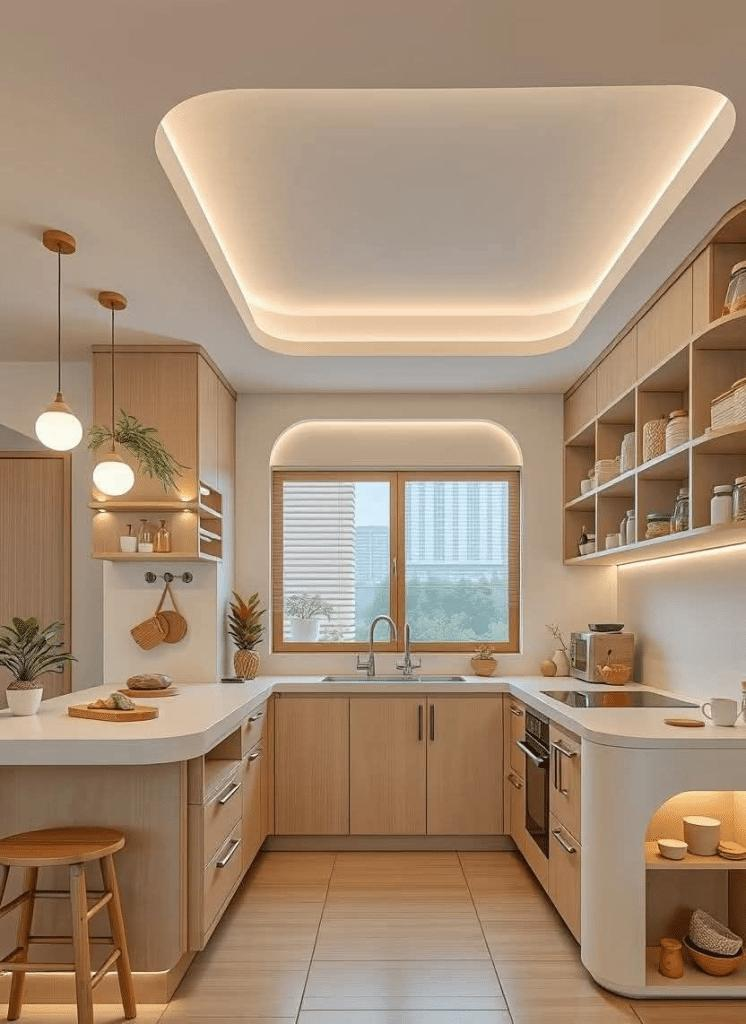
A curved perimeter ceiling uses gentle rounded edges to soften the transition between the ceiling and the walls. The shape can make a modern kitchen feel less rigid, especially when the cabinetry and island have straight lines. Concealed lighting along the curve creates a subtle glow that highlights the ceiling’s outline. A light neutral finish keeps the design elegant and prevents it from becoming too visually heavy. Curved construction requires accurate planning and skilled installation for a smooth result. This idea is perfect for a kitchen that needs a little architectural softness.
Instagram inspiration: Yatzer
33. Kitchen Ceiling with Warm Bronze Details
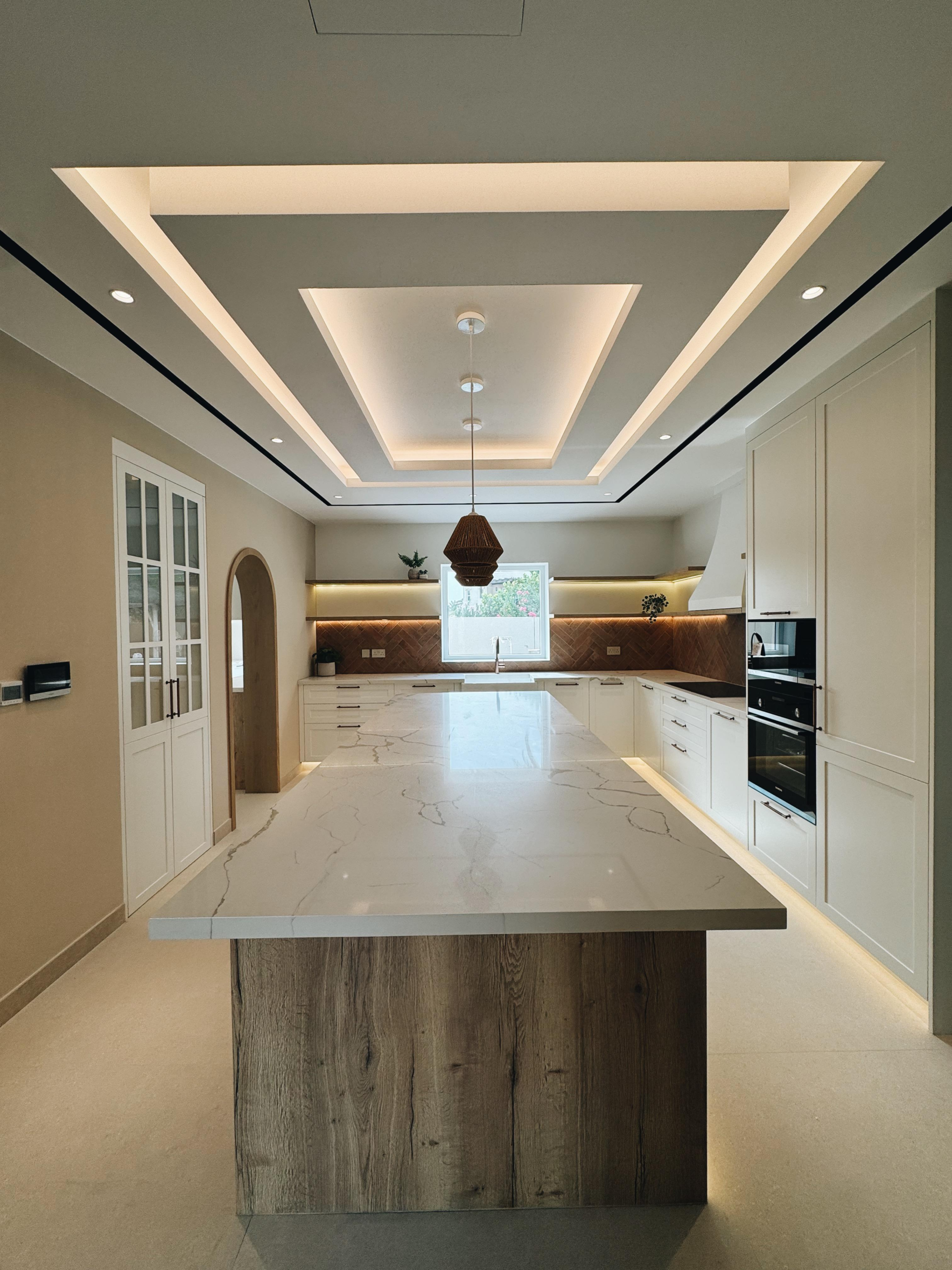
Warm bronze details can make a simple kitchen ceiling feel more refined. Narrow metallic trims or bronze-toned lighting fixtures create a subtle contrast against white, cream or beige surfaces. The finish looks especially attractive when repeated in cabinet handles, taps or pendant fittings. Keep the metallic details limited so the ceiling remains elegant rather than overly decorative. Choose fixtures with finishes intended for regular household use and clean them according to the manufacturer’s guidance. This design suits kitchens that combine understated luxury with warm contemporary materials.
Instagram inspiration: House Beautiful
34. Minimalist Ceiling with Hidden Light Slots
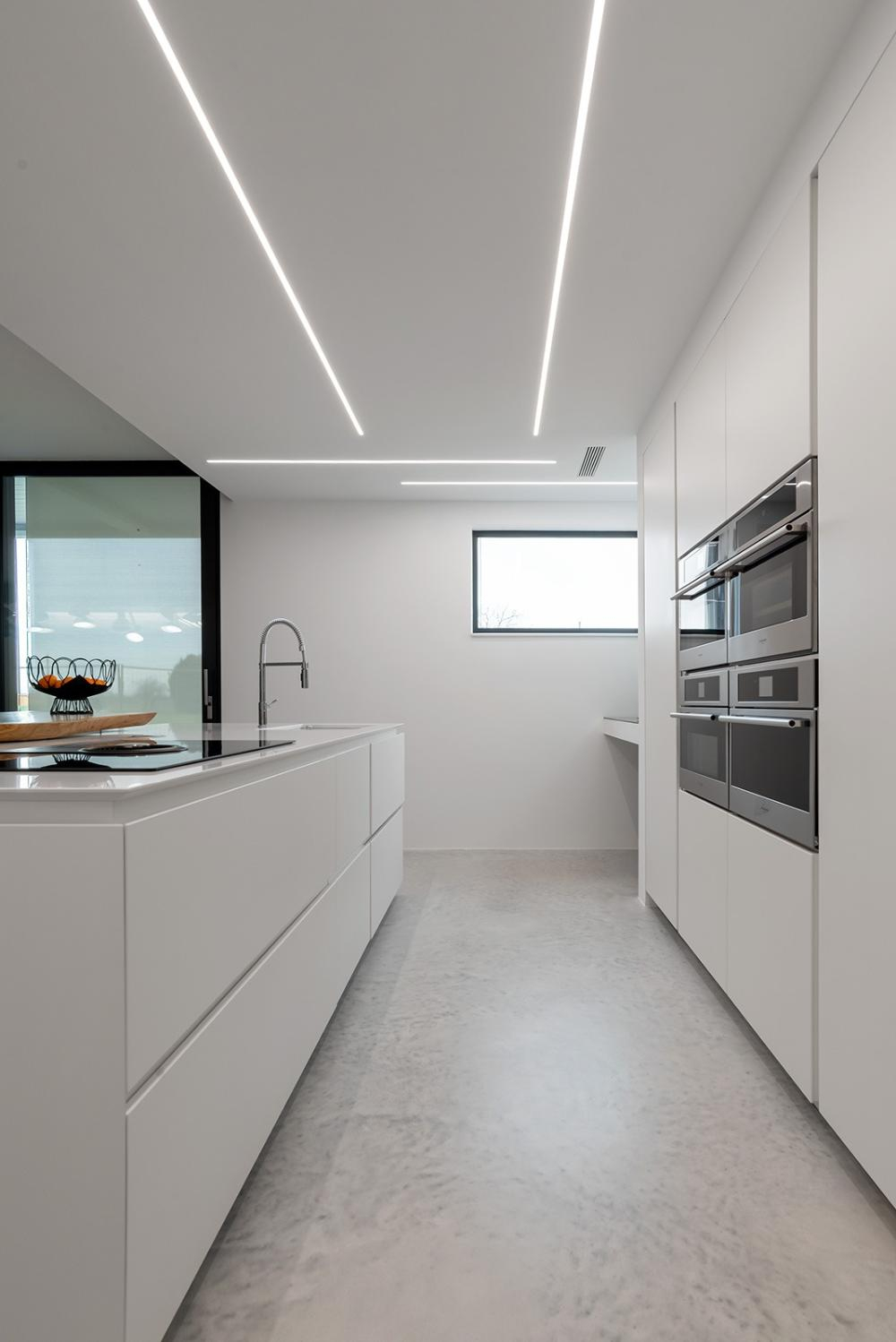
Hidden light slots provide illumination while keeping the visible ceiling surface exceptionally clean. Narrow channels can be positioned along the perimeter or above a kitchen island to create a soft architectural line. The light source remains concealed, allowing the ceiling itself to appear uninterrupted. Diffusers help produce a more even glow and reduce the appearance of individual LED points. Plan driver access and ventilation requirements before closing the ceiling. This design is a strong choice for modern kitchens where lighting should feel integrated rather than decorative.
Instagram inspiration: Dezeen
35. Deep Green Kitchen Ceiling Accent
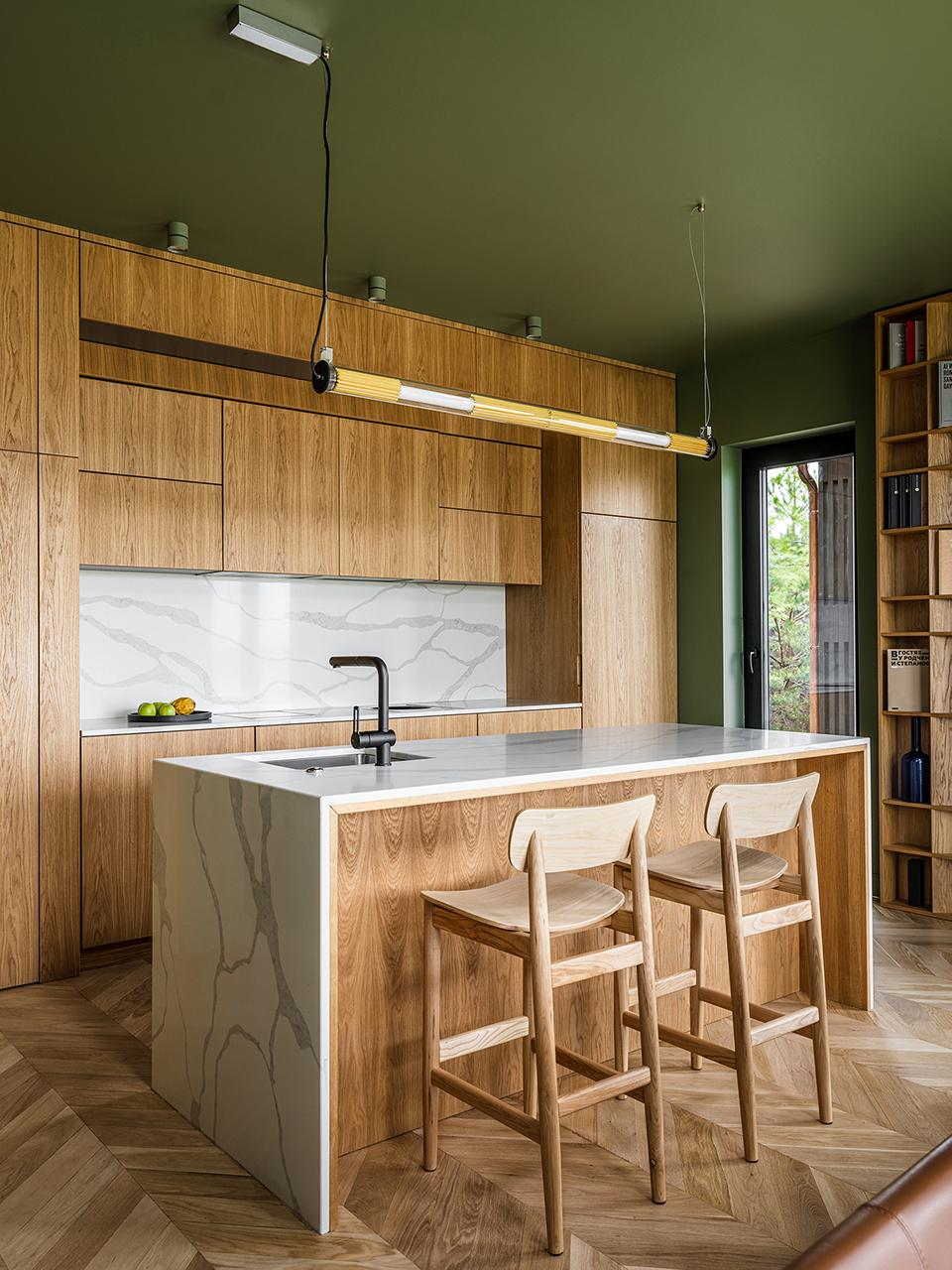
A deep green ceiling adds color and character to a kitchen without relying on patterned wallpaper or decorative accessories. Muted forest green pairs beautifully with warm oak, cream cabinetry and pale stone surfaces. It can create a cozy atmosphere in a larger kitchen, especially when natural light and warm artificial lighting are balanced. In a low-ceiling room, consider using green only in a small recessed section or border. Test the color under different lighting conditions because dark shades can appear quite different throughout the day. This idea is ideal for interiors that embrace earthy colors and confident design choices.
Instagram inspiration: House & Garden
36. White Ceiling with Timber Raft Feature

A timber raft is a suspended or visually distinct ceiling panel that creates a focused design feature above the island or dining space. It brings the warmth of wood into the kitchen without covering the entire ceiling. Integrated lights can be arranged within the panel to illuminate the work surface and emphasize the timber grain. Keep the panel proportional to the island and leave enough space around it so the kitchen does not feel crowded. Use suitable lightweight and properly secured materials for overhead installation. This design offers a stylish balance between a plain ceiling and a fully timber-clad interior.
Instagram inspiration: Design Milk
37. Kitchen Ceiling with Skylight and Recessed Lighting
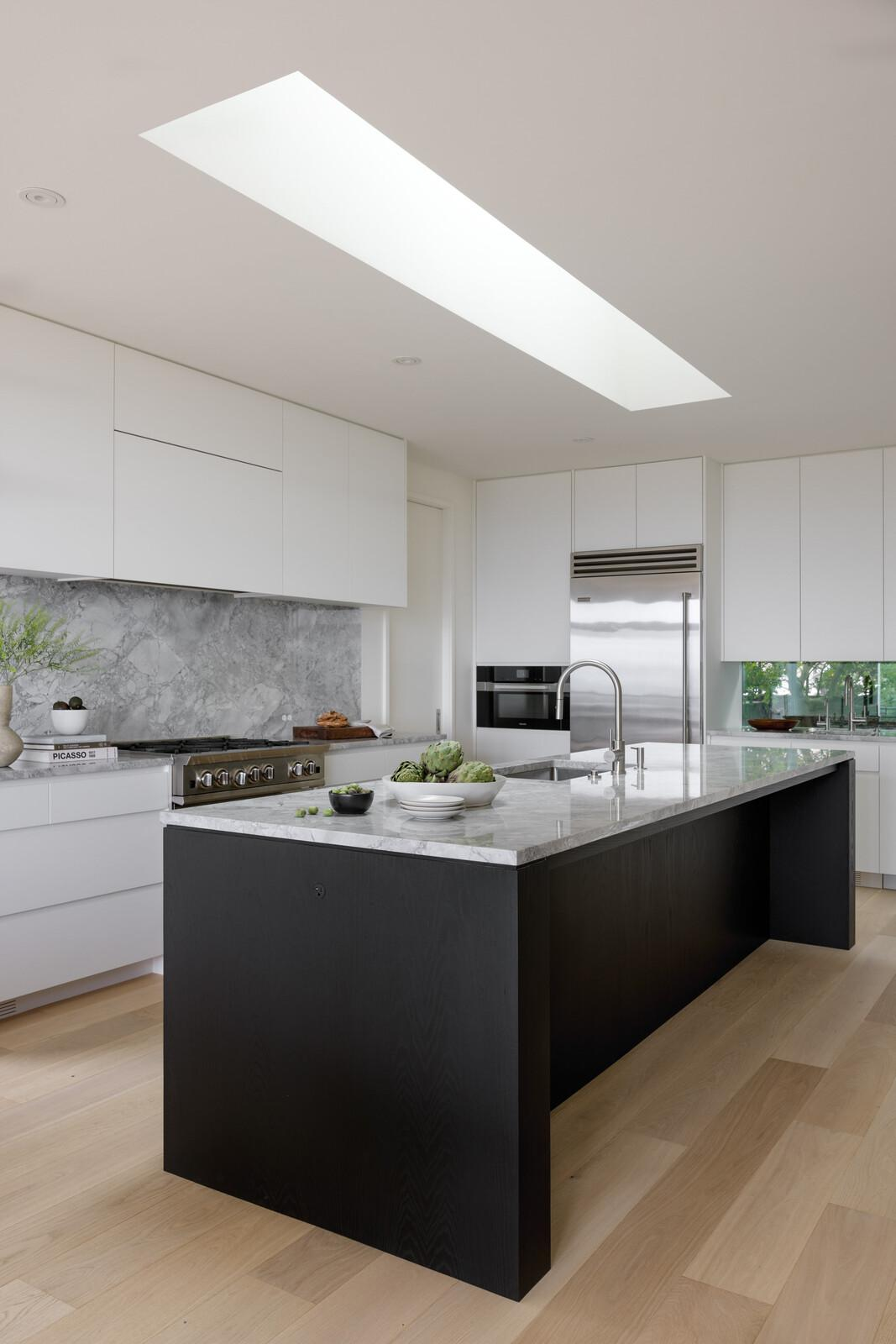
Combining a skylight with recessed lighting gives the kitchen both natural and artificial illumination. During the day, daylight can brighten the central area, while ceiling lights support evening cooking and cloudy weather. A simple ceiling design around the skylight helps the natural opening remain the main feature. Consider insulation, waterproofing, glare and heat control when planning the installation. Recessed lights should be positioned to complement daylight rather than create unnecessary brightness. This is a beautiful solution for kitchens where natural light is an important part of the design.
Instagram inspiration: ArchDaily
38. Contemporary Ceiling with Acoustic Panels
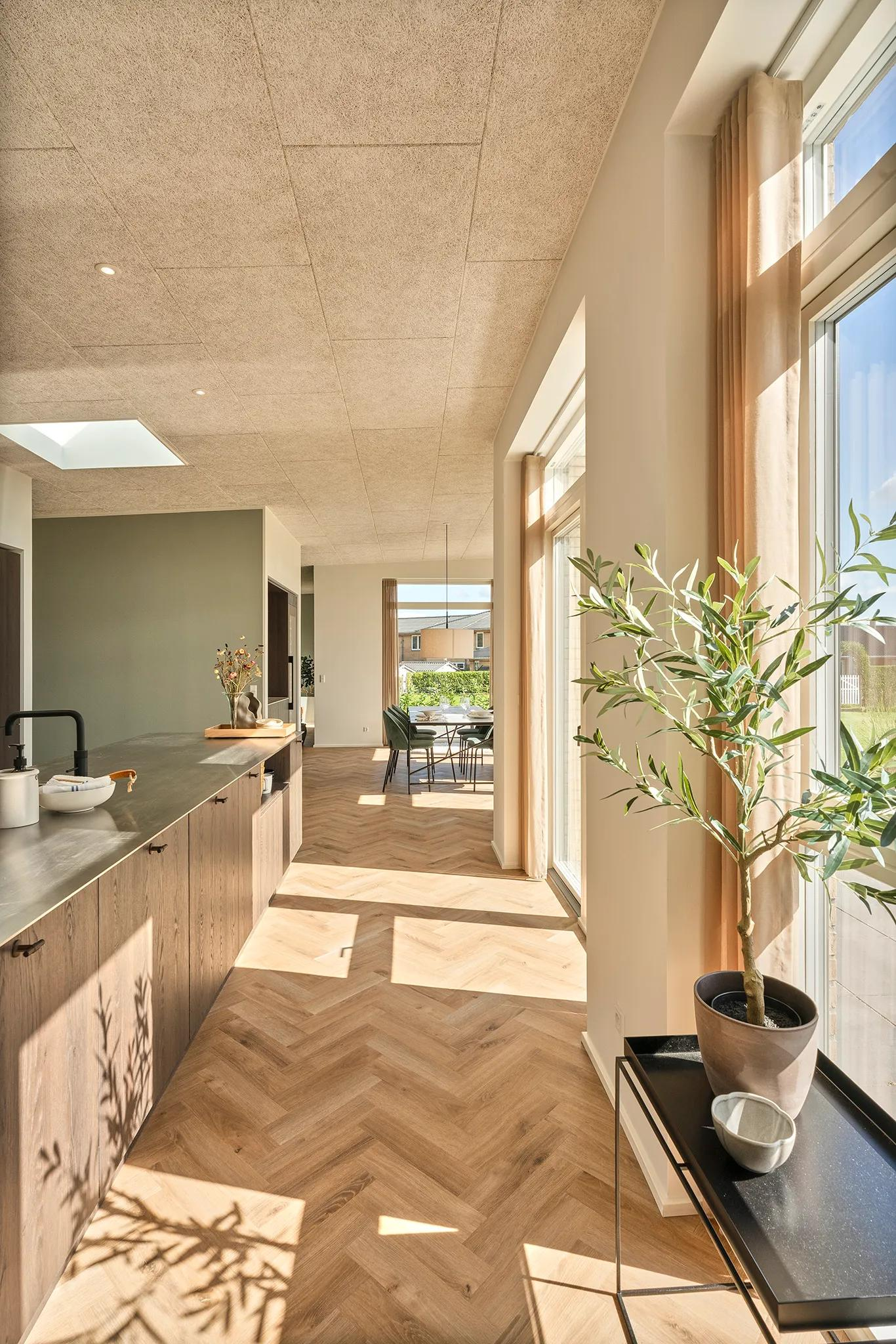
Acoustic ceiling panels can help manage sound in an open-plan kitchen, especially where hard floors, stone counters and large windows create echoes. Modern panels are available in subtle textures and finishes that can complement the rest of the interior. A carefully placed section above the dining or seating area may provide a useful balance between acoustic comfort and visual design. Check that the chosen product is suitable for the kitchen’s humidity and cleaning requirements. Keep panels away from direct cooking exposure unless they are specifically rated for that location. This idea combines a practical improvement with a modern architectural detail.
Instagram inspiration: Dezeen
39. Luxury Layered Ceiling with Statement Chandelier
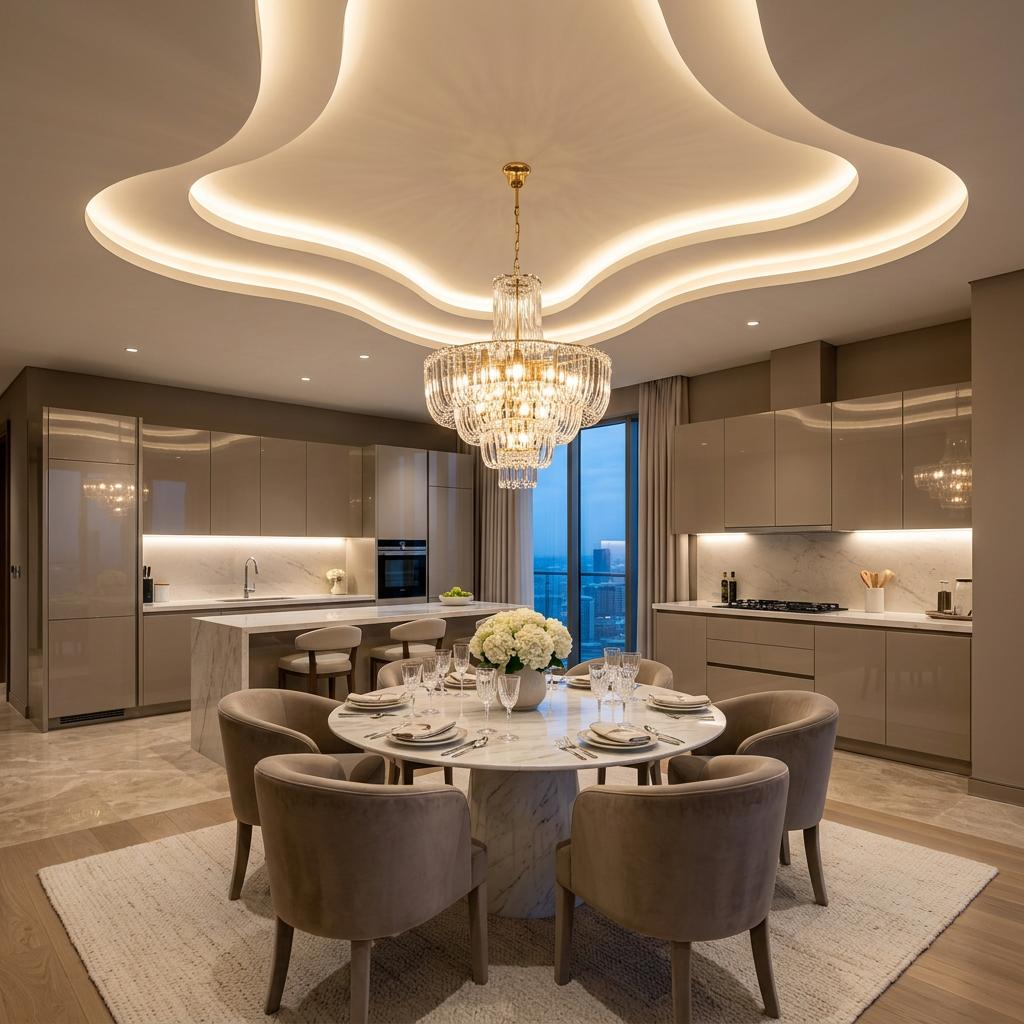
A layered ceiling paired with a statement chandelier creates a dramatic focal point in a spacious kitchen. The ceiling levels add depth, while the chandelier brings decorative character above the island or dining table. Concealed perimeter lighting can balance the stronger central fixture and provide softer ambient illumination. Choose a chandelier size that suits the room and allows comfortable movement beneath it. Make sure the ceiling structure can support the fixture and that the electrical installation is completed safely. This design is ideal for homeowners who want a luxurious kitchen with a memorable ceiling feature. homesandgardens.com+1
Instagram inspiration: Elle Decor
40. Clean Flat Ceiling with Layered Smart Lighting

A clean flat ceiling with layered smart lighting is a flexible choice for almost any modern kitchen. Recessed fixtures provide general illumination, while concealed strips and selected accent lights add depth where needed. Smart controls can allow brightness and color temperature to be adjusted for cooking, cleaning or relaxed evening use. Keep the ceiling surface simple so the lighting arrangement remains the main feature. Plan the wiring, switches and compatible controls before installation to avoid expensive changes later. This design brings together modern convenience, understated style and practical everyday performance. homesandgardens.com+2
Instagram inspiration: Architectural Digest
Important Tips Before Choosing a Kitchen Ceiling
1. Consider Your Ceiling Height
A flat or slim-border design is generally more suitable for a kitchen with limited ceiling height. Deep trays, large beams and multiple false-ceiling levels can make a low room feel smaller.
2. Choose Kitchen-Friendly Materials
Cooking produces heat, steam and grease, so select finishes that suit the environment. Use appropriate moisture-resistant ceiling materials and finishes, and avoid untreated decorative materials near cooking appliances.
3. Plan Lighting Before Installation
Decide where the island, sink, cooking area and preparation counters will be located before positioning ceiling lights. Combine general illumination with task lighting and softer accent lighting. Current kitchen design guidance also emphasizes layered lighting, including recessed fixtures, pendants and integrated LED details. homesandgardens.com+2
4. Match the Ceiling with the Kitchen Interior
Coordinate ceiling colors and textures with cabinets, flooring, countertops and lighting fixtures. Natural wood looks beautiful with warm neutral interiors, while white and grey finishes suit cleaner contemporary designs.
5. Keep Maintenance in Mind
Detailed grooves, exposed textures and decorative ledges can collect dust and cooking residue. Choose a design that you can realistically maintain, particularly near the cooking area.
Final Thoughts
A thoughtfully designed kitchen ceiling can make the entire room feel more complete, comfortable and stylish. Simple white ceilings are excellent for smaller kitchens, while tray ceilings, timber details and coffered designs can bring more architectural interest to larger spaces. If you prefer a contemporary appearance, concealed LED channels and slim layered ceilings are attractive options. For a warmer atmosphere, natural wood panels and decorative beams add texture without requiring too many accessories. Always consider ceiling height, ventilation, lighting placement and cleaning requirements before starting construction. The best kitchen ceiling is ultimately the one that complements your home while making everyday cooking and dining more enjoyable.